

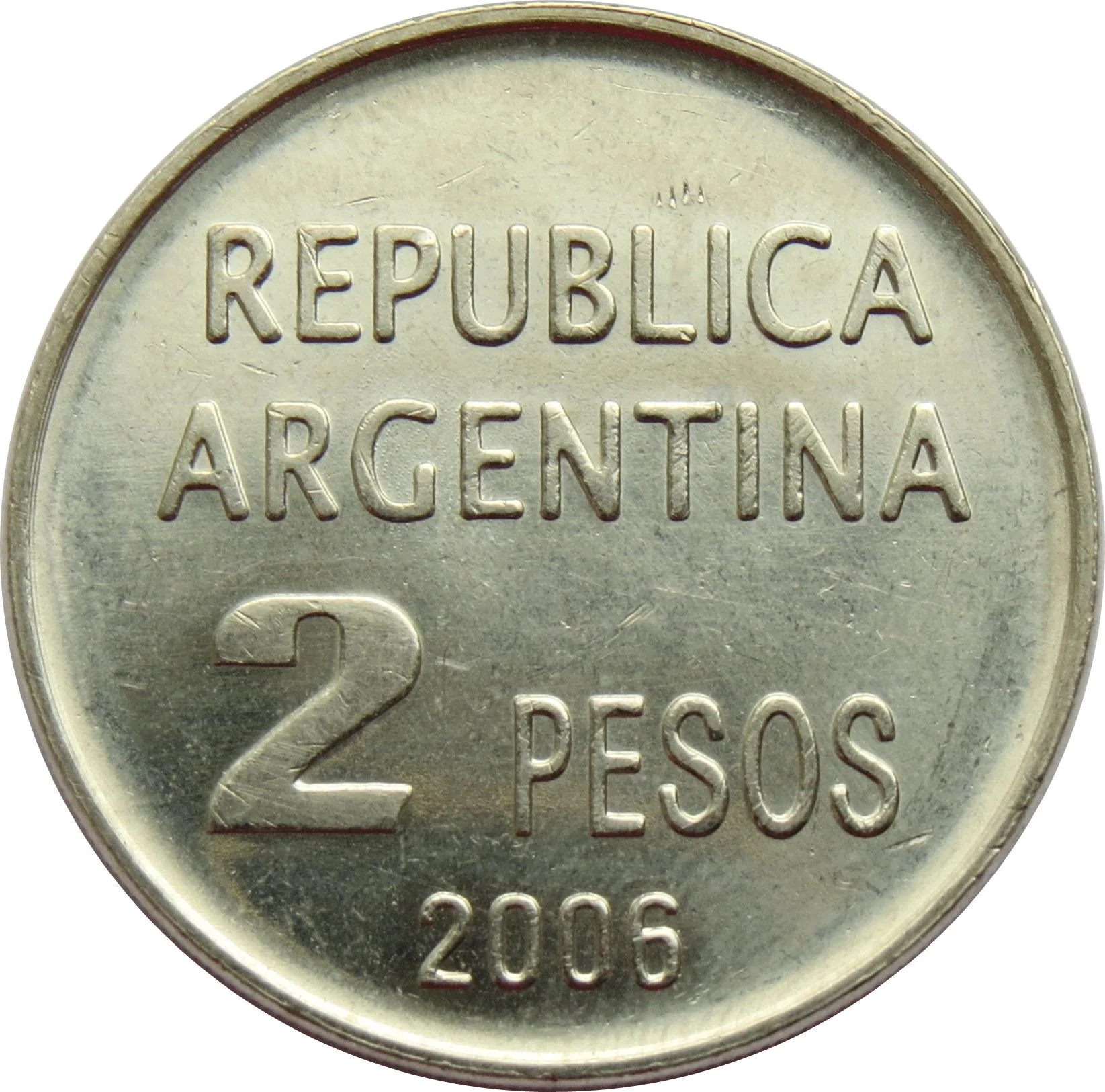
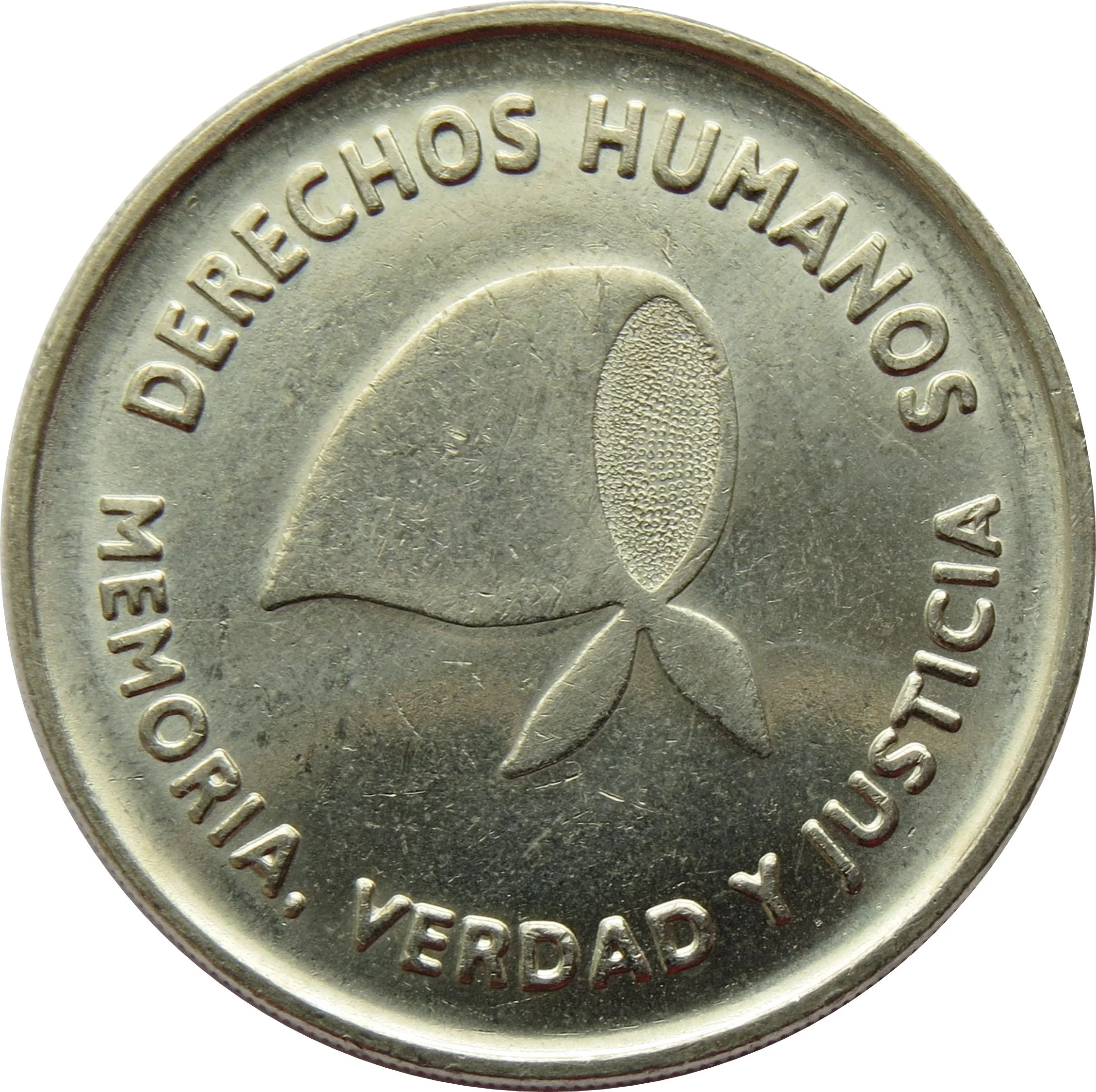
2 Pesos – Argentina
Non-circulating coins
Commemoration: Defense of Human Rights
Argentina
Context

Material

References
KM: #Click to copy to clipboard161.2
Numista: #365283
Value
Exchange value: 2 ARS
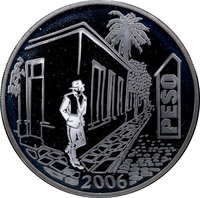
Obverse
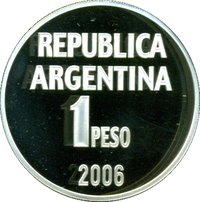
Reverse
Edge
Plain
Categories
| Human rights |
Mints
| Name | Mark |
|---|---|
| Buenos Aires | — |
Mintings
| Year | Mint Mark | Mintage | Quality | Collection |
|---|---|---|---|---|
| 2006 | — | 5,000 |
Historical background
In 2006, Argentina was navigating the complex aftermath of its catastrophic 2001-2002 economic crisis, which had included a sovereign default, a brutal devaluation, and the collapse of the Convertibility Plan that had pegged the peso 1:1 to the US dollar. Under the presidency of Néstor Kirchner, the economy was in a strong recovery phase, with high GDP growth rates driven by a boom in commodity exports and a rebound in industrial production. The currency situation was characterized by a managed float, where the Central Bank intervened to maintain a stable and competitive exchange rate, which hovered around 3 pesos per US dollar for much of the year. This policy was aimed at sustaining the export-led recovery and building up substantial foreign currency reserves.
A defining feature of the 2006 currency landscape was the government's active efforts to reduce the dollarization of the economy and restore faith in the peso. Authorities encouraged peso-denominated savings and lending, while gradually paying down debt to international creditors in a bid to regain market access. However, underlying tensions persisted, primarily rooted in high inflation, which officially reached around 10% for the year but was privately estimated to be significantly higher. This inflation began to erode the peso's stability and purchasing power, creating a growing disparity between the official exchange rate and informal market rates.
Despite the robust macroeconomic growth, 2006 sowed the seeds for future currency instability. The Kirchner administration's reliance on price controls and export taxes to contain inflation and fund social spending proved to be temporary fixes. The growing inflationary pressures, combined with increasing public spending, started to undermine the sustainability of the exchange rate policy. By the year's end, while the situation appeared stable on the surface, economists warned that the persistent inflation and market distortions were setting the stage for renewed pressure on the peso, foreshadowing the more acute currency crises that would emerge in the following decade.
A defining feature of the 2006 currency landscape was the government's active efforts to reduce the dollarization of the economy and restore faith in the peso. Authorities encouraged peso-denominated savings and lending, while gradually paying down debt to international creditors in a bid to regain market access. However, underlying tensions persisted, primarily rooted in high inflation, which officially reached around 10% for the year but was privately estimated to be significantly higher. This inflation began to erode the peso's stability and purchasing power, creating a growing disparity between the official exchange rate and informal market rates.
Despite the robust macroeconomic growth, 2006 sowed the seeds for future currency instability. The Kirchner administration's reliance on price controls and export taxes to contain inflation and fund social spending proved to be temporary fixes. The growing inflationary pressures, combined with increasing public spending, started to undermine the sustainability of the exchange rate policy. By the year's end, while the situation appeared stable on the surface, economists warned that the persistent inflation and market distortions were setting the stage for renewed pressure on the peso, foreshadowing the more acute currency crises that would emerge in the following decade.

⭐ Somewhat Rare