

10 rupees – Seychelles
Add to wishlist
Seychelles
Context
Material
Diameter: 26.3 mm
Weight: 7.8 g
Thickness: 1.9 mm
Shape: Heptagonal
Standard: Silver quarter ounce
Magnetic: No
Technique: Milled
Alignment: Medal alignment
flip
References
KM: #
Numista: #141071
Value
Exchange value: 10 SCR
Obverse
Description:
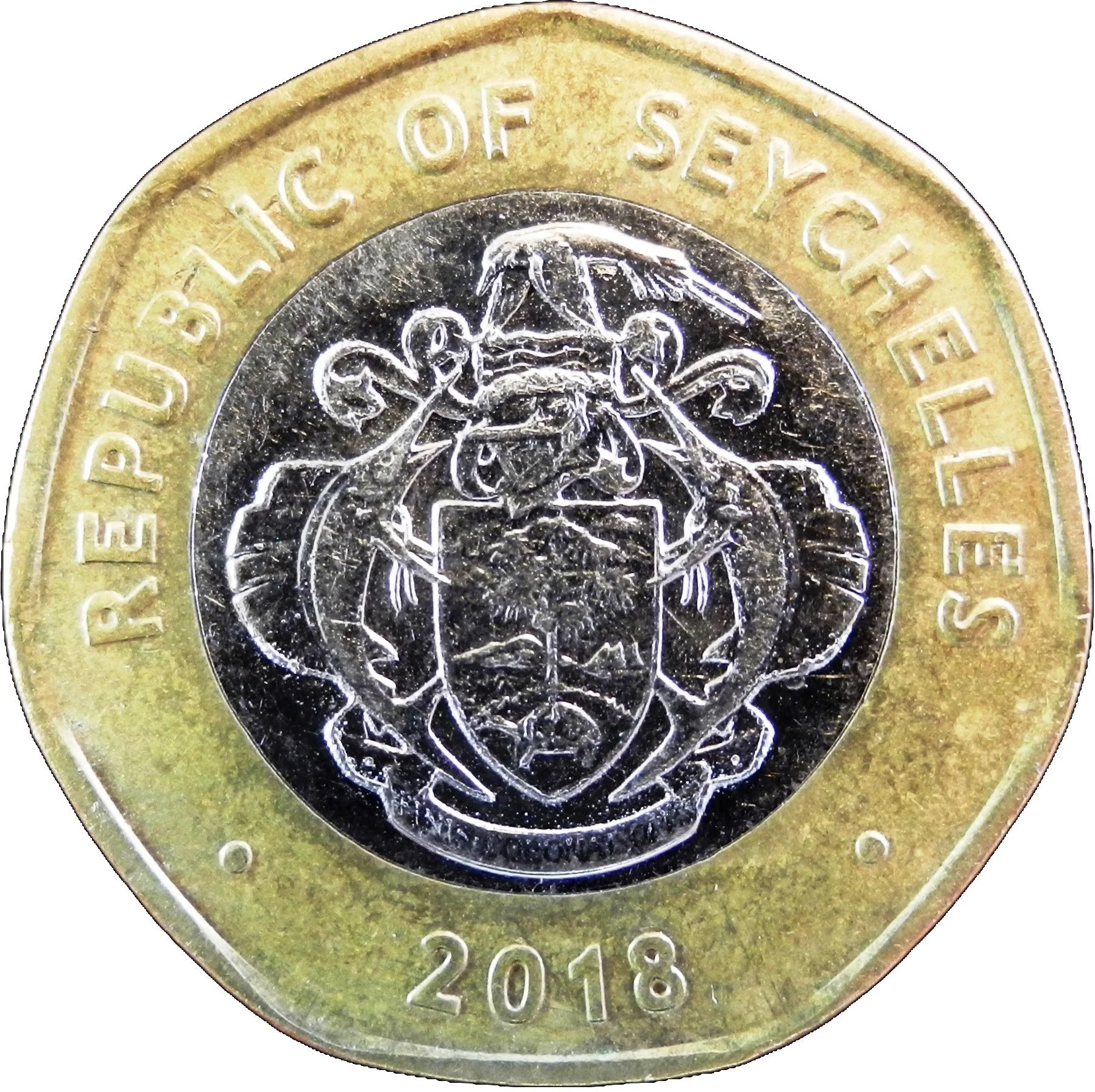
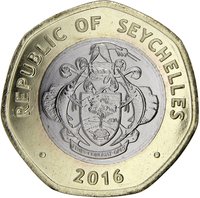
A golden shield with a coconut palm, a giant tortoise, and the sea, topped by a silver helmet and crested by a white-tailed tropicbird.
Inscription:
REPUBLIC OF SEYCHELLES
2018
2018
Script: Latin
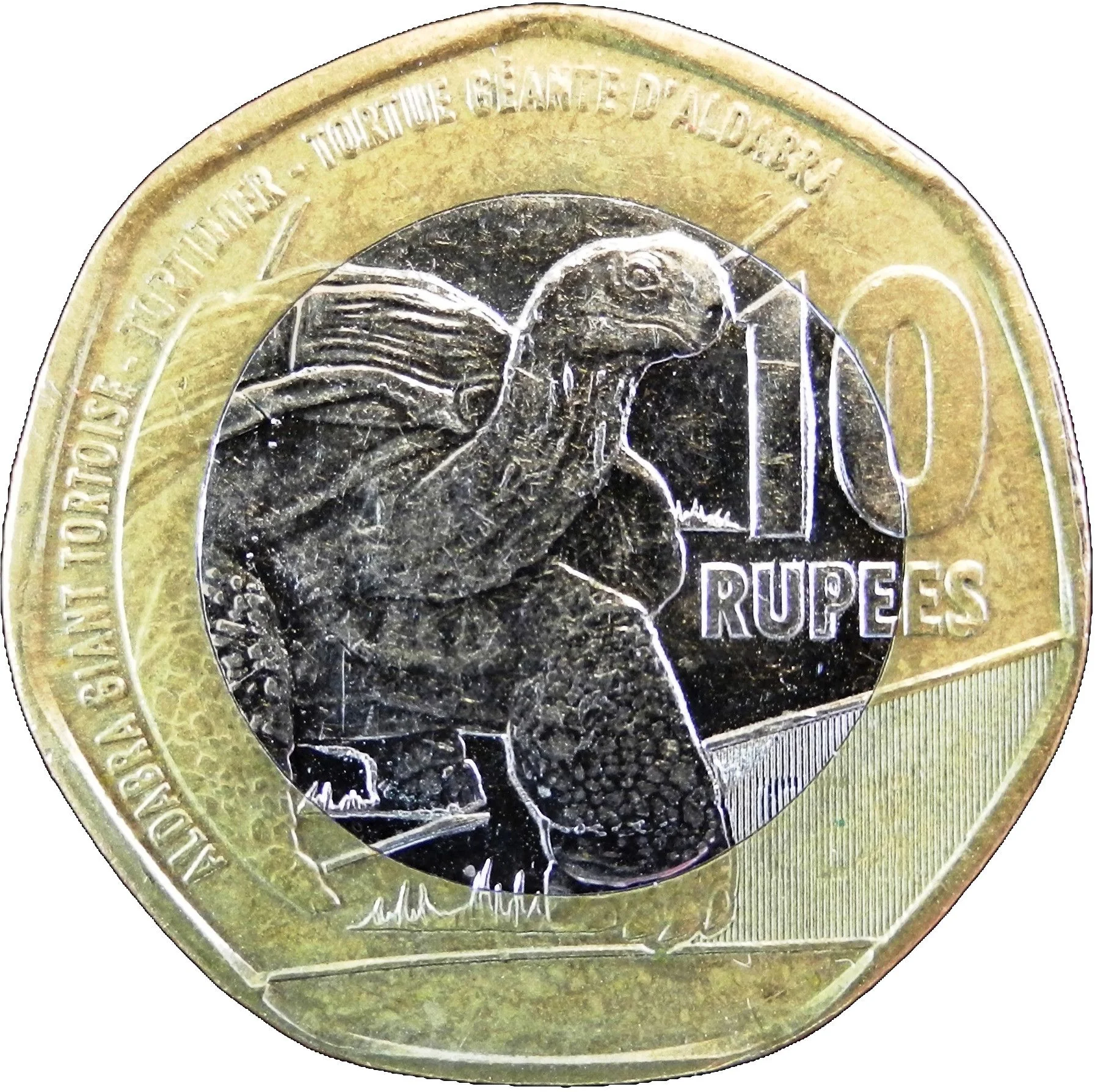
Reverse
Edge
Plain
Categories
| Animal> Bird |
| Animal> Fish |
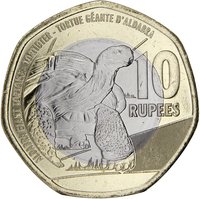
| Animal> Turtle or tortoise |
| Symbols> Coat of Arms |
Mints
| Name | Mark |
|---|---|
| Royal Mint | — |
Mintings
| Year | Mint Mark | Mintage | Quality | Collection |
|---|---|---|---|---|
| 2018 | — | 5,000,000 |
Historical background
In 2018, the currency situation in Seychelles was characterized by stability and relative strength, a significant achievement following a history of volatility. The Seychellois rupee (SCR) operated under a floating exchange rate regime, managed by the Central Bank of Seychelles (CBS) with a focus on building foreign exchange reserves and controlling inflation. This framework, established after a major devaluation and economic liberalization in 2008, had by 2018 fostered confidence, with the rupee showing resilience against major currencies like the US dollar and the euro. The CBS successfully maintained adequate reserve buffers, which covered over four months of import cover, providing a cushion against external shocks.
The stable currency was underpinned by a robust tourism sector, which drove the inflow of foreign exchange. Record-breaking tourist arrivals in 2018 bolstered the services account and supported the rupee's value. Furthermore, prudent fiscal and monetary policies, including a tight control on government spending and a positive interest rate differential, helped maintain macroeconomic stability. This environment contributed to low and stable inflation, which averaged around 3.7% for the year, preserving domestic purchasing power and reducing exchange rate pressure.
However, underlying vulnerabilities persisted. The economy remained heavily dependent on tourism and fisheries, making it susceptible to global economic downturns and climate-related impacts. Additionally, the high level of dollarization within the domestic economy, though reduced from previous peaks, continued to pose a risk, as it limited the CBS's effectiveness in monetary policy. Consequently, while 2018 was a year of currency stability and economic confidence, authorities remained mindful of the need for continued structural reforms to diversify the economy and further strengthen long-term external resilience.
The stable currency was underpinned by a robust tourism sector, which drove the inflow of foreign exchange. Record-breaking tourist arrivals in 2018 bolstered the services account and supported the rupee's value. Furthermore, prudent fiscal and monetary policies, including a tight control on government spending and a positive interest rate differential, helped maintain macroeconomic stability. This environment contributed to low and stable inflation, which averaged around 3.7% for the year, preserving domestic purchasing power and reducing exchange rate pressure.
However, underlying vulnerabilities persisted. The economy remained heavily dependent on tourism and fisheries, making it susceptible to global economic downturns and climate-related impacts. Additionally, the high level of dollarization within the domestic economy, though reduced from previous peaks, continued to pose a risk, as it limited the CBS's effectiveness in monetary policy. Consequently, while 2018 was a year of currency stability and economic confidence, authorities remained mindful of the need for continued structural reforms to diversify the economy and further strengthen long-term external resilience.
🌱 Fairly Common