

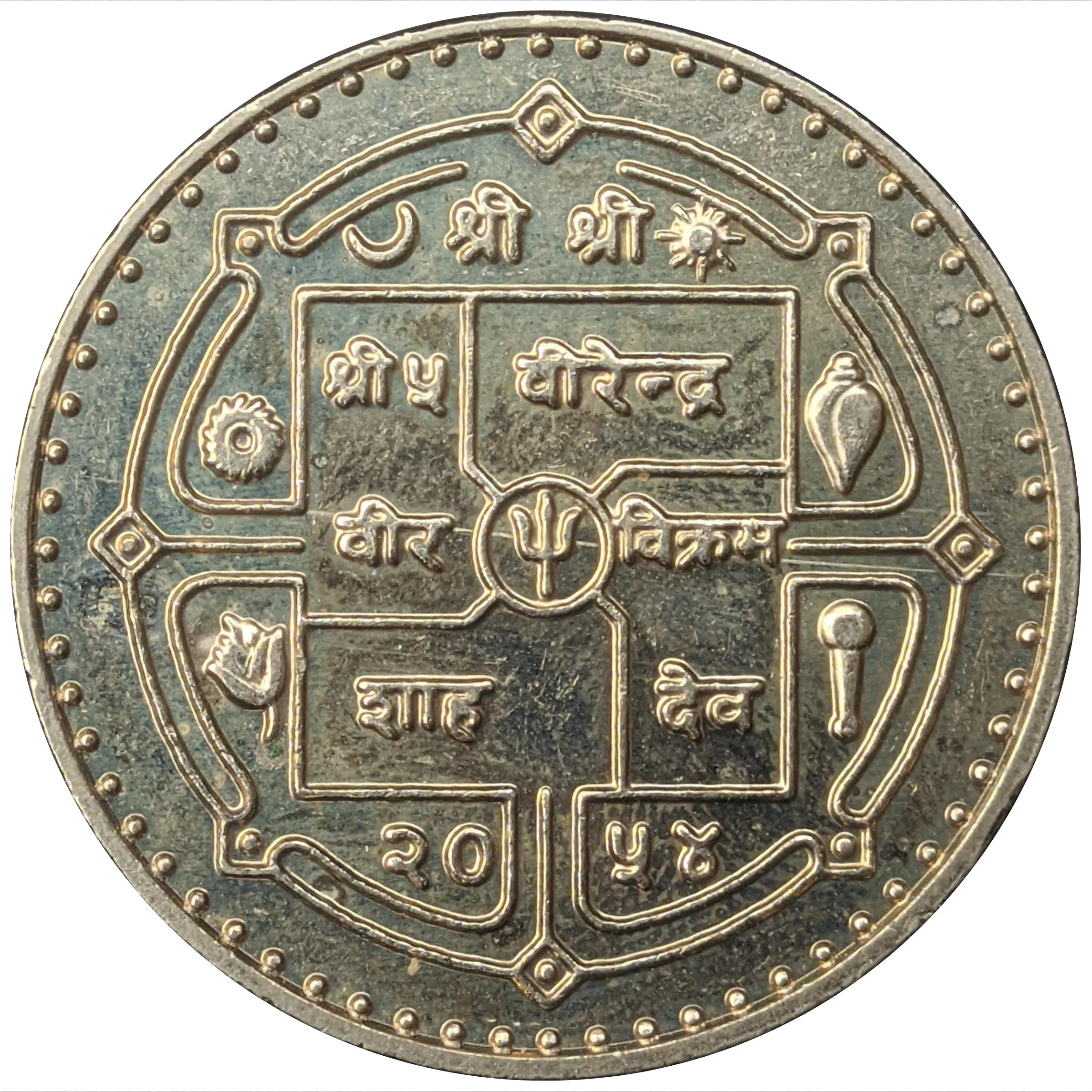
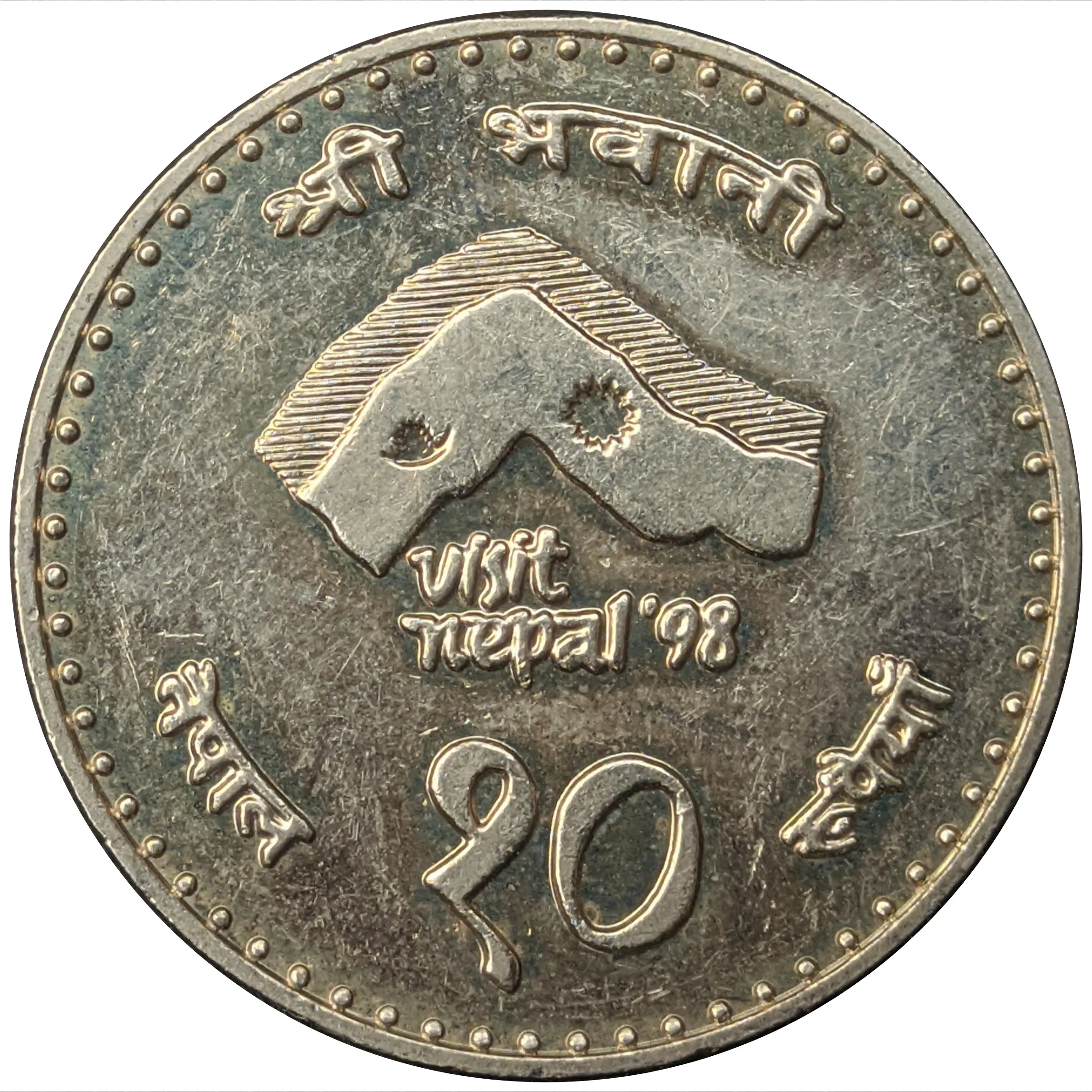
10 rupees – Nepal
Add to wishlist
Circulating commemorative coins
Commemoration: Visit Nepal '98
Nepal
Context
Year: 1997
Vikram Samvat Year:: 2054
Issuer: Nepal
Ruler: Birendra Bir Bikram Shah
Currency:
(since 1932)
Total mintage: 5,000,000
Material
Diameter: 25 mm
Weight: 10 g
Thickness: 2.7 mm
Shape: Round
Composition: Copper-nickel
Technique: Milled
Alignment: Medal alignment
flip
References
KM: #
Numista: #14092
Value
Exchange value: 10 NPR
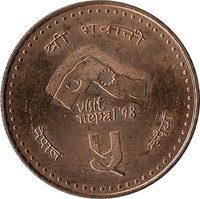
Obverse
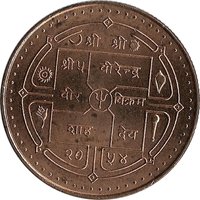
Reverse
Inscription:
Visit Nepal '98
१०
१०
Edge
Reeded
Mints
| Name | Mark |
|---|---|
| Mint of Finland | — |
Mintings
| Year | Mint Mark | Mintage | Quality | Collection |
|---|---|---|---|---|
| 1997 | — | 5,000,000 |
Historical background
In 1997, Nepal's currency situation was characterized by a dual exchange rate system and significant pressure on foreign exchange reserves, all within the framework of a pegged currency. The Nepalese rupee (NPR) was officially pegged to the Indian rupee (INR) at a fixed rate of 1.6 NPR to 1 INR, a cornerstone of the 1960 Treaty of Trade and Transit that governed economic relations with its dominant neighbor. This peg provided stability for trade, as India was Nepal's largest trading partner, but it also meant Nepal's monetary policy was largely constrained by India's economic decisions.
Alongside this official peg, a separate and higher market-determined exchange rate existed for other hard currencies like the US dollar, reflecting broader economic pressures. The country was grappling with the economic aftermath of a period of political instability following the restoration of multi-party democracy in 1990 and a costly Maoist insurgency that began in 1996. These factors, combined with a growing trade deficit, declining tourism revenue, and low industrial productivity, strained Nepal's balance of payments and depleted its foreign currency reserves throughout the mid-1990s.
Consequently, 1997 was a year of transition and adjustment. Under guidance from the International Monetary Fund (IMF), which had approved a Structural Adjustment Facility, the government was implementing economic liberalization policies. A critical move was the unification of the dual exchange rate system in early 1997, devaluing the official rate for non-Indian rupee transactions to align with the market rate. This devaluation aimed to boost exports, discourage imports, and stabilize reserves, marking a significant step towards a more market-oriented economy while maintaining the vital fixed peg to the Indian rupee.
Alongside this official peg, a separate and higher market-determined exchange rate existed for other hard currencies like the US dollar, reflecting broader economic pressures. The country was grappling with the economic aftermath of a period of political instability following the restoration of multi-party democracy in 1990 and a costly Maoist insurgency that began in 1996. These factors, combined with a growing trade deficit, declining tourism revenue, and low industrial productivity, strained Nepal's balance of payments and depleted its foreign currency reserves throughout the mid-1990s.
Consequently, 1997 was a year of transition and adjustment. Under guidance from the International Monetary Fund (IMF), which had approved a Structural Adjustment Facility, the government was implementing economic liberalization policies. A critical move was the unification of the dual exchange rate system in early 1997, devaluing the official rate for non-Indian rupee transactions to align with the market rate. This devaluation aimed to boost exports, discourage imports, and stabilize reserves, marking a significant step towards a more market-oriented economy while maintaining the vital fixed peg to the Indian rupee.
🌱 Common