

1 Cent – Kwangtung Province
China
Context
Years: 1900–1906
Country: China 
Issuer: Kwangtung Province
Ruler: Guangxu
Currency:
(1900—1949)
Demonetized: Yes
Material
References
Y: #Click to copy to clipboard192
Numista: #14087
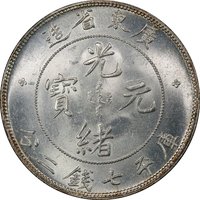
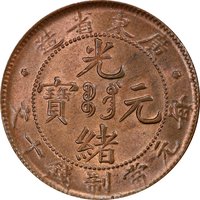
Obverse
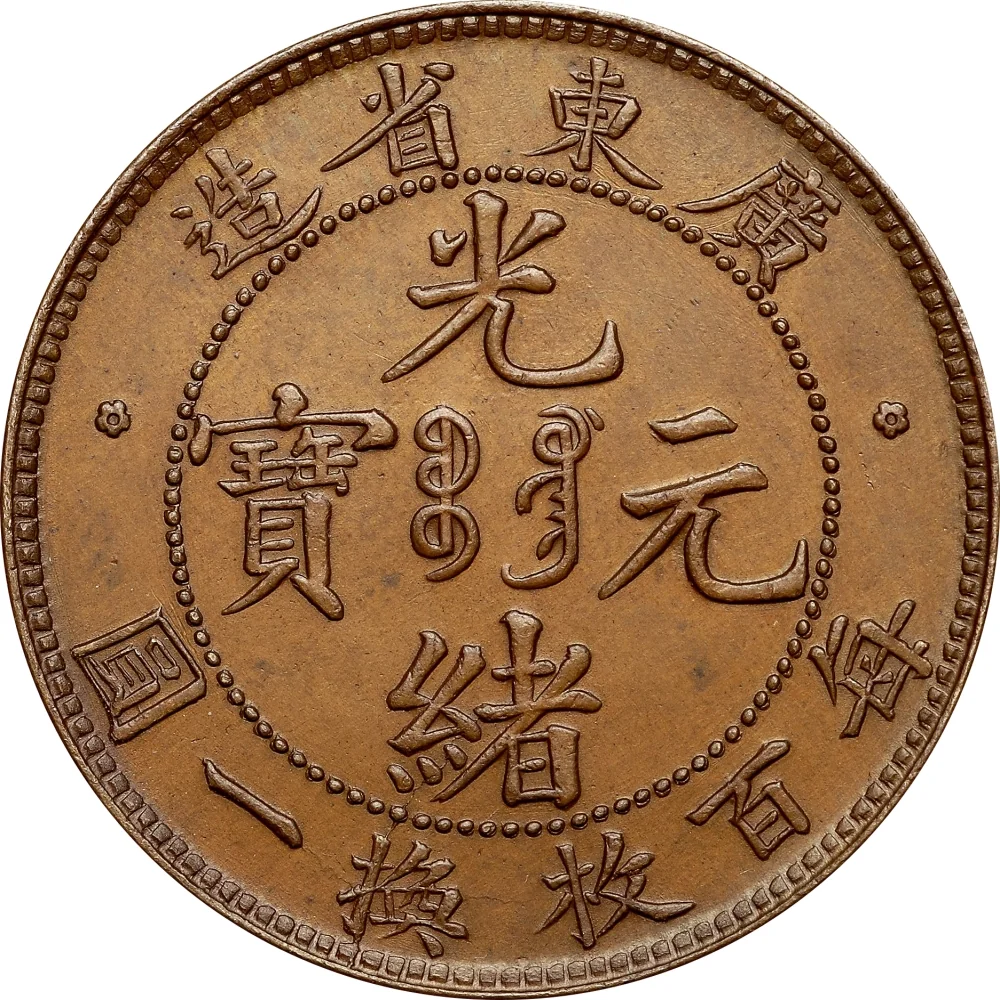
Description:
Chinese ideograms top to bottom, right to left, with central Manchu text, all encircled by more Chinese characters.
Inscription:
造省東廣
光
寶 ᠪᠣᠣ ᡤᡠᠸᠠᠩ 元
緒
圓一换枚百每
光
寶 ᠪᠣᠣ ᡤᡠᠸᠠᠩ 元
緒
圓一换枚百每
Translation:
Made in Guangdong Province.
Guangxu Treasure.
One Boo Guwang Yuan coin exchanges for one hundred pieces.
Guangxu Treasure.
One Boo Guwang Yuan coin exchanges for one hundred pieces.
Scripts: Chinese, Mongolian / Manchu
Languages: Manchu, Classical Chinese
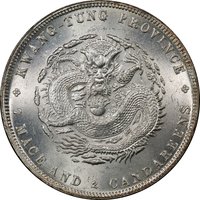
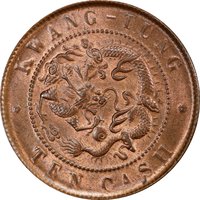
Reverse
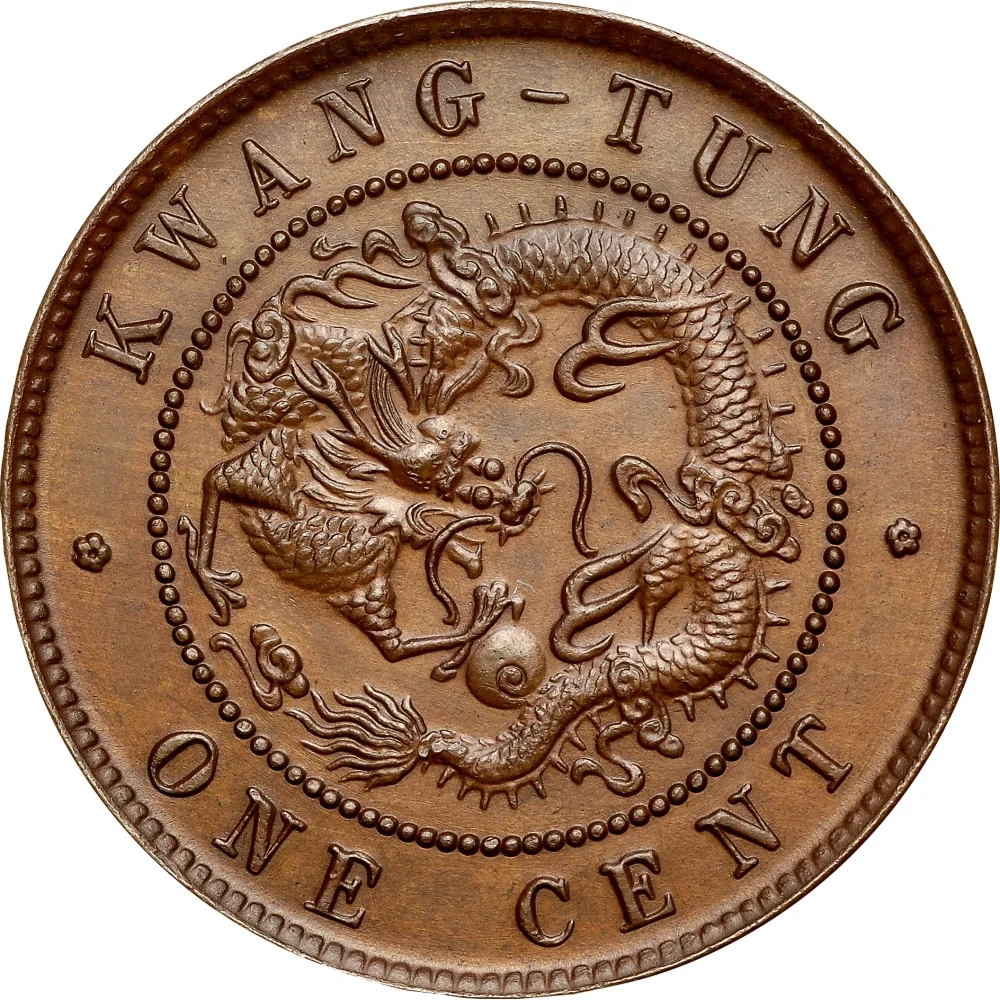
Description:
Dragon encircling a pearl, surrounded by English text.
Inscription:
KWANG-TUNG
ONE CENT
ONE CENT
Script: Latin
Edge
Plain
Categories
| Mythology> Fantastic animal |
Mintings
| Year | Mint Mark | Mintage | Quality | Collection |
|---|---|---|---|---|
| — | — | — |
Historical background
In 1900, Kwangtung Province (modern Guangdong) existed within a complex and fragmented monetary system, a legacy of its long history as a major trading hub. The primary currency in daily use was the silver dollar, predominantly the Mexican "Eagle" dollar, which had circulated for decades due to foreign trade. Alongside these were various silver sycee ingots (taels) weighed in the local Kuping standard, British Hong Kong dollars, and a limited number of Chinese imperial silver coins from the newly established mints. This multiplicity created constant challenges of exchange and valuation, complicating both commerce and tax collection.
The provincial economy also relied heavily on a vast circulation of copper cash coins (tongyuan) for smaller, everyday transactions. However, the supply was unstable, subject to debasement and counterfeiting, leading to fluctuating exchange rates between copper and silver. This instability severely impacted the peasantry and urban poor, who were paid in copper but often had tax obligations calculated in silver. Furthermore, the imperial court's authority was waning, and Kwangtung, influenced by its large diaspora and proximity to British Hong Kong and Portuguese Macao, was increasingly exposed to foreign financial systems and revolutionary ideas.
This chaotic monetary environment reflected the broader crisis of the late Qing Dynasty. The Boxer Rebellion of 1900, while centered in the north, exacerbated economic uncertainty nationwide, disrupting trade and straining imperial finances. In Kwangtung, this instability fueled discontent and highlighted the urgent need for reform, setting the stage for the province's later role in pioneering China's own standardized silver dollar currency in the final years of the dynasty.
The provincial economy also relied heavily on a vast circulation of copper cash coins (tongyuan) for smaller, everyday transactions. However, the supply was unstable, subject to debasement and counterfeiting, leading to fluctuating exchange rates between copper and silver. This instability severely impacted the peasantry and urban poor, who were paid in copper but often had tax obligations calculated in silver. Furthermore, the imperial court's authority was waning, and Kwangtung, influenced by its large diaspora and proximity to British Hong Kong and Portuguese Macao, was increasingly exposed to foreign financial systems and revolutionary ideas.
This chaotic monetary environment reflected the broader crisis of the late Qing Dynasty. The Boxer Rebellion of 1900, while centered in the north, exacerbated economic uncertainty nationwide, disrupting trade and straining imperial finances. In Kwangtung, this instability fueled discontent and highlighted the urgent need for reform, setting the stage for the province's later role in pioneering China's own standardized silver dollar currency in the final years of the dynasty.
🌱 Fairly Common