

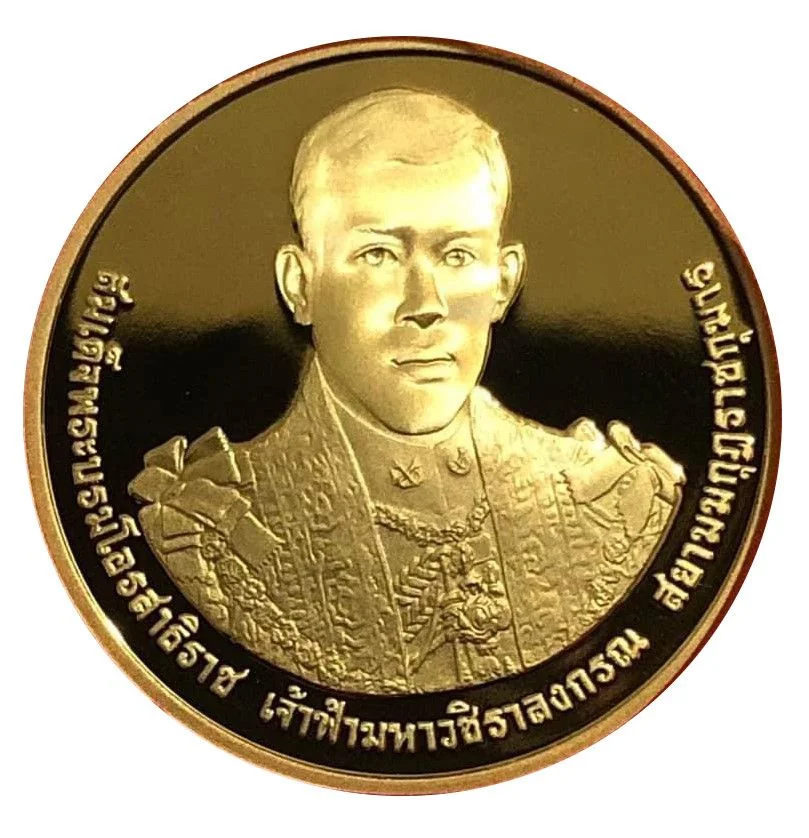
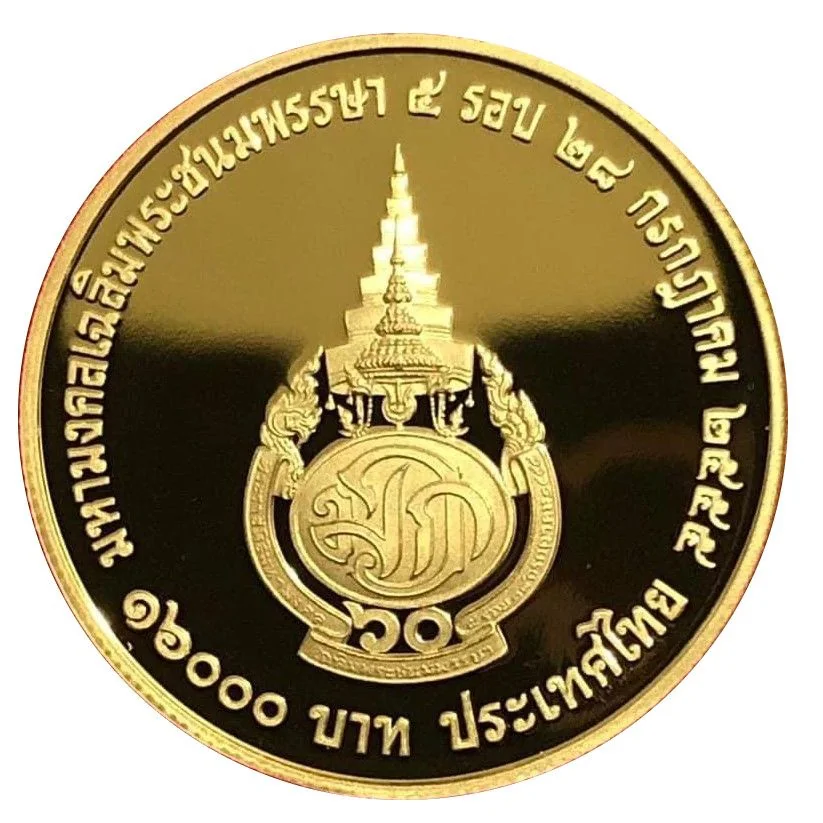
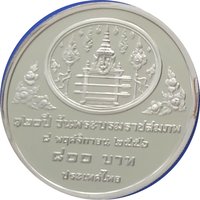
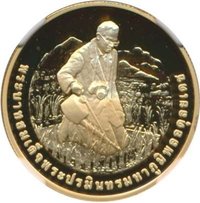
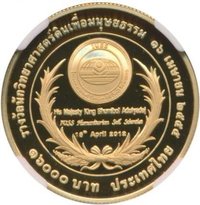
16000 bahts (Crown Prince) – Thailand
Add to wishlist
Non-circulating coins
Commemoration: 60th Birthday of Crown Prince
Thailand
Context
Year: 2013
Thai Year:: 2555
Issuer: Thailand
Ruler: Bhumibol Adulyadej
Currency:
(since 1897)
Total mintage: 3,800
Material

References
Numista: #363056
Value
Exchange value: 16000 THB
Bullion value: $2253.56
Categories
| Event> Birth anniversary |
| Symbols> Monogram |
Mintings
| Year | Mint Mark | Mintage | Quality | Collection |
|---|---|---|---|---|
| 2013 | — | 3,800 | Proof |
Historical background
In 2013, Thailand's currency, the baht (THB), was one of the strongest-performing currencies in Asia, appreciating significantly against the US dollar. This strength was driven by a combination of robust economic fundamentals, including a large current account surplus, substantial foreign exchange reserves, and sustained capital inflows attracted by relatively high interest rates and a stable economy. However, this appreciation created a major policy dilemma for the Bank of Thailand (BoT), as a strong baht hurt the competitiveness of the country's crucial export sector, which accounted for over 60% of GDP.
The situation was further complicated by aggressive monetary policies in developed nations, particularly the US Federal Reserve's quantitative easing, which flooded emerging markets with "hot money" seeking higher yields. To curb the baht's rapid rise and protect exporters, the BoT implemented a series of measures. These included cutting interest rates twice in late 2013 and, more controversially, imposing capital controls and relaxing regulations on Thai investment abroad to encourage outward flows. The government also intervened directly in foreign exchange markets, building reserves to slow the pace of appreciation.
Despite these efforts, the baht remained persistently strong throughout much of the year. The currency's resilience highlighted the challenges of managing capital flows in a globalized economy and sparked debate between policymakers focused on financial stability and exporters demanding relief. The tension culminated in political pressure on the BoT and set the stage for increased volatility in 2014, as the domestic political crisis that began in late 2013 deepened, eventually leading to a military coup and shifting investor sentiment.
The situation was further complicated by aggressive monetary policies in developed nations, particularly the US Federal Reserve's quantitative easing, which flooded emerging markets with "hot money" seeking higher yields. To curb the baht's rapid rise and protect exporters, the BoT implemented a series of measures. These included cutting interest rates twice in late 2013 and, more controversially, imposing capital controls and relaxing regulations on Thai investment abroad to encourage outward flows. The government also intervened directly in foreign exchange markets, building reserves to slow the pace of appreciation.
Despite these efforts, the baht remained persistently strong throughout much of the year. The currency's resilience highlighted the challenges of managing capital flows in a globalized economy and sparked debate between policymakers focused on financial stability and exporters demanding relief. The tension culminated in political pressure on the BoT and set the stage for increased volatility in 2014, as the domestic political crisis that began in late 2013 deepened, eventually leading to a military coup and shifting investor sentiment.
✨ Legendary