

½ Ackey – Gold Coast
Ghana
Context
Year: 1818
Country: Ghana 
Issuer: Gold Coast
Ruler: George III
Currency:
(1796—1818)
Demonetized: Yes
Total mintage: 2,170
Material
References
KM: #Click to copy to clipboard8
Numista: #36274
Value
Bullion value: $19.06
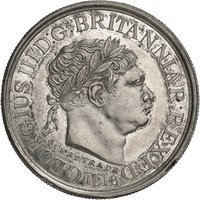
Obverse
Description:
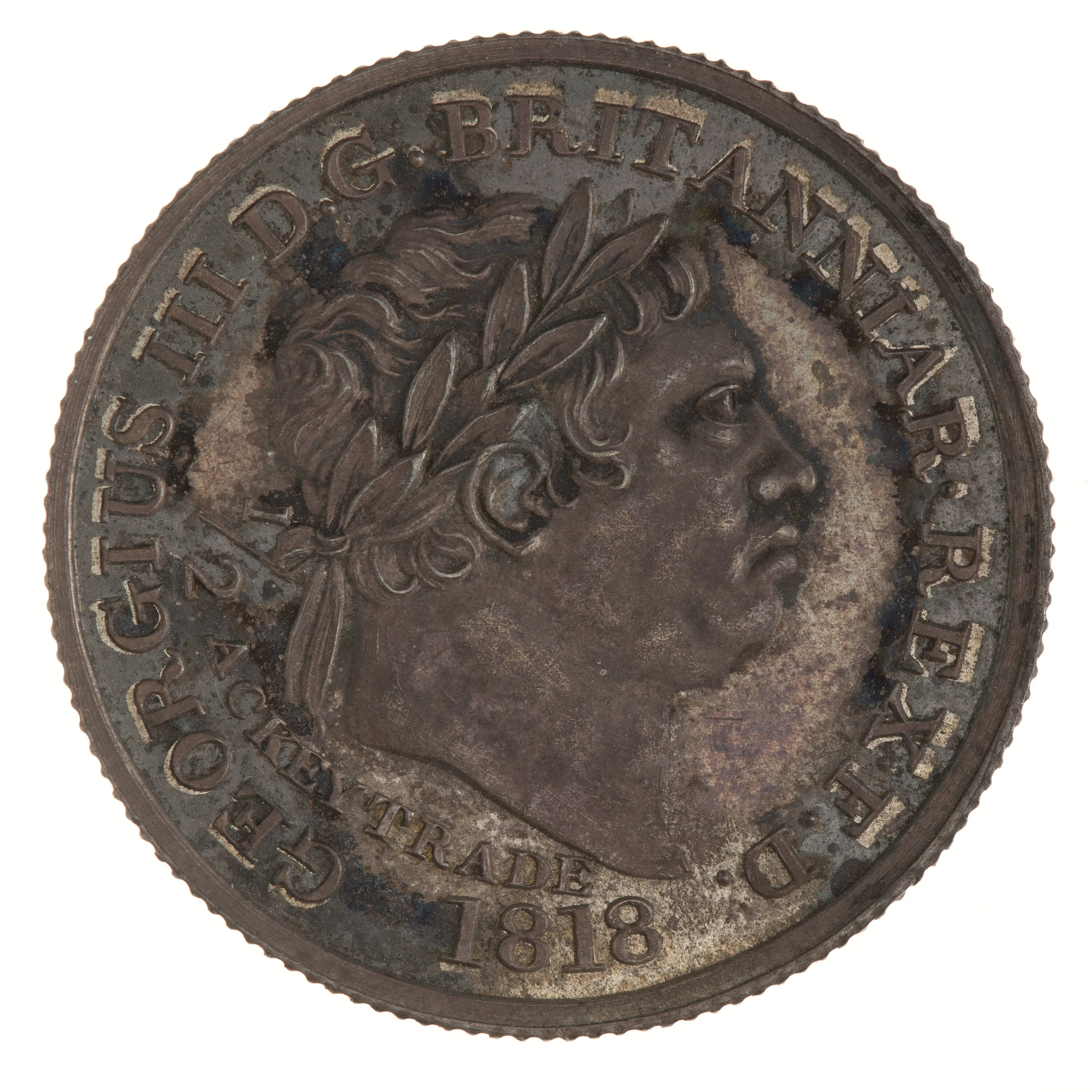
Laureate head right
Inscription:
1/2 ACKEY TRADE
GEORGIUS III D.G. BRITANNIAR REX F.D.
1818
GEORGIUS III D.G. BRITANNIAR REX F.D.
1818
Translation:
Half Ackey Trade Coin
George the Third, by the Grace of God, King of the Britains, Defender of the Faith.
1818
George the Third, by the Grace of God, King of the Britains, Defender of the Faith.
1818
Script: Latin
Engraver: Thomas Halliday
Reverse
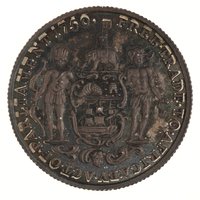
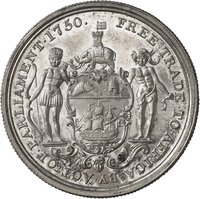
Description:
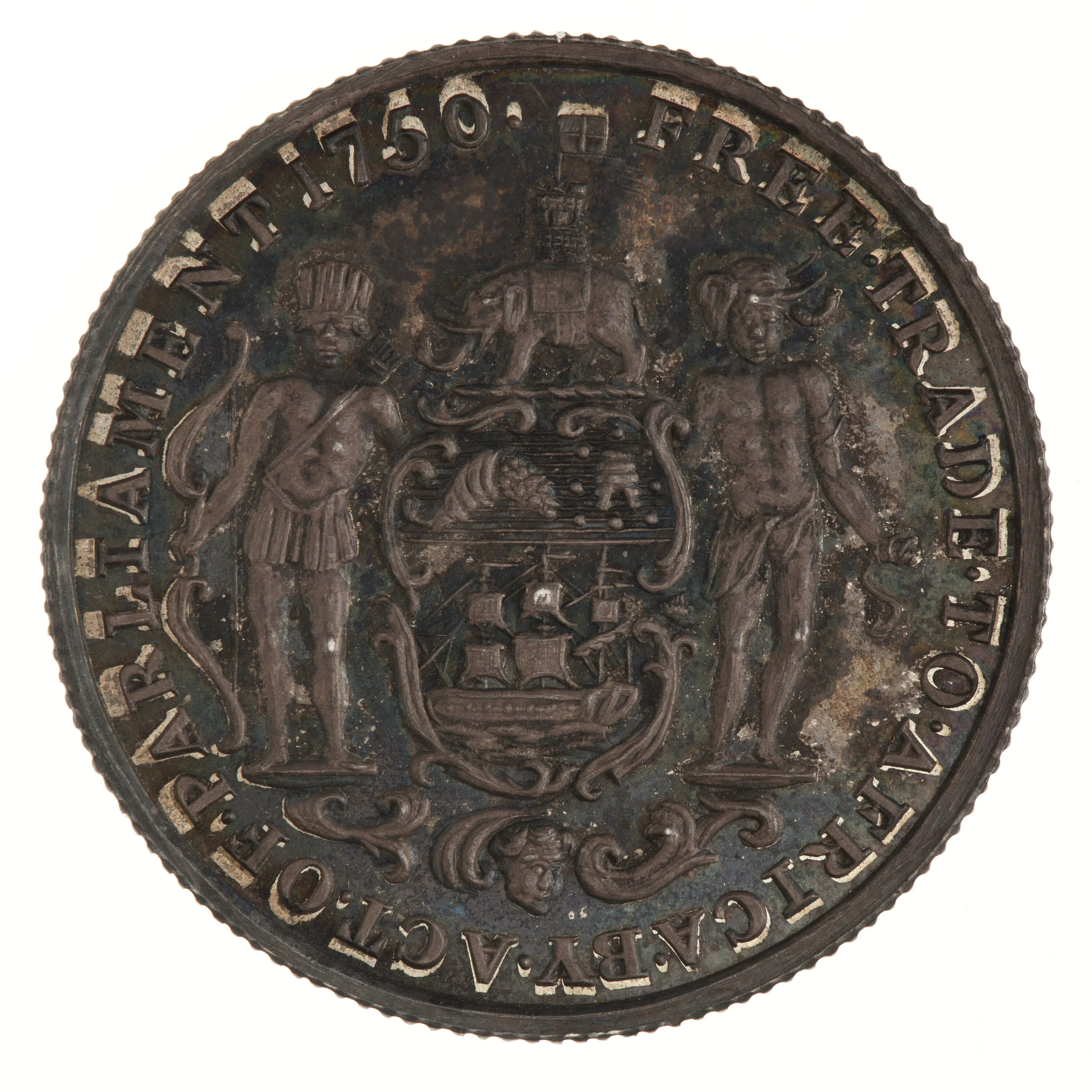
Crest with encircling motto.
Inscription:
FREE TRADE TO AFRICA BY ACT OF PARLIAMENT 1750
Script: Latin
Edge
Reeded
Categories
| Animal> Elephant |
| Person> Monarch |
| Symbol> Wreath |
| Object> Cold weapons |
| Transportation> Watercraft |
| Symbols> Coat of Arms |
| Symbol> Flag |
| Symbol> Cornucopia |
Mints
| Name | Mark |
|---|---|
| Heaton and Sons / The Mint Birmingham | — |
Mintings
| Year | Mint Mark | Mintage | Quality | Collection |
|---|---|---|---|---|
| 1818 | — | 2,170 | ||
| 1818 | — | — | Proof |
Historical background
In 1818, the Gold Coast (modern-day Ghana) was a complex economic landscape dominated by the Atlantic slave trade, though this was in its final decades due to growing abolitionist pressure. The official British presence was limited to a series of coastal forts and trading posts, most notably at Cape Coast Castle. The primary "currency" was not a formal, state-issued money but a system of commodity currencies and trade goods. Cowrie shells, imported in vast quantities from the Indian Ocean, served as a ubiquitous small-change currency for local market transactions, while gold dust—the region's namesake—remained the high-value standard for larger trade and wealth storage, often measured using small weights and scales.
Alongside these traditional forms, a major medium of exchange was the "trade ounce"—a notional unit based on the value of a troy ounce of gold, but physically represented by bundles of imported European goods. A merchant might price an item at "two ounces," meaning it was worth two units of goods such as iron bars, brass pans, firearms, gunpowder, textiles, or spirits. This system created a direct link between currency and imported merchandise, with exchange rates fluctuating based on supply, demand, and the relative bargaining power of African merchants and European coastal traders. The British did not circulate sterling coinage for local use, as their economic interests were purely mercantile.
This multi-currency environment reflected the region's role as a crossroads of international commerce and diverse African polities, including the declining Asante Empire, which exerted control over gold-producing areas and trade routes. The monetary situation was inherently unstable, prone to inflation (especially with cowries) and manipulation. It would begin to shift only later in the 19th century, as the slave trade ended and "legitimate commerce" in palm oil and timber expanded, eventually leading to the introduction of formal British colonial currency after the annexation of the Gold Coast in 1874.
Alongside these traditional forms, a major medium of exchange was the "trade ounce"—a notional unit based on the value of a troy ounce of gold, but physically represented by bundles of imported European goods. A merchant might price an item at "two ounces," meaning it was worth two units of goods such as iron bars, brass pans, firearms, gunpowder, textiles, or spirits. This system created a direct link between currency and imported merchandise, with exchange rates fluctuating based on supply, demand, and the relative bargaining power of African merchants and European coastal traders. The British did not circulate sterling coinage for local use, as their economic interests were purely mercantile.
This multi-currency environment reflected the region's role as a crossroads of international commerce and diverse African polities, including the declining Asante Empire, which exerted control over gold-producing areas and trade routes. The monetary situation was inherently unstable, prone to inflation (especially with cowries) and manipulation. It would begin to shift only later in the 19th century, as the slave trade ended and "legitimate commerce" in palm oil and timber expanded, eventually leading to the introduction of formal British colonial currency after the annexation of the Gold Coast in 1874.
💎 Extremely Rare