Logo Title
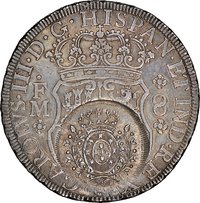
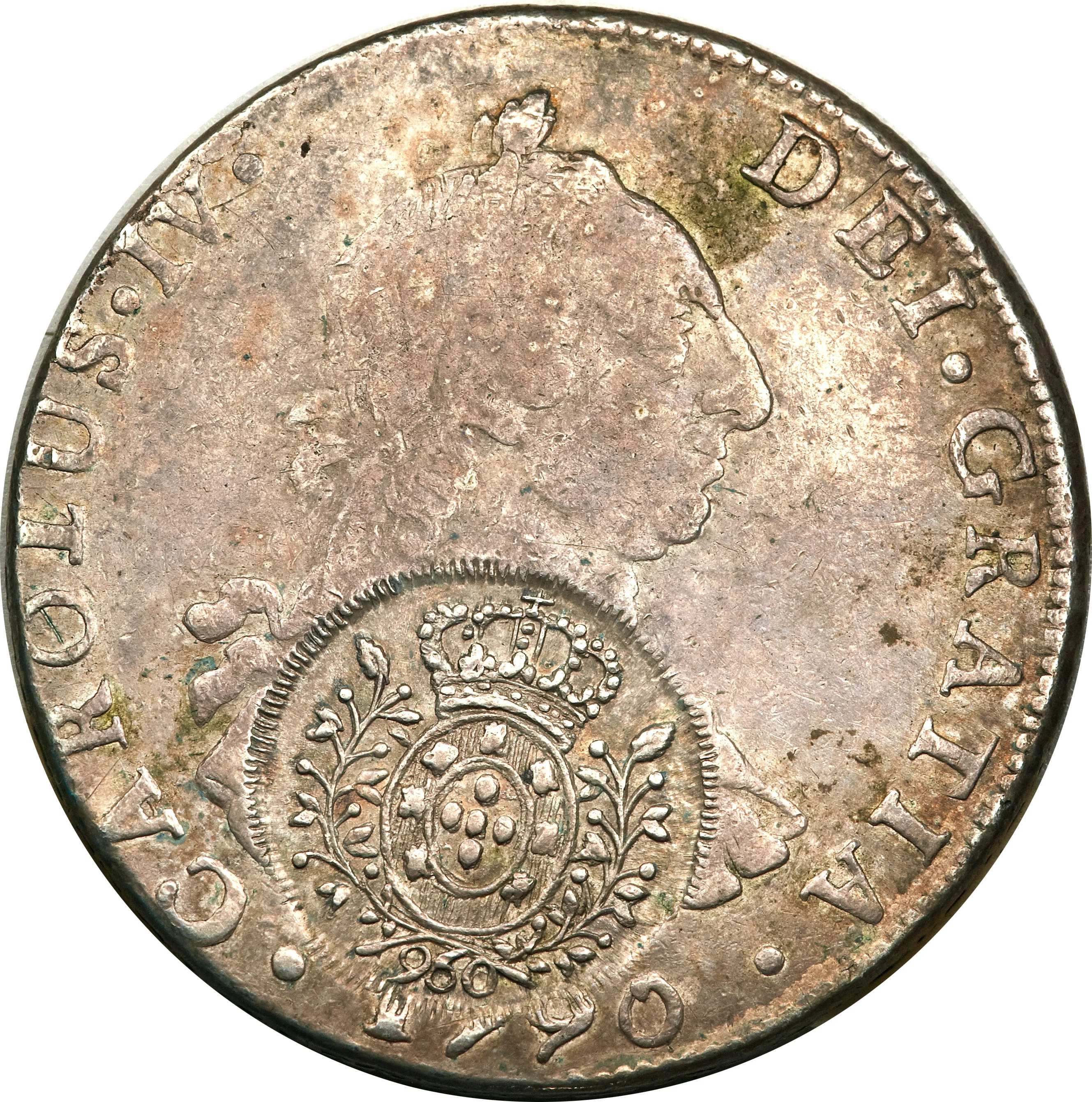
obverse
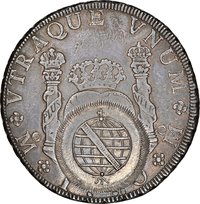
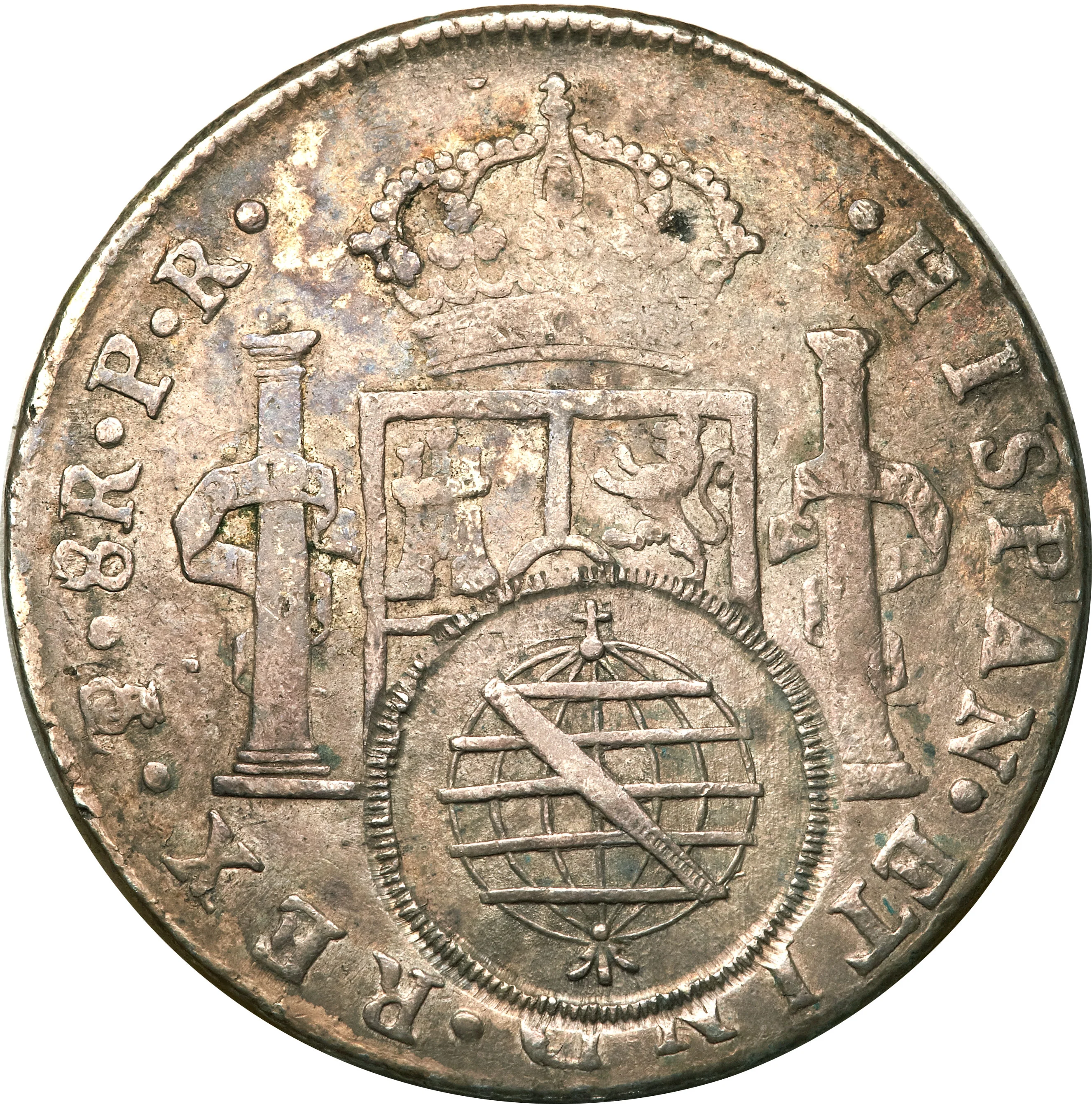
reverse
Heritage Auctions

960 Réis – State of Minas Gerais

Brazil
Context
Year: 1808
Country: Brazil Country flag
Ruler: John VI
Currency:
(1799—1942)
Demonetized: Yes
Material
Weight: 27.07 g
Silver weight: 24.25 g
Shape: Round
Composition: 89.6% Silver
Magnetic: No
Technique: Counterstamped
References
KM: #Click to copy to clipboard241
Numista: #36248
Value
Bullion value: $68.05

Obverse

Description:
Circular counterstamp with reeded border, crowned arms, and value on a Bolivia 8 Reales KM# 64 host coin.
Inscription:
960
Translation:
In the year of our Lord 960.
Script: Latin
Language: Latin

Reverse

Description:
Counterstamp: armillary sphere within reeded border.

Edge

Mintings

YearMint MarkMintageQualityCollection
1808

Historical background

In 1808, the currency situation in Minas Gerais was one of profound scarcity and complexity, a legacy of its colonial past as the heart of Brazil's gold cycle. The decline of gold production in the latter half of the 18th century had drained the captaincy of specie (gold and silver coin), while Portugal's mercantilist policies strictly controlled minting and the flow of currency. The local economy relied heavily on a cumbersome system of commodity money, with goods like tobacco, cotton, and even cane brandy (cachaça) serving as common mediums of exchange, alongside gold dust measured in oitavas and grãos. This informal and unstable system created significant challenges for commerce, taxation, and debt settlement.

The arrival of the Portuguese Royal Court in Rio de Janeiro earlier that year, fleeing Napoleon's invasion, introduced immediate but disruptive changes. The sudden need to finance the monarchy and its entourage led to increased fiscal pressure on Minas Gerais, exacerbating the currency shortage. Furthermore, the opening of Brazilian ports to "friendly nations" by Prince Regent Dom João began to reorient trade, but the benefits were not yet felt in the internal money supply. The captaincy remained caught between a decaying colonial monetary system and the nascent financial demands of a suddenly elevated colony serving as the seat of an empire.

Consequently, the monetary landscape was marked by contradiction: immense historical wealth tied to gold existed alongside a crippling daily lack of circulating coin. This scarcity stifled economic activity and fueled tensions between local elites, merchants, and the royal authorities. The year 1808 thus represents a pivotal moment, where Minas Gerais' deep-seated currency crisis persisted, even as the political events in Rio set in motion forces that would eventually lead to the establishment of the first Brazilian bank (the Banco do Brasil in 1808) and the slow, uneven integration of the region into a more formal monetary economy.
Legendary