

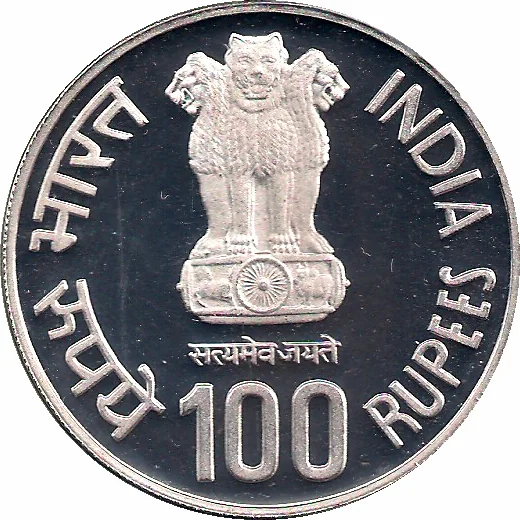
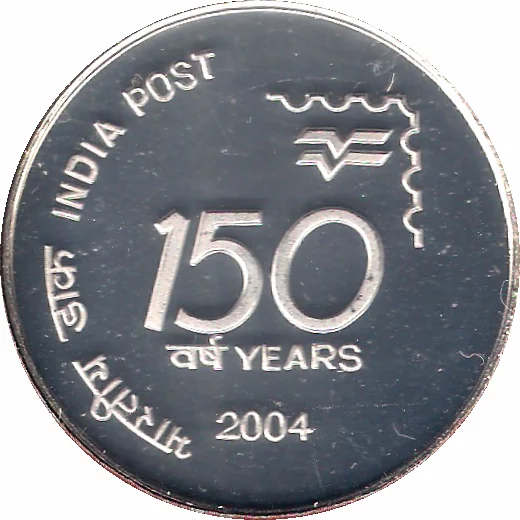
100 Rupees (India Post) – India
Non-circulating coins
Commemoration: 150 Years of India Post
India

Material

References
KM: #Click to copy to clipboard343
Numista: #36243
Value
Exchange value: 100 INR = $1.10
Bullion value: $50.85
Inflation-adjusted value: 389.89 INR
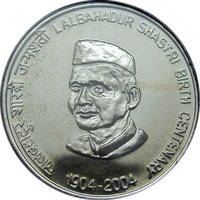
Obverse
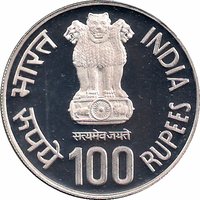
Reverse
Edge
Reeded
Mints
| Name | Mark |
|---|---|
| Kolkata / Calcutta / Murshidabad | — |
Mintings
| Year | Mint Mark | Mintage | Quality | Collection |
|---|---|---|---|---|
| 2004 | — | — | Proof | |
| 2004 | — | — | In sets |
Historical background
In 2004, India's currency situation was characterized by robust stability and growing strength, a significant turnaround from the pressures of the previous decade. The Indian Rupee (INR) was on a managed float, with the Reserve Bank of India (RBI) intervening to curb excessive volatility rather than targeting a specific exchange rate. This period followed the economic liberalization of the 1990s, and the currency benefited from strong macroeconomic fundamentals: GDP growth was accelerating towards 8%, foreign exchange reserves had swelled to a record $141 billion (a symbol of newfound resilience), and inflows from foreign institutional investors (FIIs) were substantial. The rupee traded in a relatively narrow band, appreciating gently against the US dollar, reflecting broad confidence in the economy.
This stability was underpinned by a conscious policy shift. After the balance of payments crisis of 1991, India had moved away from a fixed exchange rate regime. By 2004, the focus was on building reserves as a buffer against external shocks and gradually moving towards fuller capital account convertibility. The RBI's interventions were designed to prevent a rapid appreciation of the rupee that could hurt India's burgeoning export sector, particularly in IT services and textiles, which were key drivers of growth and employment. Inflation was moderate, and interest rates were relatively stable, providing a supportive environment for the currency.
However, the landscape was not without underlying challenges. The surge in capital inflows, while boosting reserves, also created complexities for monetary management, leading to concerns about potential asset bubbles and sterilization costs for the RBI. Furthermore, the fiscal deficit remained high, and global oil prices were rising, posing a persistent threat to the current account and inflationary pressures. Thus, in 2004, the Indian rupee presented a picture of calibrated strength, but one that required careful stewardship to navigate the dual objectives of maintaining export competitiveness and managing the inflationary impact of a strengthening currency in a booming economy.
This stability was underpinned by a conscious policy shift. After the balance of payments crisis of 1991, India had moved away from a fixed exchange rate regime. By 2004, the focus was on building reserves as a buffer against external shocks and gradually moving towards fuller capital account convertibility. The RBI's interventions were designed to prevent a rapid appreciation of the rupee that could hurt India's burgeoning export sector, particularly in IT services and textiles, which were key drivers of growth and employment. Inflation was moderate, and interest rates were relatively stable, providing a supportive environment for the currency.
However, the landscape was not without underlying challenges. The surge in capital inflows, while boosting reserves, also created complexities for monetary management, leading to concerns about potential asset bubbles and sterilization costs for the RBI. Furthermore, the fiscal deficit remained high, and global oil prices were rising, posing a persistent threat to the current account and inflationary pressures. Thus, in 2004, the Indian rupee presented a picture of calibrated strength, but one that required careful stewardship to navigate the dual objectives of maintaining export competitiveness and managing the inflationary impact of a strengthening currency in a booming economy.
⭐ Rare