

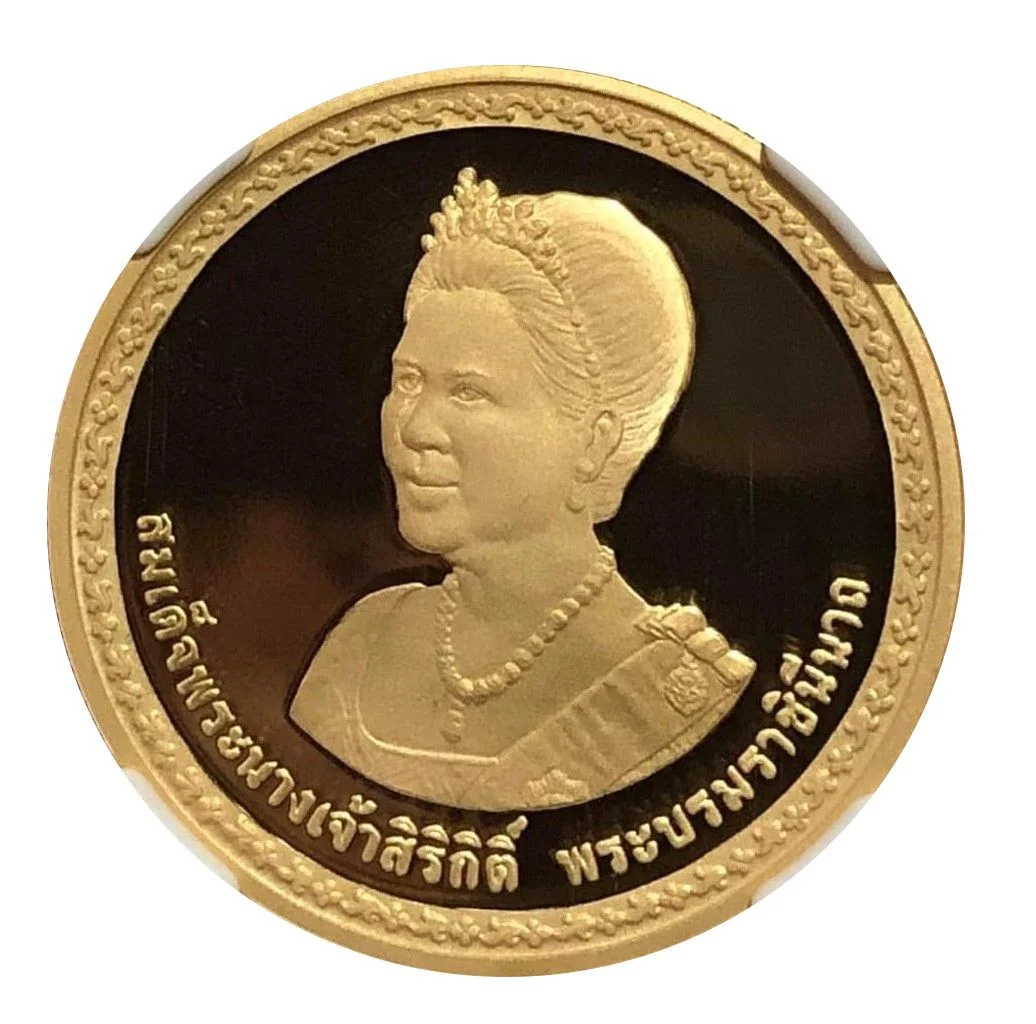
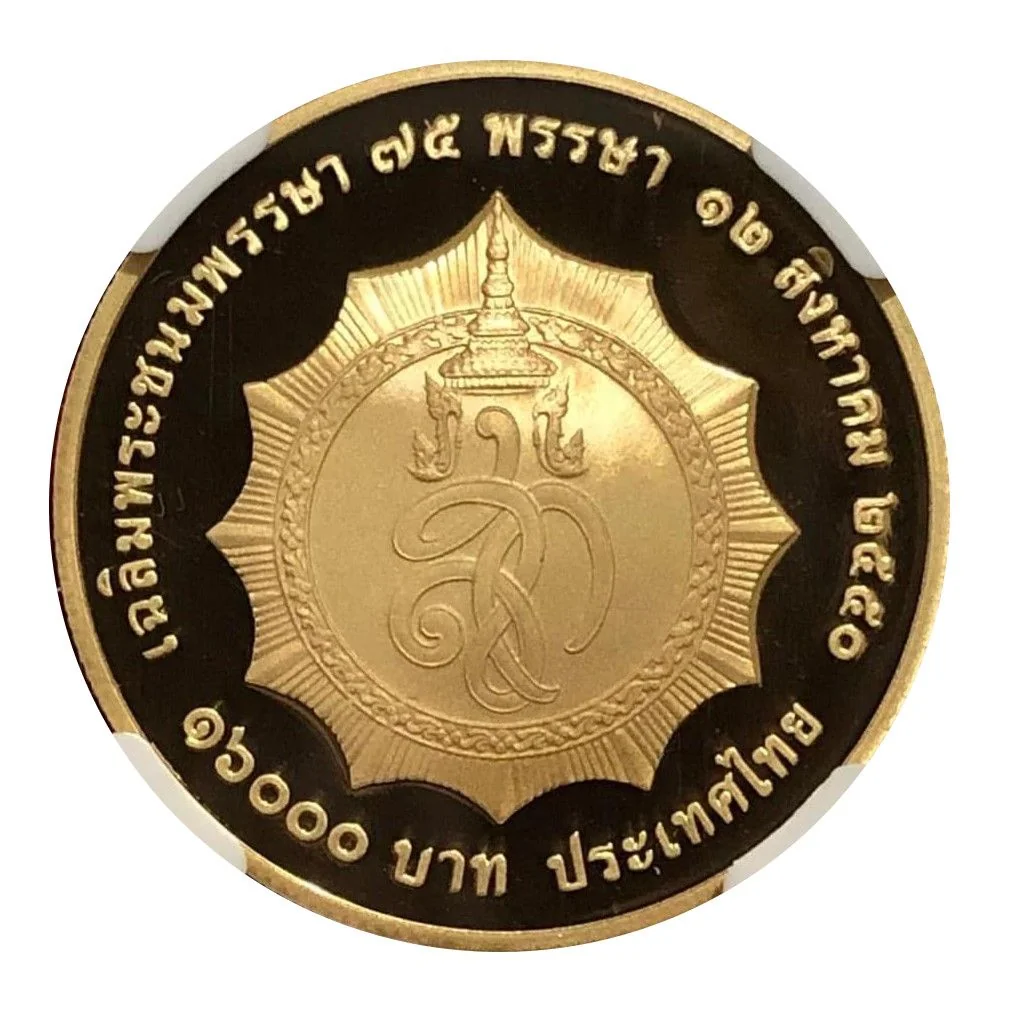
16000 bahts (Queen's Birthday) – Thailand
Add to wishlist
Non-circulating coins
Commemoration: Queen's 75th Birthday
Thailand
Context
Year: 2008
Thai Year:: 2550
Issuer: Thailand
Ruler: Bhumibol Adulyadej
Currency:
(since 1897)
Total mintage: 7,000
Material
References
Numista: #362242
Value
Exchange value: 16000 THB
Bullion value: $2071.13
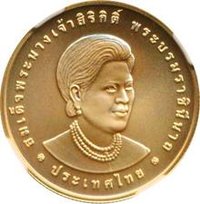
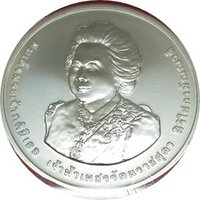
Obverse
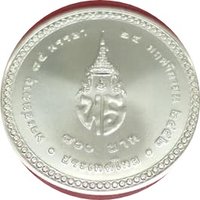
Reverse
Edge
Categories
| Symbols> Monogram |
| Event> Birth anniversary |
Mintings
| Year | Mint Mark | Mintage | Quality | Collection |
|---|---|---|---|---|
| 2008 | — | 5,000 | ||
| 2008 | — | 2,000 | Proof |
Historical background
In 2008, Thailand's currency, the baht (THB), experienced significant volatility and appreciation pressure, largely driven by global financial turbulence and domestic political instability. The year began with the baht continuing a strong rally that started in 2007, reaching a decade-high of around 29.5 baht per US dollar in March. This strength was fueled by robust export growth, persistent foreign capital inflows into the Thai stock and bond markets, and broad US dollar weakness. However, this appreciation posed a serious threat to Thailand's export-dependent economy, leading the Bank of Thailand (BOT) to intervene heavily in the foreign exchange market to curb the baht's rise and protect the competitiveness of Thai exports.
The situation reversed dramatically in the second half of the year following the escalation of the global financial crisis after the collapse of Lehman Brothers. As risk aversion spiked globally, foreign investors began a rapid withdrawal of capital from emerging markets like Thailand. Concurrently, the country was plunged into a profound domestic political crisis, with the "Yellow Shirt" People's Alliance for Democracy (PAD) occupying Government House in August and Bangkok's airports in November, paralyzing tourism and business. This toxic combination of global credit freezing and intense local political unrest triggered a sharp capital flight, causing the baht to depreciate rapidly, losing over 10% of its value against the dollar in the final quarter alone.
Throughout this period, the Bank of Thailand's policy was challenged by these opposing forces. Initially focused on sterilization to manage inflows and curb baht strength, it later shifted to providing liquidity and cutting interest rates (from 3.75% to 2.75% by year-end) to counter the global economic slowdown. The baht's wild swing from a decade-high to a two-year low within a single year underscored the extreme vulnerability of an emerging market currency to both external shocks and internal political fractures, setting the stage for economic contraction in Thailand in 2009.
The situation reversed dramatically in the second half of the year following the escalation of the global financial crisis after the collapse of Lehman Brothers. As risk aversion spiked globally, foreign investors began a rapid withdrawal of capital from emerging markets like Thailand. Concurrently, the country was plunged into a profound domestic political crisis, with the "Yellow Shirt" People's Alliance for Democracy (PAD) occupying Government House in August and Bangkok's airports in November, paralyzing tourism and business. This toxic combination of global credit freezing and intense local political unrest triggered a sharp capital flight, causing the baht to depreciate rapidly, losing over 10% of its value against the dollar in the final quarter alone.
Throughout this period, the Bank of Thailand's policy was challenged by these opposing forces. Initially focused on sterilization to manage inflows and curb baht strength, it later shifted to providing liquidity and cutting interest rates (from 3.75% to 2.75% by year-end) to counter the global economic slowdown. The baht's wild swing from a decade-high to a two-year low within a single year underscored the extreme vulnerability of an emerging market currency to both external shocks and internal political fractures, setting the stage for economic contraction in Thailand in 2009.

✨ Legendary