

300 cruzeiros (Independence of Brazil) – Brazil
Add to wishlist
Non-circulating coins
Commemoration: 150th Anniversary of the Independence of Brazil
Brazil
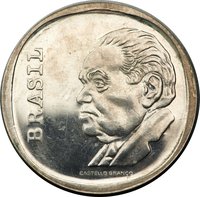
Obverse
Description:
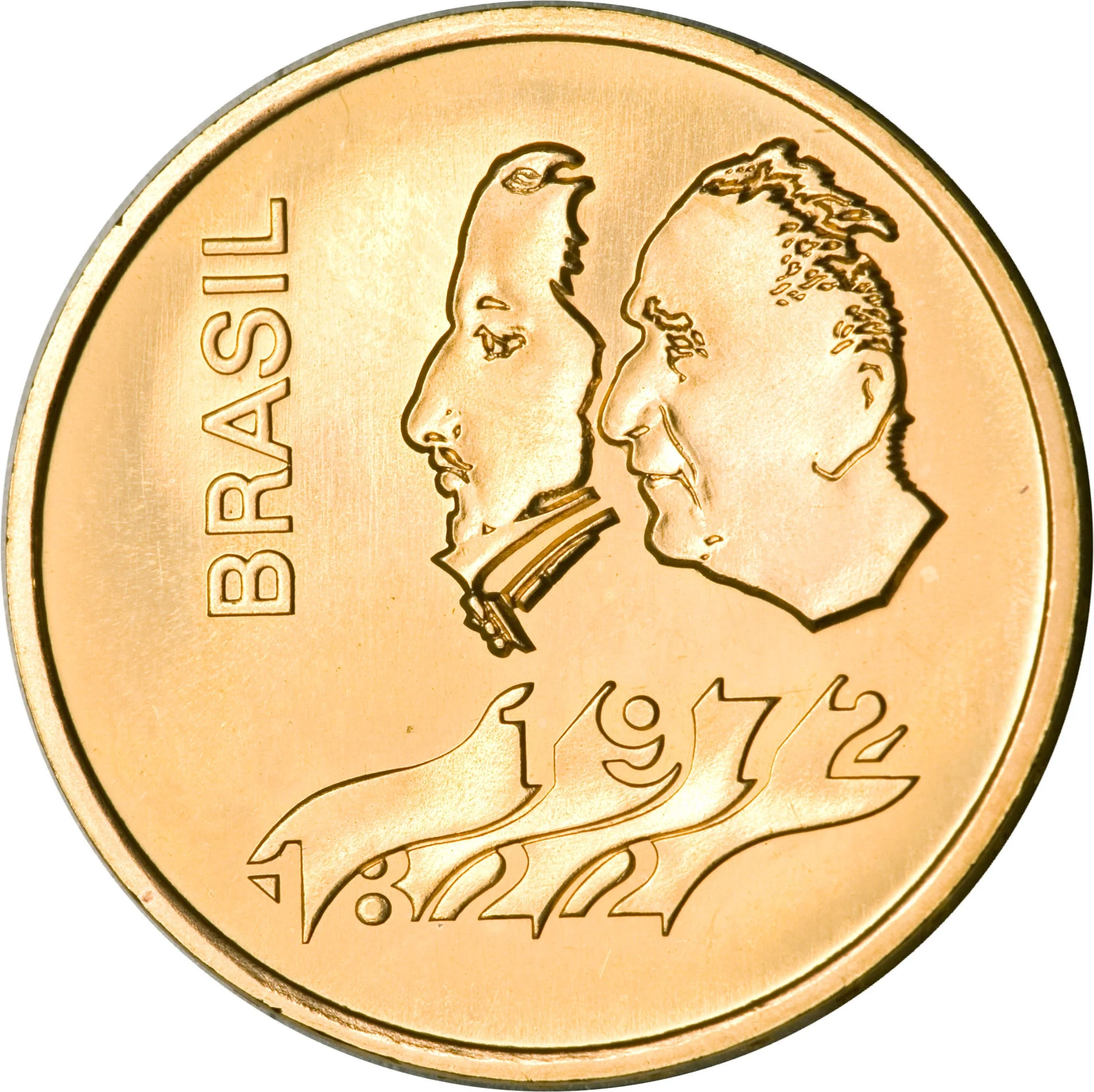
Pedro I and Medici left, dates below.
Inscription:
BRASIL
1972
1822
1972
1822
Translation:
BRASIL
1972
1822
1972
1822
Script: Latin
Languages: Portuguese, English
Engraver: Raymond Joly
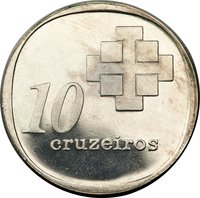
Reverse
Description:
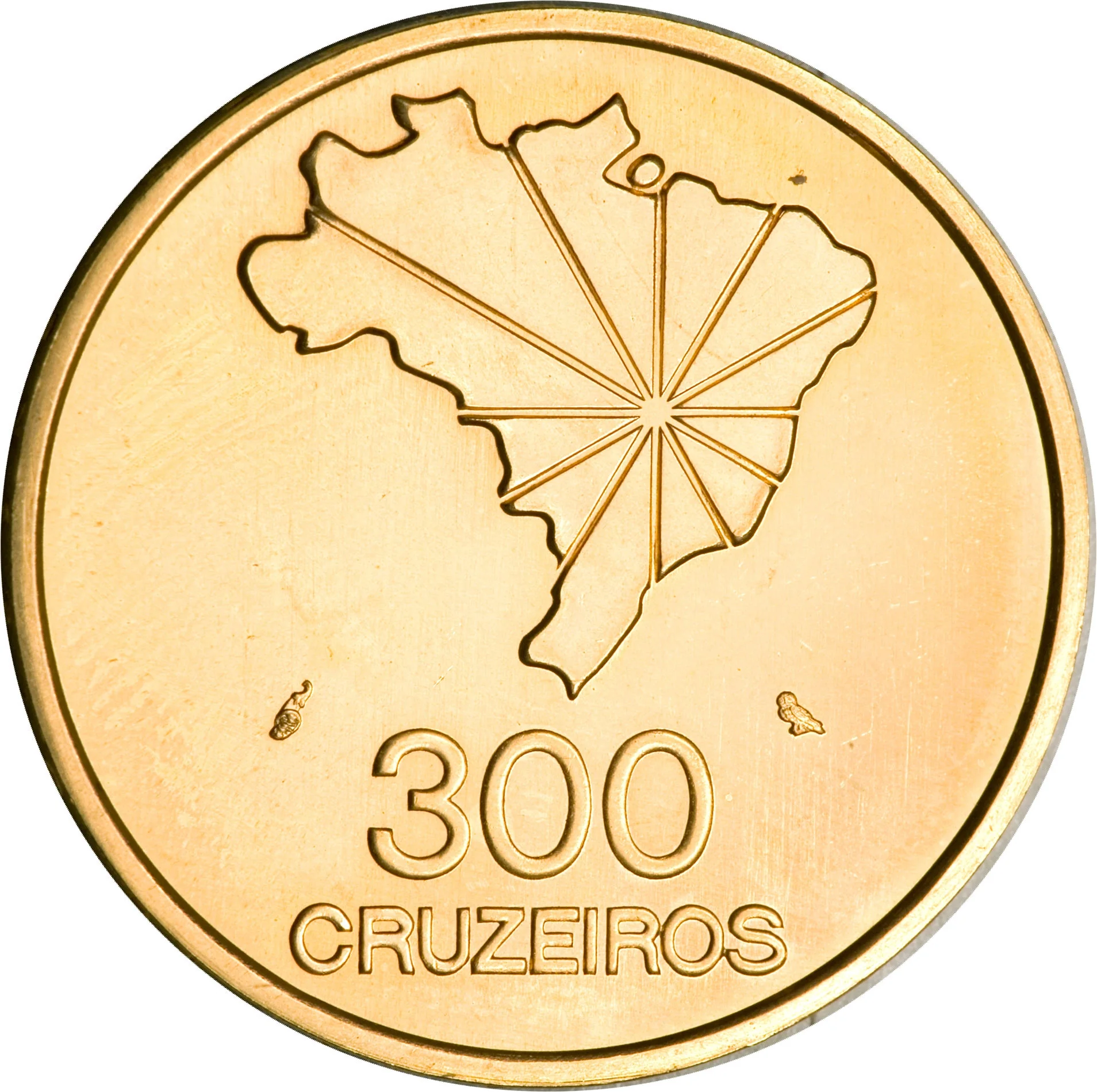
Brazil's outline overlaid on its value.
Inscription:
300
CRUZEIROS
CRUZEIROS
Script: Latin
Engraver: Raymond Joly
Edge
Lettered
Legend:
SESQUICENTENARIO DA INDEPENDENCIA
Categories
| Person> Politician |
| Map |
Mints
| Name | Mark |
|---|---|
| Monnaie de Paris | — |
Mintings
| Year | Mint Mark | Mintage | Quality | Collection |
|---|---|---|---|---|
| 1972 | — | 50,000 |
Historical background
In 1972, Brazil was operating under the cruzeiro (Cr$) as its national currency, a system that had been in place since 1942. The country was in the midst of the "Brazilian Miracle," a period of rapid economic growth averaging over 10% annually, fueled by an authoritarian military government's aggressive industrialization and infrastructure policies. However, this growth came with underlying inflationary pressures and a complex web of monetary correction (correção monetária) mechanisms, which indexed prices, wages, and financial contracts to past inflation in an attempt to neutralize its distorting effects.
The exchange rate regime was a fixed, but frequently adjusted, crawling peg managed by the Brazilian Central Bank. Officially, the cruzeiro was pegged to the US dollar, but the government would implement periodic mini-devaluations, often on a pre-announced schedule. This policy, known as the minidesvalorizações, aimed to maintain export competitiveness by gradually offsetting the difference between Brazil's high domestic inflation and lower international inflation, rather than facing a sudden, large devaluation. In practice, the currency was steadily losing value against the dollar to support the export-oriented growth model.
Despite the economic boom, the currency situation was inherently fragile. The indexing system created an inertia that institutionalized and validated high inflation (which was approximately 15% in 1972, a rate considered manageable at the time but indicative of deeper issues). Furthermore, growth was heavily reliant on foreign borrowing to finance imports and large-scale projects, increasing external debt. The stability of the cruzeiro in 1972 was thus an artificially managed one, masking long-term vulnerabilities that would contribute to the debt crises and hyperinflation of the following decades.
The exchange rate regime was a fixed, but frequently adjusted, crawling peg managed by the Brazilian Central Bank. Officially, the cruzeiro was pegged to the US dollar, but the government would implement periodic mini-devaluations, often on a pre-announced schedule. This policy, known as the minidesvalorizações, aimed to maintain export competitiveness by gradually offsetting the difference between Brazil's high domestic inflation and lower international inflation, rather than facing a sudden, large devaluation. In practice, the currency was steadily losing value against the dollar to support the export-oriented growth model.
Despite the economic boom, the currency situation was inherently fragile. The indexing system created an inertia that institutionalized and validated high inflation (which was approximately 15% in 1972, a rate considered manageable at the time but indicative of deeper issues). Furthermore, growth was heavily reliant on foreign borrowing to finance imports and large-scale projects, increasing external debt. The stability of the cruzeiro in 1972 was thus an artificially managed one, masking long-term vulnerabilities that would contribute to the debt crises and hyperinflation of the following decades.
💎 Very Rare