

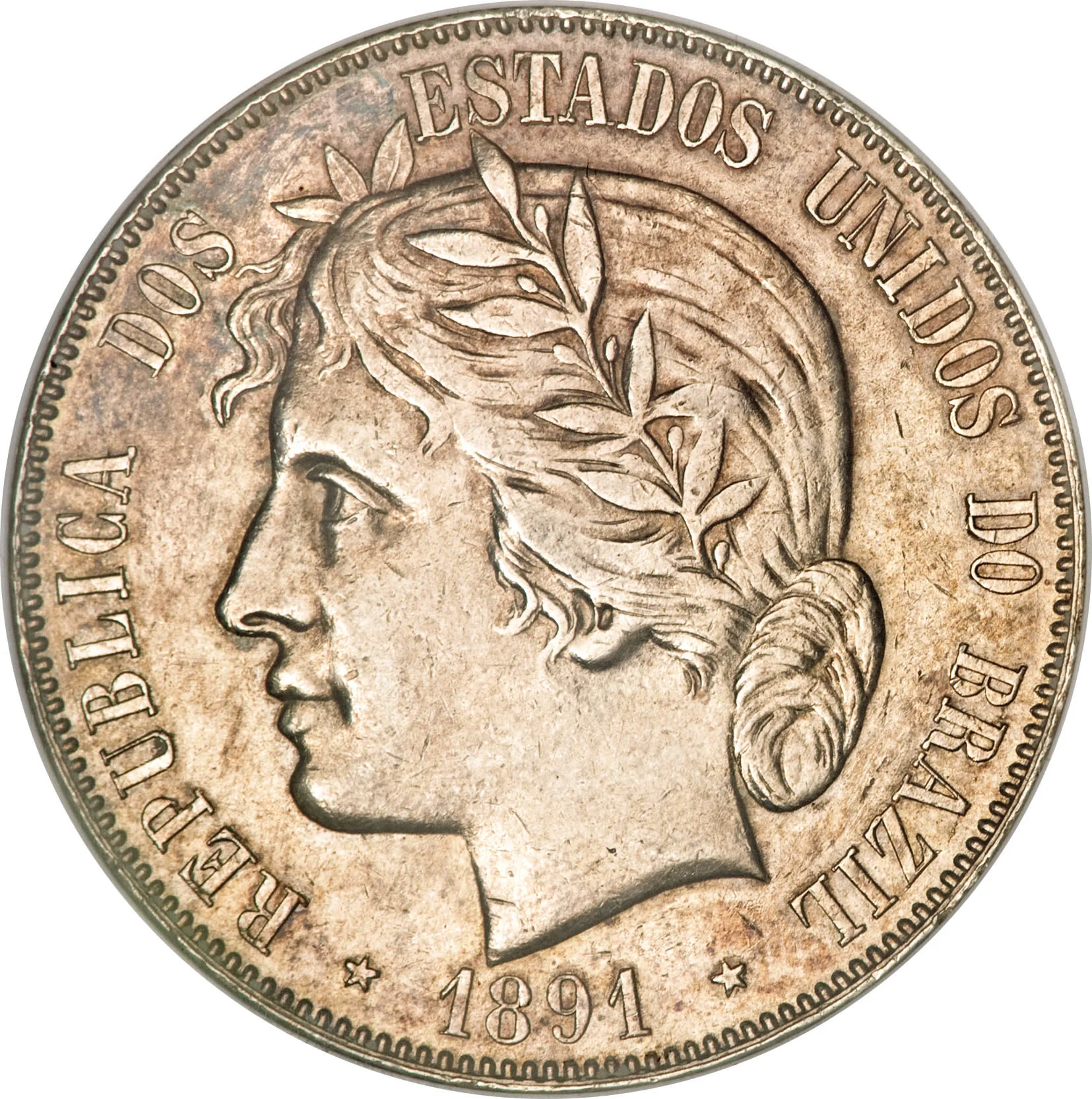
Obverse
Description:
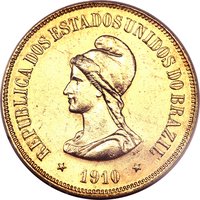
Laureate facing left.
Inscription:
REPUBLICA DOS ESTADOS UNIDOS DO BRAZIL
1891
1891
Translation:
REPUBLIC OF THE UNITED STATES OF BRAZIL
1891
1891
Script: Latin
Language: Portuguese
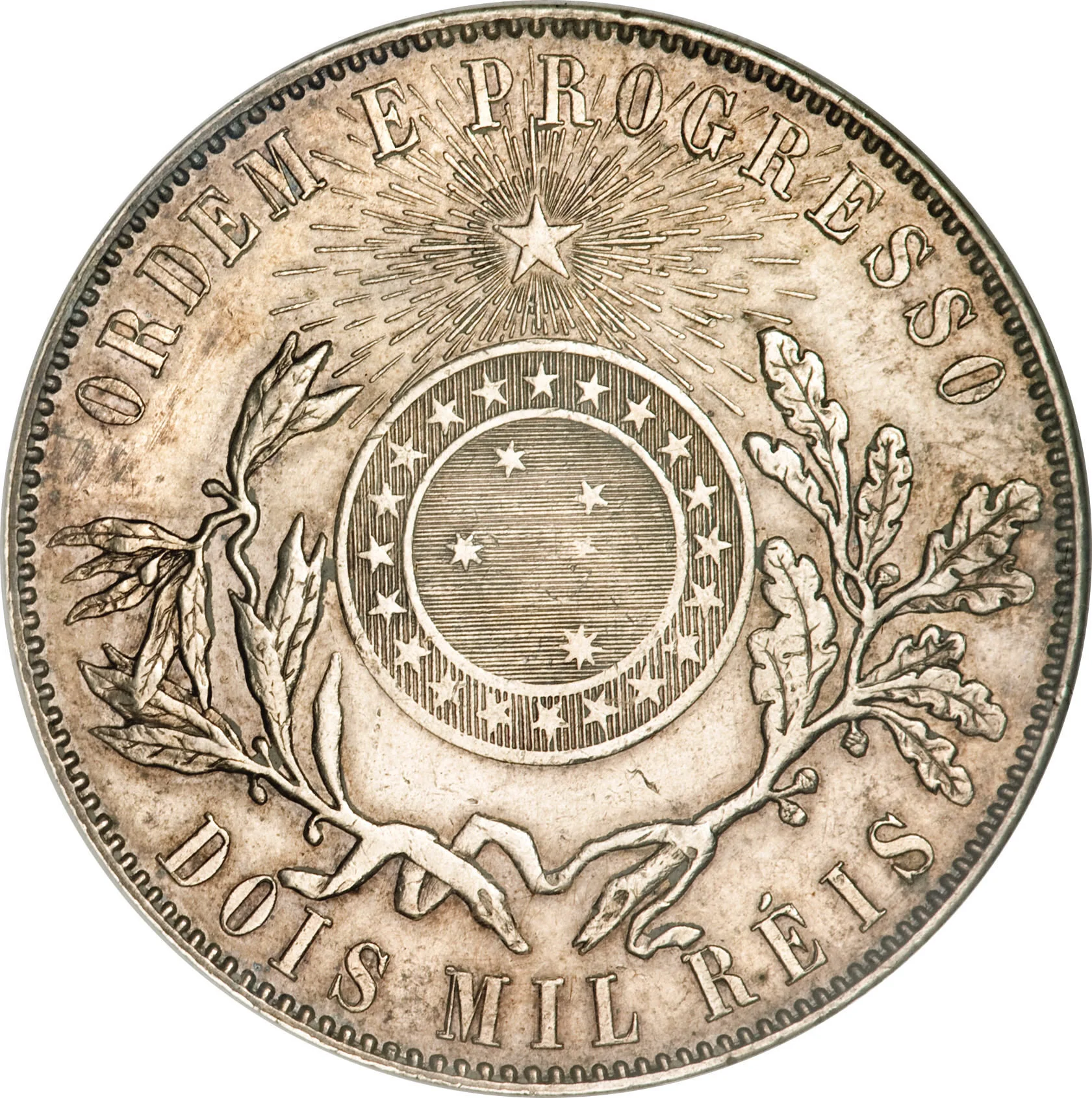
Reverse
Description:
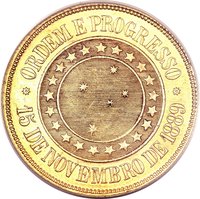
Circle with stars above sprays, cross at top.
Inscription:
ORDEM E PROGRESSO
DOIS MIL REIS
DOIS MIL REIS
Script: Latin
Edge
Mintings
| Year | Mint Mark | Mintage | Quality | Collection |
|---|---|---|---|---|
| 1891 | — | 40,000 | ||
| 1896 | — | 10,000 | ||
| 1897 | — | 160,000 |
Historical background
In 1891, Brazil was grappling with the severe economic and monetary consequences of the late imperial period and the recent transition to a republic. The nation operated under a deeply unstable currency system, primarily relying on unbacked paper money known as papel-moeda. This inflation-prone fiat currency had been issued extensively since the 1870s to finance deficits, particularly during the Paraguayan War and to support the coffee economy. The result was a chronic and worsening depreciation of the milréis against gold-backed foreign currencies, leading to high inflation, exchange rate volatility, and a loss of public confidence in the monetary system.
The newly promulgated Republican Constitution of 1891 formally established financial decentralization, granting individual states the right to secure foreign loans and issue their own currency through state-chartered banks. This fragmentation of monetary authority, especially in powerful coffee-producing states like São Paulo, led to a dramatic expansion of the money supply. The lack of a central bank or any effective national coordination meant monetary policy was essentially non-existent, exacerbating the inflationary spiral. The federal government, itself fiscally weak and reliant on further paper money emissions, had little power to impose discipline.
Consequently, the currency situation in 1891 was one of profound disorder, setting the stage for the severe financial crises of the 1890s, most notably the encilhamento. This speculative boom and bust, which peaked just before 1891, was fueled by easy credit and rampant stock market speculation, leaving a legacy of corporate failures and deepened mistrust in the financial system. The year thus represents a pivotal moment of monetary fragmentation and instability, where the unresolved tensions between regional financial power and the need for national monetary stability would define Brazil's economic challenges for the next decade.
The newly promulgated Republican Constitution of 1891 formally established financial decentralization, granting individual states the right to secure foreign loans and issue their own currency through state-chartered banks. This fragmentation of monetary authority, especially in powerful coffee-producing states like São Paulo, led to a dramatic expansion of the money supply. The lack of a central bank or any effective national coordination meant monetary policy was essentially non-existent, exacerbating the inflationary spiral. The federal government, itself fiscally weak and reliant on further paper money emissions, had little power to impose discipline.
Consequently, the currency situation in 1891 was one of profound disorder, setting the stage for the severe financial crises of the 1890s, most notably the encilhamento. This speculative boom and bust, which peaked just before 1891, was fueled by easy credit and rampant stock market speculation, leaving a legacy of corporate failures and deepened mistrust in the financial system. The year thus represents a pivotal moment of monetary fragmentation and instability, where the unresolved tensions between regional financial power and the need for national monetary stability would define Brazil's economic challenges for the next decade.
💎 Very Rare