

1000 dinars (Dositej Obradović's arrival to Serbia) – Serbia
Add to wishlist
Non-circulating coins
Commemoration: Bicentenary of Dositej Obradović’s arrival to Serbia
Serbia
Context
Material
References
KM: #
Numista: #36049
Value
Exchange value: 1000 RSD
Bullion value: $29.41
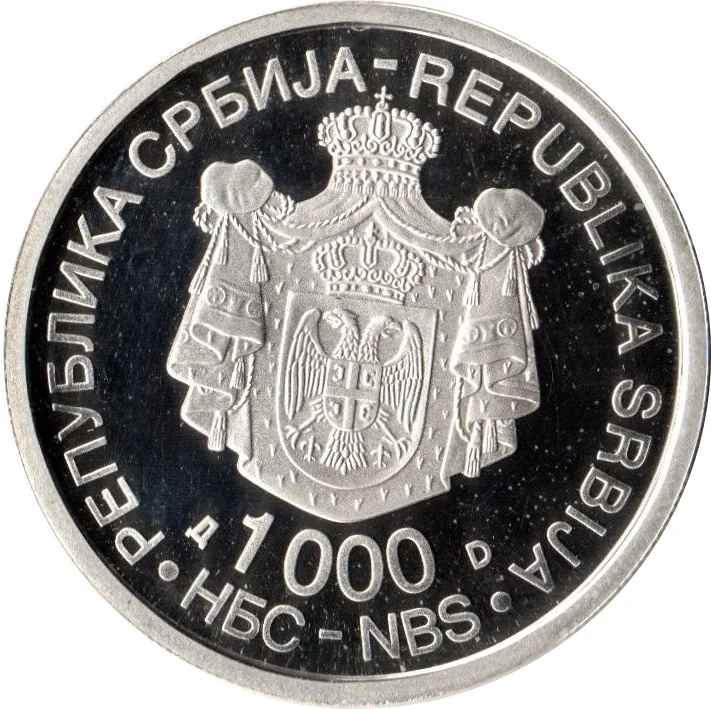
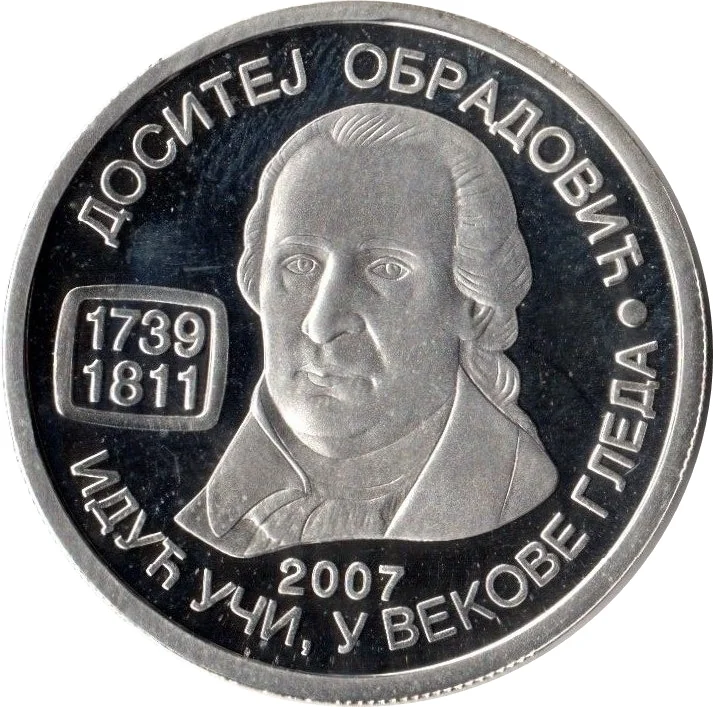
Reverse
Description:
IDUC: UCI, U VEKOVE GLEDA
Inscription:
DOSITEJ OBRADOVIC
1739-1811
2007
IDUC UCI, U VEKOVE GLEDA
1739-1811
2007
IDUC UCI, U VEKOVE GLEDA
Script: Cyrillic
Edge
Mints
| Name | Mark |
|---|---|
| Belgrade | — |
Mintings
| Year | Mint Mark | Mintage | Quality | Collection |
|---|---|---|---|---|
| 2007 | — | 1,000 | Proof |
Historical background
In 2007, Serbia's currency situation was characterized by a managed float of the Serbian dinar (RSD) within a climate of relative macroeconomic stability, following the turbulence of the 1990s and early 2000s. The National Bank of Serbia (NBS) operated an inflation-targeting regime, with the primary goal of achieving and maintaining price stability. The dinar's exchange rate was not pegged but was actively influenced by the central bank's interventions in the foreign exchange market to curb excessive volatility, particularly against the euro, which served as the key reference currency for trade and savings.
This period followed a significant stabilization program initiated earlier in the decade, which had successfully suppressed hyperinflation. By 2007, inflation was under control but remained a persistent concern, ending the year at approximately 6.8%. The NBS utilized a combination of interest rate policy and strategic foreign currency purchases to build up reserves and sterilize excess liquidity, aiming to strengthen the currency and anchor inflationary expectations. Economic growth was robust, exceeding 6% that year, driven by foreign direct investment and credit growth, which increased demand for dinars.
However, underlying vulnerabilities were present. The economy exhibited a large and growing current account deficit, financed largely by capital inflows, making the dinar sensitive to shifts in investor sentiment. Furthermore, the widespread practice of "euroization," where many loans, savings, and major transactions were conducted in euros, limited the effectiveness of monetary policy and created a dual-currency environment. Thus, while 2007 represented a year of surface-level stability for the dinar, it was a stability carefully managed by the central bank amidst significant structural challenges in the broader economy.
This period followed a significant stabilization program initiated earlier in the decade, which had successfully suppressed hyperinflation. By 2007, inflation was under control but remained a persistent concern, ending the year at approximately 6.8%. The NBS utilized a combination of interest rate policy and strategic foreign currency purchases to build up reserves and sterilize excess liquidity, aiming to strengthen the currency and anchor inflationary expectations. Economic growth was robust, exceeding 6% that year, driven by foreign direct investment and credit growth, which increased demand for dinars.
However, underlying vulnerabilities were present. The economy exhibited a large and growing current account deficit, financed largely by capital inflows, making the dinar sensitive to shifts in investor sentiment. Furthermore, the widespread practice of "euroization," where many loans, savings, and major transactions were conducted in euros, limited the effectiveness of monetary policy and created a dual-currency environment. Thus, while 2007 represented a year of surface-level stability for the dinar, it was a stability carefully managed by the central bank amidst significant structural challenges in the broader economy.
💎 Extremely Rare