

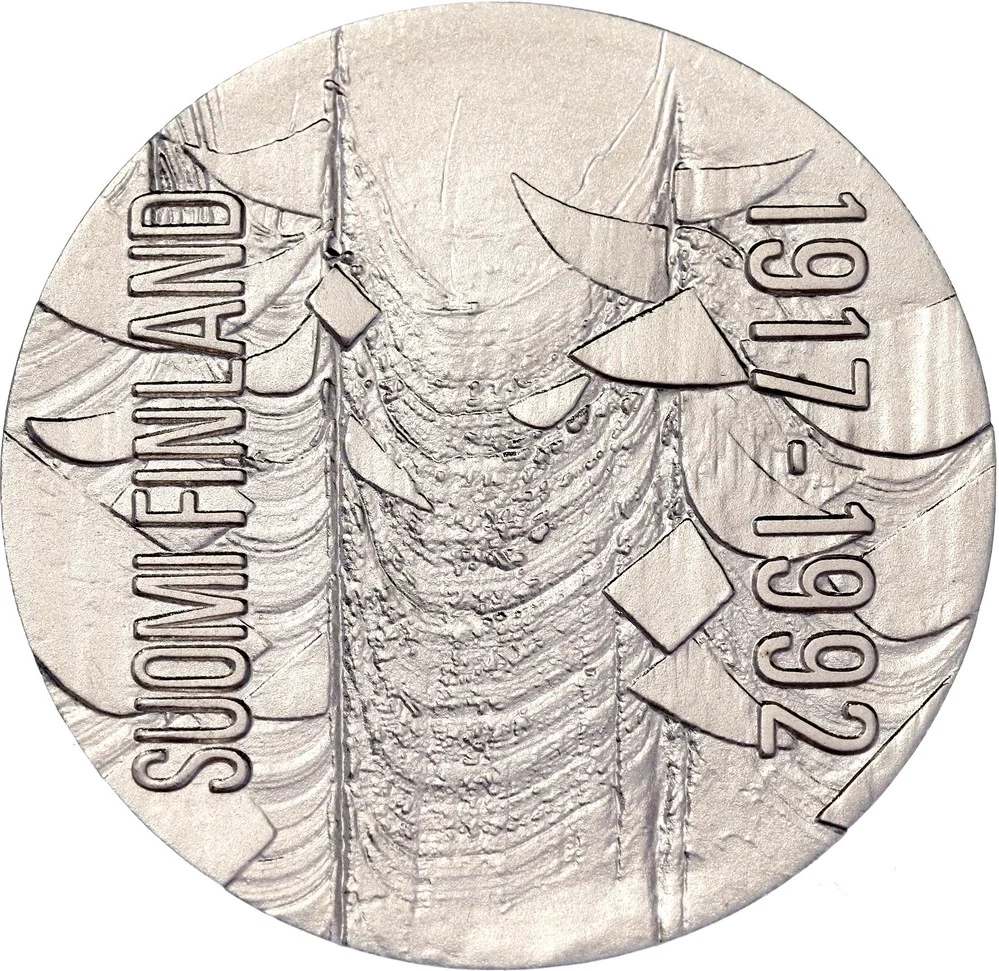
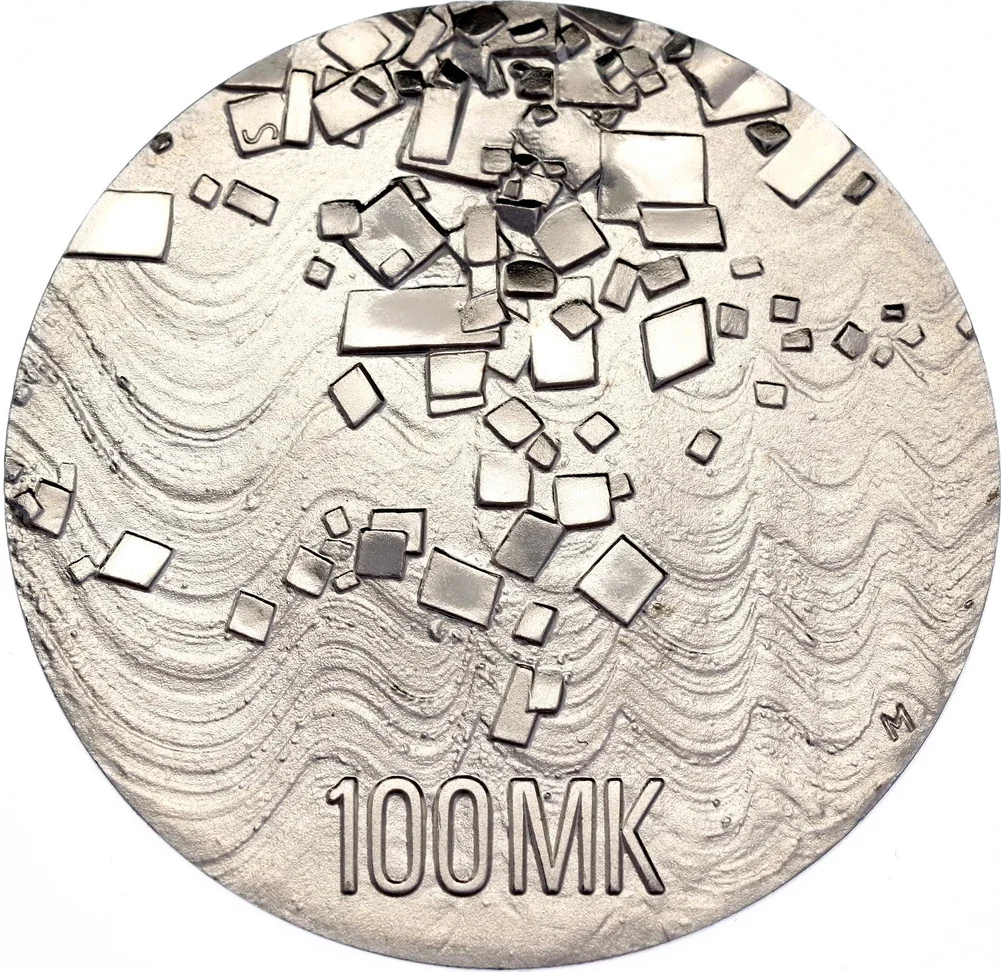
100 Markkaa (Independence) – Finland
Non-circulating coins
Commemoration: 75th Anniversary of Independence
Finland

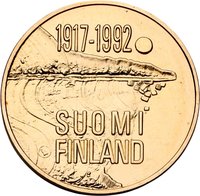
Obverse
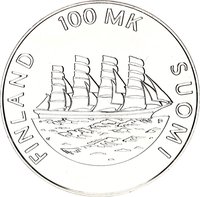
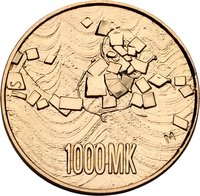
Reverse
Edge
Plain
Categories
| Event> Independence |
Mints
| Name | Mark |
|---|---|
| Mint of Finland | — |
Mintings
| Year | Mint Mark | Mintage | Quality | Collection |
|---|---|---|---|---|
| 1992 | S | 300,000 |
Historical background
In 1992, Finland was in the throes of a severe economic and banking crisis, precipitated by the collapse of the Soviet Union—a major trading partner—and a domestic credit bubble. The Finnish markka (FIM) was under intense speculative pressure as part of the European Exchange Rate Mechanism (ERM), which aimed to stabilize European currencies. To defend its fixed exchange rate, the Bank of Finland was forced to raise key interest rates to unprecedented levels, with the marginal lending rate peaking at an astonishing 17% in September 1992. This drastic measure, however, failed to stem capital flight and placed unbearable strain on an economy already plunging into a deep recession.
Consequently, Finland was forced to abandon its fixed exchange rate policy. On September 8, 1992, the markka was allowed to float freely, leading to an immediate and sharp devaluation of roughly 15%. This decision, while painful, was a necessary step to regain control over monetary policy. The devaluation eventually helped restore export competitiveness, which proved vital for the subsequent recovery, particularly for the forestry and technology sectors. The crisis marked the definitive end of the era of fixed exchange rates for Finland and set the stage for its later adoption of the euro.
The currency turmoil of 1992 was a central chapter in Finland's worst economic downturn since World War II, with GDP contracting significantly and unemployment soaring. The experience profoundly shaped national economic policy, leading to stringent banking sector reforms, fiscal consolidation, and a renewed political commitment to European integration. This path ultimately paved the way for Finland's entry into the European Union in 1995 and its membership in the eurozone at its inception in 1999.
Consequently, Finland was forced to abandon its fixed exchange rate policy. On September 8, 1992, the markka was allowed to float freely, leading to an immediate and sharp devaluation of roughly 15%. This decision, while painful, was a necessary step to regain control over monetary policy. The devaluation eventually helped restore export competitiveness, which proved vital for the subsequent recovery, particularly for the forestry and technology sectors. The crisis marked the definitive end of the era of fixed exchange rates for Finland and set the stage for its later adoption of the euro.
The currency turmoil of 1992 was a central chapter in Finland's worst economic downturn since World War II, with GDP contracting significantly and unemployment soaring. The experience profoundly shaped national economic policy, leading to stringent banking sector reforms, fiscal consolidation, and a renewed political commitment to European integration. This path ultimately paved the way for Finland's entry into the European Union in 1995 and its membership in the eurozone at its inception in 1999.
🌟 Uncommon