

100 rupees – India
Add to wishlist
Non-circulating coins
Commemoration: 19th Commonwealth Games in India
India
Material

References
KM: #
Numista: #35998
Value
Exchange value: 100 INR
Bullion value: $43.90
Inflation-adjusted value: 266.56 INR
Obverse
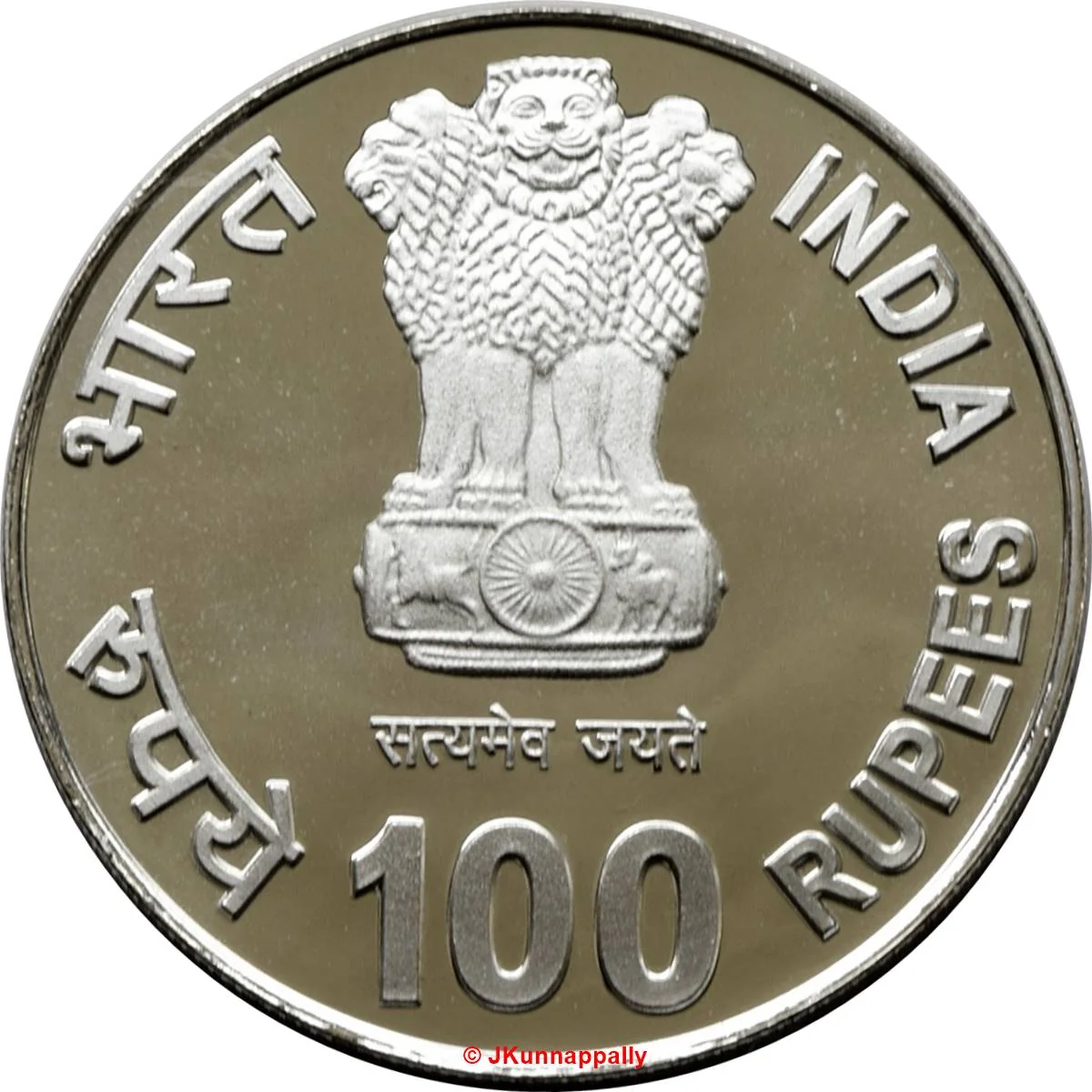
Reverse
Description:
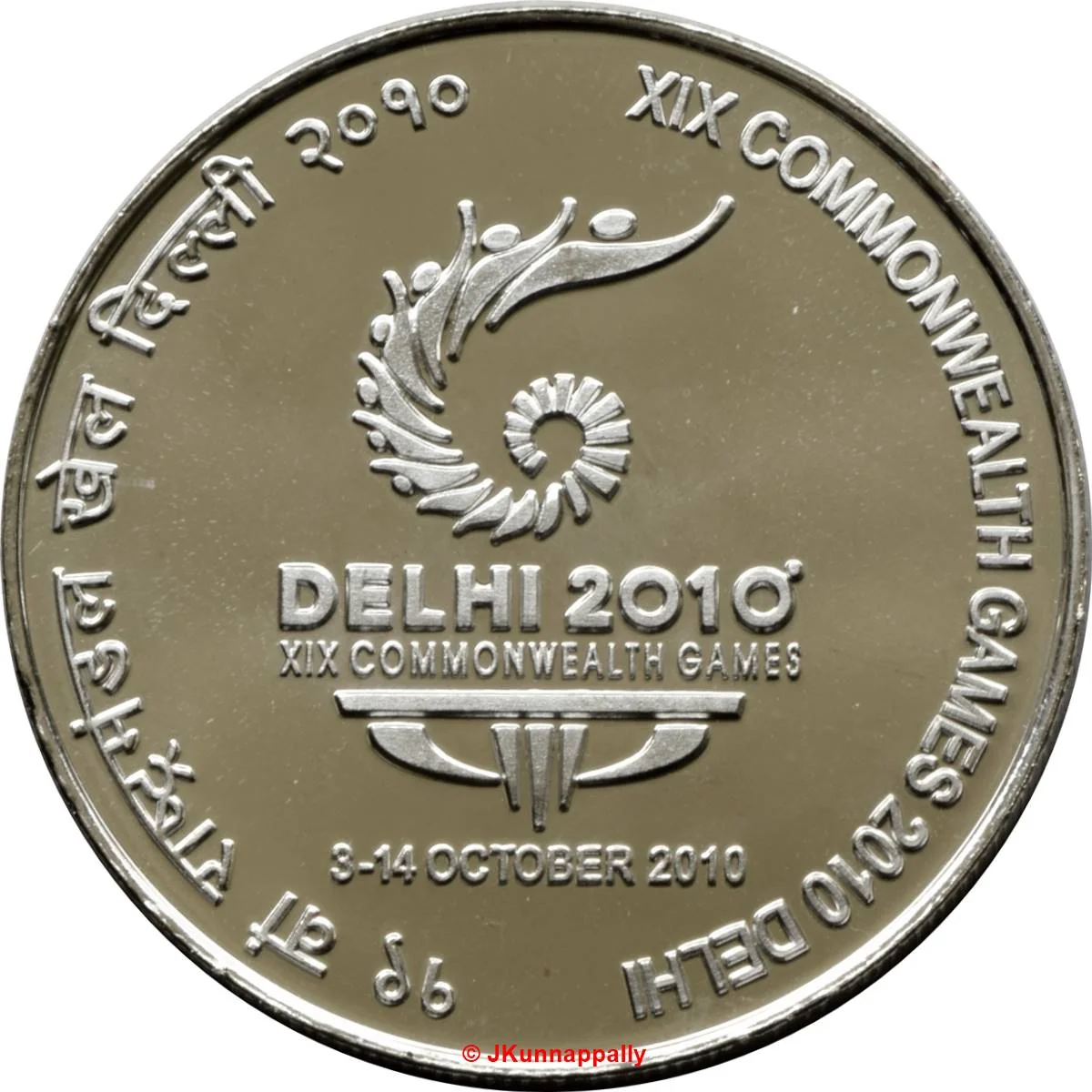
The 2010 Commonwealth Games emblem.
Inscription:
१९ वां राष्ट्रमंडल खेल दिल्ली २०१०
XIX COMMONWEALTH GAMES 2010 DELHI
DELHI 2010
XIX COMMONWEALTH GAMES
3-14 OCTOBER 2010
XIX COMMONWEALTH GAMES 2010 DELHI
DELHI 2010
XIX COMMONWEALTH GAMES
3-14 OCTOBER 2010
Translation:
19th Commonwealth Games Delhi 2010
XIX Commonwealth Games 2010 Delhi
Delhi 2010
XIX Commonwealth Games
3-14 October 2010
XIX Commonwealth Games 2010 Delhi
Delhi 2010
XIX Commonwealth Games
3-14 October 2010
Edge
Reeded
Categories
| Sport> Commonwealth Games |
Mints
| Name | Mark |
|---|---|
| Kolkata / Calcutta / Murshidabad | — |
Mintings
| Year | Mint Mark | Mintage | Quality | Collection |
|---|---|---|---|---|
| 2010 | — | — | ||
| 2010 | — | — | Proof |
Historical background
In 2010, India's currency situation was characterized by a strong recovery from the global financial crisis, but also by mounting inflationary pressures and a complex management challenge for the Reserve Bank of India (RBI). The Indian Rupee (INR) had stabilized after the volatility of 2008-09, trading in a relatively stable range against the US dollar for much of the year, supported by resurgent capital inflows from foreign institutional investors (FIIs) attracted to India's high-growth economy. This period saw a significant rebound in GDP growth, which was projected to be around 8.5%, reinforcing India's position as a leading emerging market. However, this very growth and the influx of foreign capital contributed to underlying strains.
The dominant macroeconomic concern of 2010 was escalating inflation, particularly in food prices, which transitioned into broader demand-side pressures. Headline wholesale price index (WPI) inflation remained persistently high, hovering near double digits for much of the year, far above the RBI's comfort zone. This forced the central bank to shift its policy stance decisively from one of crisis-driven accommodation to active tightening. The RBI undertook multiple rounds of repo rate hikes and increased the cash reserve ratio (CRR) to drain liquidity from the system, aiming to anchor inflation expectations even at the potential cost of moderating growth.
Furthermore, the currency dynamics were influenced by global "risk-on" sentiment and domestic fiscal considerations. While capital inflows supported the rupee, they also complicated monetary management by adding to domestic liquidity and inflationary pressures. The government's post-crisis fiscal stimulus was still in the process of being rolled back, contributing to a wide current account deficit. By the end of 2010, the key narrative was the RBI's difficult balancing act: managing the exchange rate amidst volatile capital flows, fighting stubbornly high inflation through tightening measures, and attempting to sustain growth momentum—a trilemma that would define India's policy challenges in the years immediately following.
The dominant macroeconomic concern of 2010 was escalating inflation, particularly in food prices, which transitioned into broader demand-side pressures. Headline wholesale price index (WPI) inflation remained persistently high, hovering near double digits for much of the year, far above the RBI's comfort zone. This forced the central bank to shift its policy stance decisively from one of crisis-driven accommodation to active tightening. The RBI undertook multiple rounds of repo rate hikes and increased the cash reserve ratio (CRR) to drain liquidity from the system, aiming to anchor inflation expectations even at the potential cost of moderating growth.
Furthermore, the currency dynamics were influenced by global "risk-on" sentiment and domestic fiscal considerations. While capital inflows supported the rupee, they also complicated monetary management by adding to domestic liquidity and inflationary pressures. The government's post-crisis fiscal stimulus was still in the process of being rolled back, contributing to a wide current account deficit. By the end of 2010, the key narrative was the RBI's difficult balancing act: managing the exchange rate amidst volatile capital flows, fighting stubbornly high inflation through tightening measures, and attempting to sustain growth momentum—a trilemma that would define India's policy challenges in the years immediately following.

⭐ Somewhat Rare