

10 Won – North Korea
North Korea
Context
Material
References
KM: #Click to copy to clipboard1198
Numista: #356620
Value
Exchange value: 10 KPW
Bullion value: $151.84
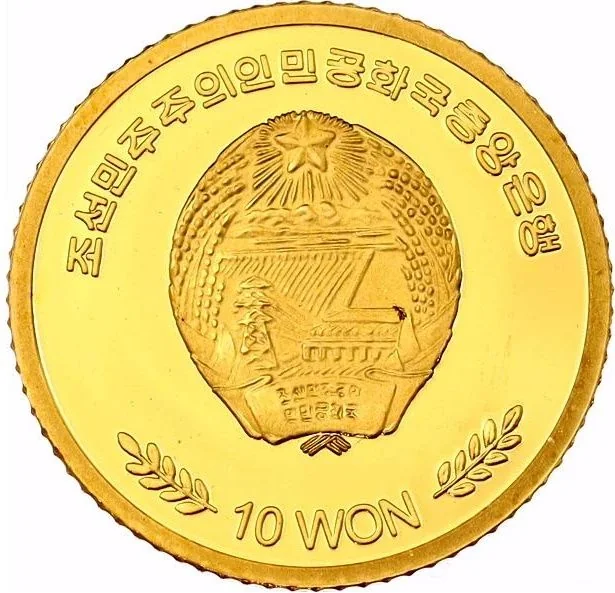
Obverse
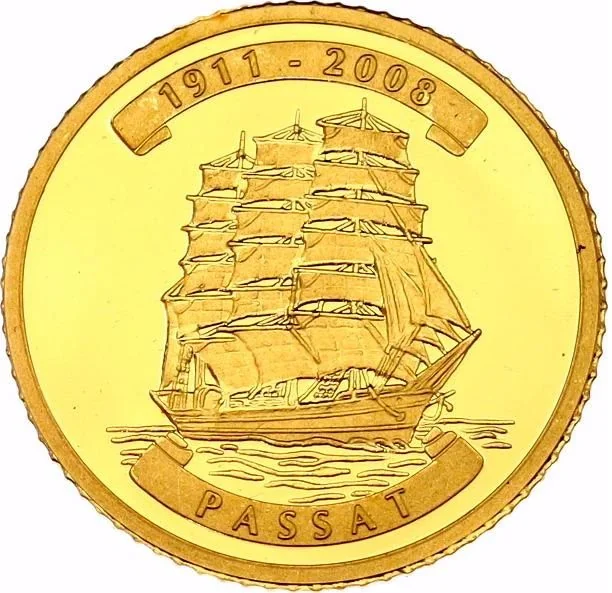
Reverse
Edge
Categories
| Transportation> Watercraft |
Mints
| Name | Mark |
|---|---|
| Pugang Coins Corp | — |
Mintings
| Year | Mint Mark | Mintage | Quality | Collection |
|---|---|---|---|---|
| 2008 | — | 7,500 | Proof |
Historical background
In 2008, North Korea's currency situation was characterized by severe inflation and economic instability, a direct legacy of the catastrophic 1990s famine and the failure of earlier reforms. The official North Korean won (KPW) had become so devalued that it was largely supplanted in everyday use by foreign currencies, particularly the US dollar and the Chinese yuan. This "dollarization" was most evident in markets and for luxury goods, creating a dual economy where the state-run distribution system used the won for rations, while the vital informal market sector operated on hard currency, widening social inequalities.
The regime, under Kim Jong-il, recognized the need to reassert control over the economy and curb the growing marketization and inequality. In a dramatic but poorly conceived move, the government announced a currency redenomination in late 2009 (November 30), which effectively became the defining monetary crisis of the period. While the reform occurred just after 2008, its planning and underlying causes were rooted in the conditions of that year. The aim was to destroy private wealth accumulated in won by exchanging old notes for new at a rate of 100 to 1, with severe limits on the amount that could be converted, thereby attempting to wipe out the savings of black-market traders.
The 2009 redenomination proved to be a disastrous policy, leading to widespread panic, a collapse in trust in the won, and severe shortages of goods as markets froze. Although the peak of the crisis unfolded in 2010, the failed reform was a direct consequence of the unstable currency environment that had fully manifested by 2008. It resulted in a brief period of hyperinflation, significant social unrest, and reportedly executions of officials blamed for the fallout. The event ultimately strengthened the role of foreign currency even further, forcing the state to tolerate markets and highlighting its inability to manage the economy through brute-force edicts alone.
The regime, under Kim Jong-il, recognized the need to reassert control over the economy and curb the growing marketization and inequality. In a dramatic but poorly conceived move, the government announced a currency redenomination in late 2009 (November 30), which effectively became the defining monetary crisis of the period. While the reform occurred just after 2008, its planning and underlying causes were rooted in the conditions of that year. The aim was to destroy private wealth accumulated in won by exchanging old notes for new at a rate of 100 to 1, with severe limits on the amount that could be converted, thereby attempting to wipe out the savings of black-market traders.
The 2009 redenomination proved to be a disastrous policy, leading to widespread panic, a collapse in trust in the won, and severe shortages of goods as markets froze. Although the peak of the crisis unfolded in 2010, the failed reform was a direct consequence of the unstable currency environment that had fully manifested by 2008. It resulted in a brief period of hyperinflation, significant social unrest, and reportedly executions of officials blamed for the fallout. The event ultimately strengthened the role of foreign currency even further, forcing the state to tolerate markets and highlighting its inability to manage the economy through brute-force edicts alone.
✨ Legendary