

Obverse
Description:
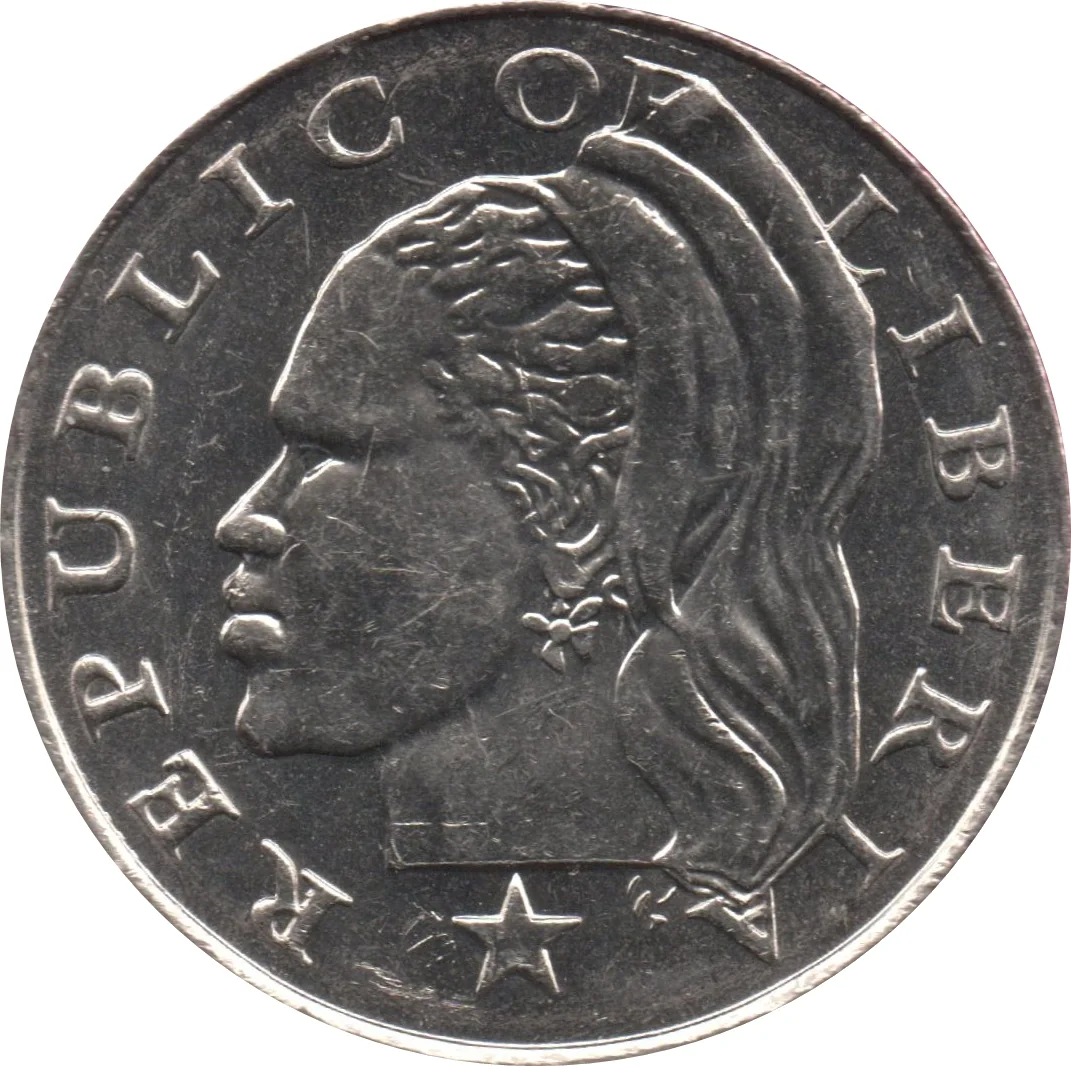
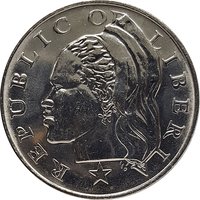
Native woman's profile with a five-point star below.
Inscription:
REPUBLIC OF LIBERIA
Script: Latin
Reverse
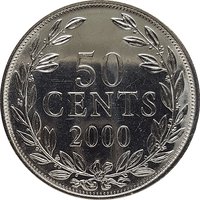
Description:
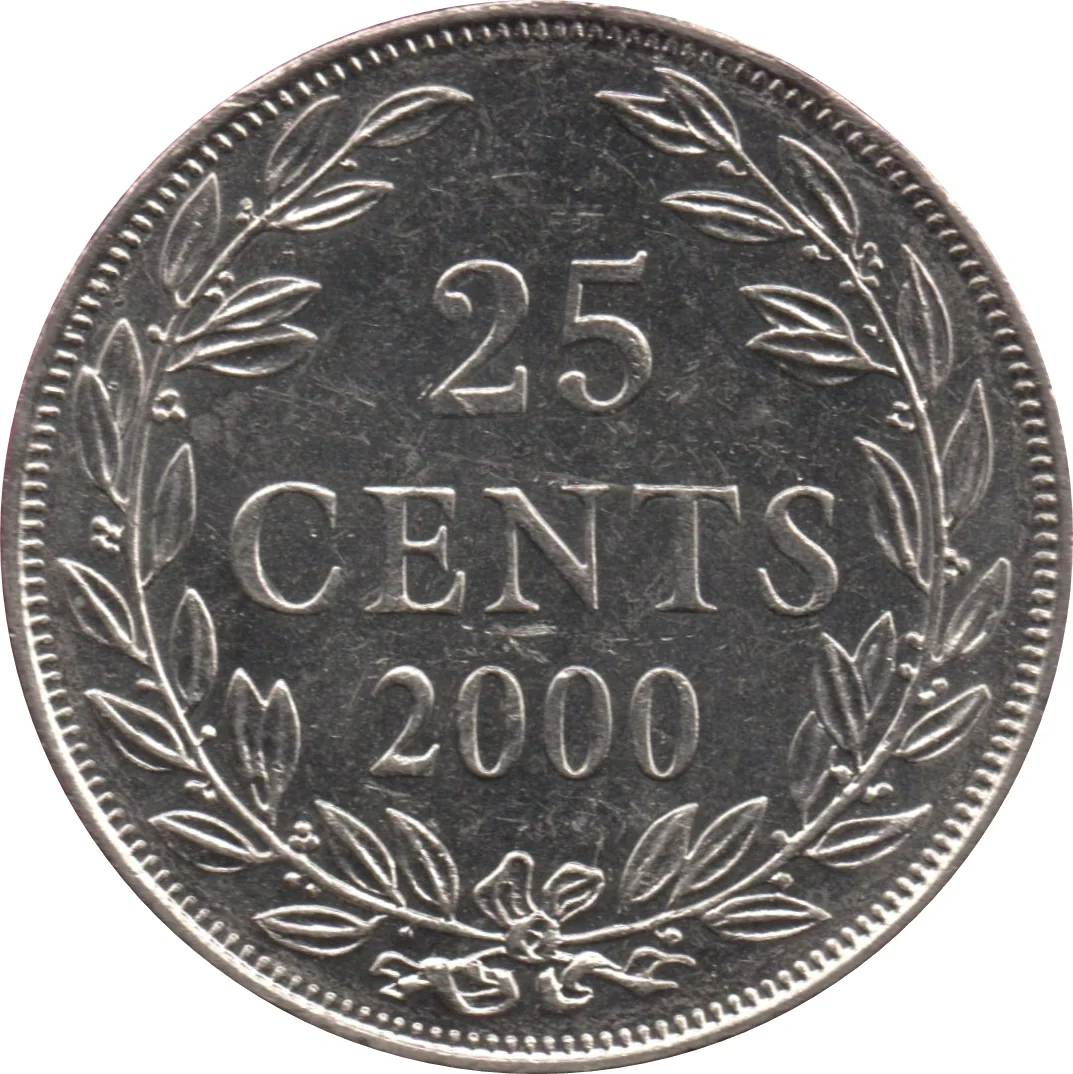
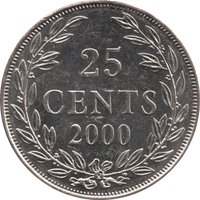
Olive branches flank the date and denomination.
Inscription:
25
CENTS
2000
CENTS
2000
Script: Latin
Edge
Reeded
Mintings
| Year | Mint Mark | Mintage | Quality | Collection |
|---|---|---|---|---|
| 2000 | — | — |
Historical background
In the year 2000, Liberia’s currency situation was characterized by profound instability and a chaotic dual-currency system, a direct legacy of the devastating civil war (1989-1997). The official currency, the Liberian dollar (LRD), had become severely devalued and was treated with deep public distrust due to years of unchecked printing by successive warring factions to finance conflict. This hyperinflationary practice rendered large-denomination Liberian dollar banknotes virtually worthless, and the currency circulated primarily in worn, small-denomination notes used for everyday minor transactions.
The real economy functioned on the United States dollar, which served as the de facto medium for significant transactions, government contracts, and savings. This dollarization provided a rare anchor of stability but also highlighted the collapse of sovereign monetary authority and created a two-tiered society: those with access to USD and those without. The Central Bank of Liberia had little to no effective control over the money supply, and the coexistence of two currencies without a fixed exchange rate led to volatile and often exploitative exchange rates in informal markets, further harming the poor.
This monetary chaos was compounded by the precarious political climate, as President Charles Taylor’s regime, under international sanctions and accused of fueling regional conflicts, had limited capacity or will to implement monetary reform. The currency situation thus mirrored the state’s overall condition: fragmented, internationally isolated, and struggling to lay a foundation for post-war recovery. Economic activity remained stifled, with the dysfunctional currency system acting as both a symptom and a cause of Liberia's deep-seated governance and economic crises at the turn of the millennium.
The real economy functioned on the United States dollar, which served as the de facto medium for significant transactions, government contracts, and savings. This dollarization provided a rare anchor of stability but also highlighted the collapse of sovereign monetary authority and created a two-tiered society: those with access to USD and those without. The Central Bank of Liberia had little to no effective control over the money supply, and the coexistence of two currencies without a fixed exchange rate led to volatile and often exploitative exchange rates in informal markets, further harming the poor.
This monetary chaos was compounded by the precarious political climate, as President Charles Taylor’s regime, under international sanctions and accused of fueling regional conflicts, had limited capacity or will to implement monetary reform. The currency situation thus mirrored the state’s overall condition: fragmented, internationally isolated, and struggling to lay a foundation for post-war recovery. Economic activity remained stifled, with the dysfunctional currency system acting as both a symptom and a cause of Liberia's deep-seated governance and economic crises at the turn of the millennium.
🌱 Fairly Common