

5 pounds – Egypt
Add to wishlist
Non-circulating coins
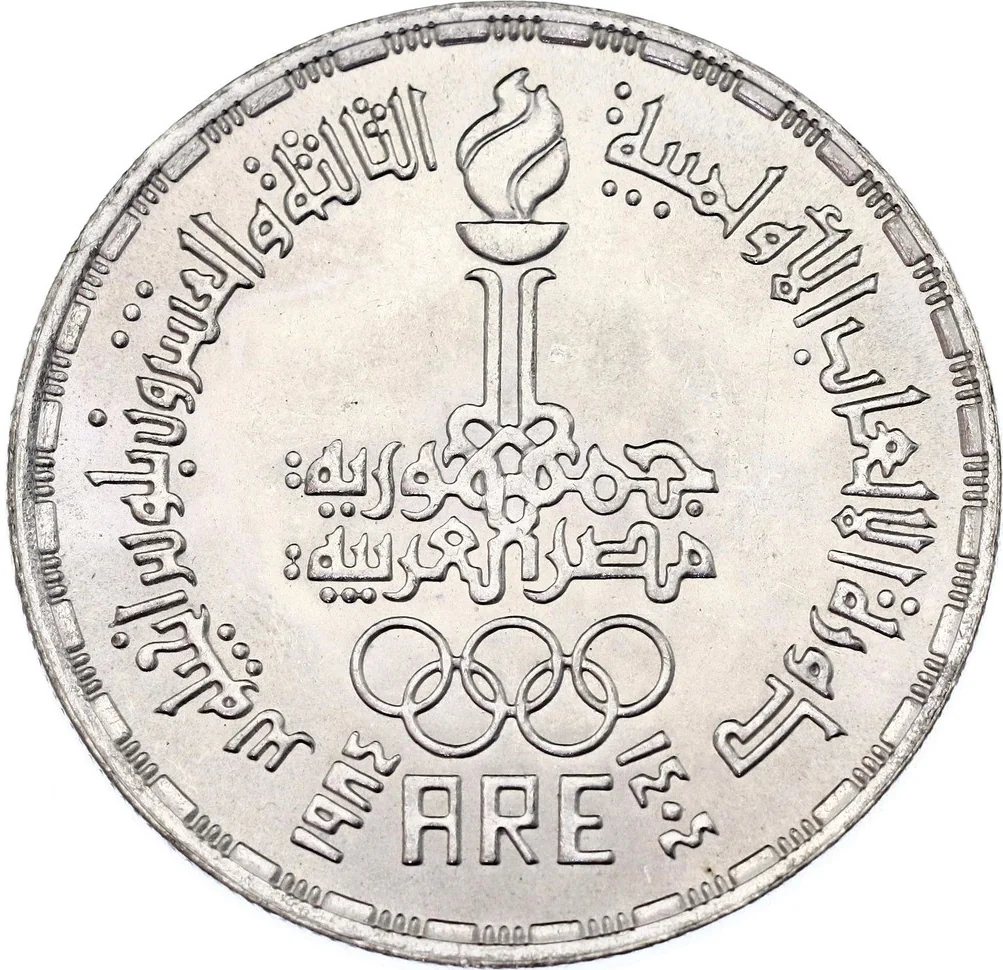
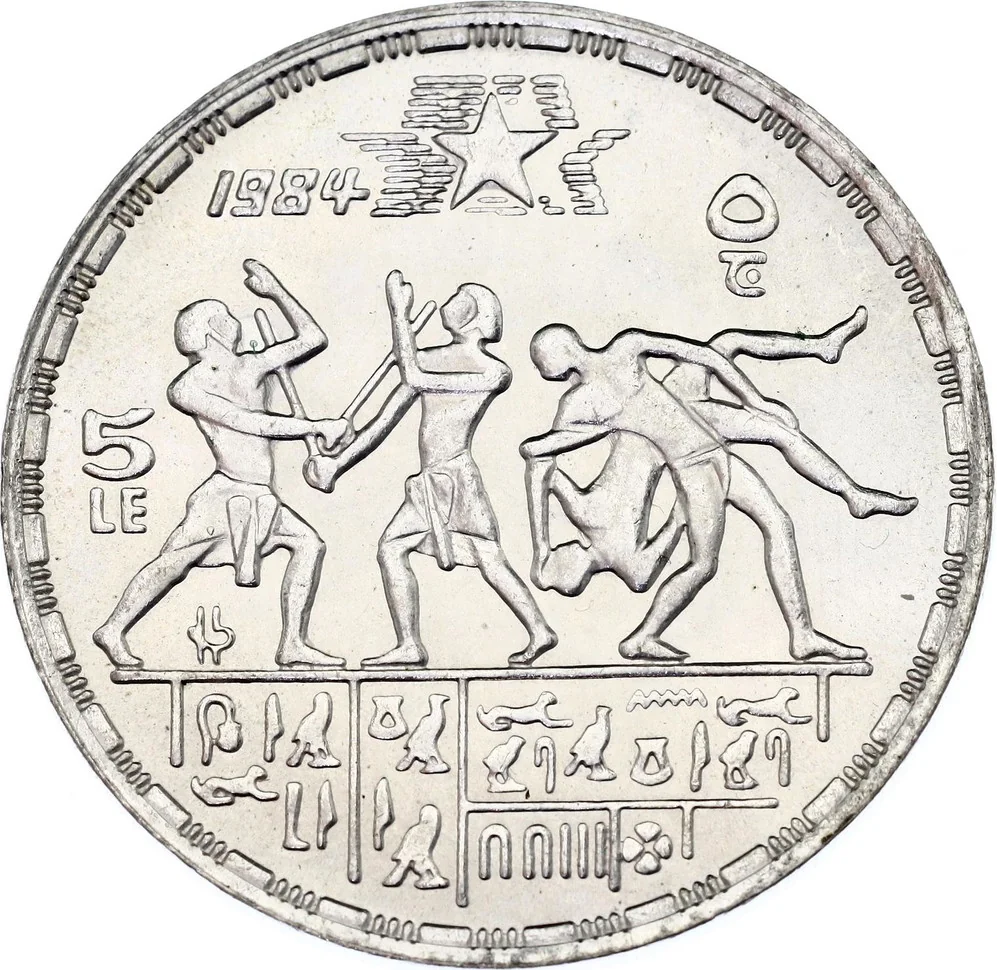
Commemoration: 23rd Olympic Games - Los Angeles
Egypt
Context
Year: 1984
Islamic (Hijri) Year:: 1404
Issuer: Egypt
Period:
(since 1971)
Currency:
(since 1916)
Demonetized: Yes
Total mintage: 20,000
Material
References
KM: #
Numista: #35559
Value
Exchange value: 5 EGP
Bullion value: $32.08
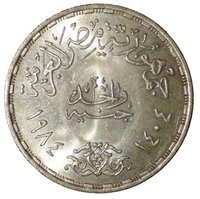
Obverse
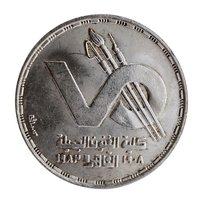
Reverse
Inscription:
1984
5 LE
٥ ج
5 LE
٥ ج
Translation:
Nineteen Eighty-Four
5 Lebanese Pounds
5 Lebanese Pounds
5 Lebanese Pounds
5 Lebanese Pounds
Designer: Ibrahim Elhelw
Edge
Reeded
Categories
| Sport> Summer Olympic Games |
Mints
| Name | Mark |
|---|---|
| Egyptian Mint Authority | — |
Mintings
| Year | Mint Mark | Mintage | Quality | Collection |
|---|---|---|---|---|
| 1984 | — | 20,000 |
Historical background
In 1984, Egypt's currency situation was characterized by a strained and complex dual-exchange rate system, a legacy of economic liberalization efforts begun in the 1970s. The official exchange rate was fixed by the Central Bank of Egypt at approximately LE 0.70 to the US dollar, a highly overvalued rate used for government transactions and imports of essential goods like food and fuel. Alongside this, a parallel "free market" rate, which reflected true market pressures, operated at nearly LE 1.10 to the dollar. This significant gap created major distortions, encouraging a black market for foreign currency and leading to rampant rent-seeking behaviors as individuals and businesses sought access to cheap official dollars.
The root of this currency pressure was a profound balance of payments crisis. Egypt was heavily reliant on imports for both consumer goods and industrial inputs, but its export base—primarily oil, cotton, and tourism—was insufficient to generate the necessary hard currency. High public subsidies, a large bureaucracy, and costly military commitments further drained fiscal resources. Consequently, the country depended heavily on external borrowing, remittances from Egyptians working abroad, and aid, particularly from the United States following the 1979 Camp David Accords. These inflows were volatile and could not sustainably support the overvalued pound.
The dual-rate system in 1984 was therefore a symptom of deeper structural economic weaknesses. It acted as a temporary shield for the state budget and consumers from the full cost of imports but at the expense of depleting foreign reserves and discouraging both foreign investment and domestic export production. This unsustainable framework set the stage for the more aggressive reforms that would follow later in the decade, culminating in an International Monetary Fund agreement in 1987 and a series of painful devaluations aimed at unifying the exchange rates and stabilizing the economy.
The root of this currency pressure was a profound balance of payments crisis. Egypt was heavily reliant on imports for both consumer goods and industrial inputs, but its export base—primarily oil, cotton, and tourism—was insufficient to generate the necessary hard currency. High public subsidies, a large bureaucracy, and costly military commitments further drained fiscal resources. Consequently, the country depended heavily on external borrowing, remittances from Egyptians working abroad, and aid, particularly from the United States following the 1979 Camp David Accords. These inflows were volatile and could not sustainably support the overvalued pound.
The dual-rate system in 1984 was therefore a symptom of deeper structural economic weaknesses. It acted as a temporary shield for the state budget and consumers from the full cost of imports but at the expense of depleting foreign reserves and discouraging both foreign investment and domestic export production. This unsustainable framework set the stage for the more aggressive reforms that would follow later in the decade, culminating in an International Monetary Fund agreement in 1987 and a series of painful devaluations aimed at unifying the exchange rates and stabilizing the economy.
⭐ Somewhat Rare