

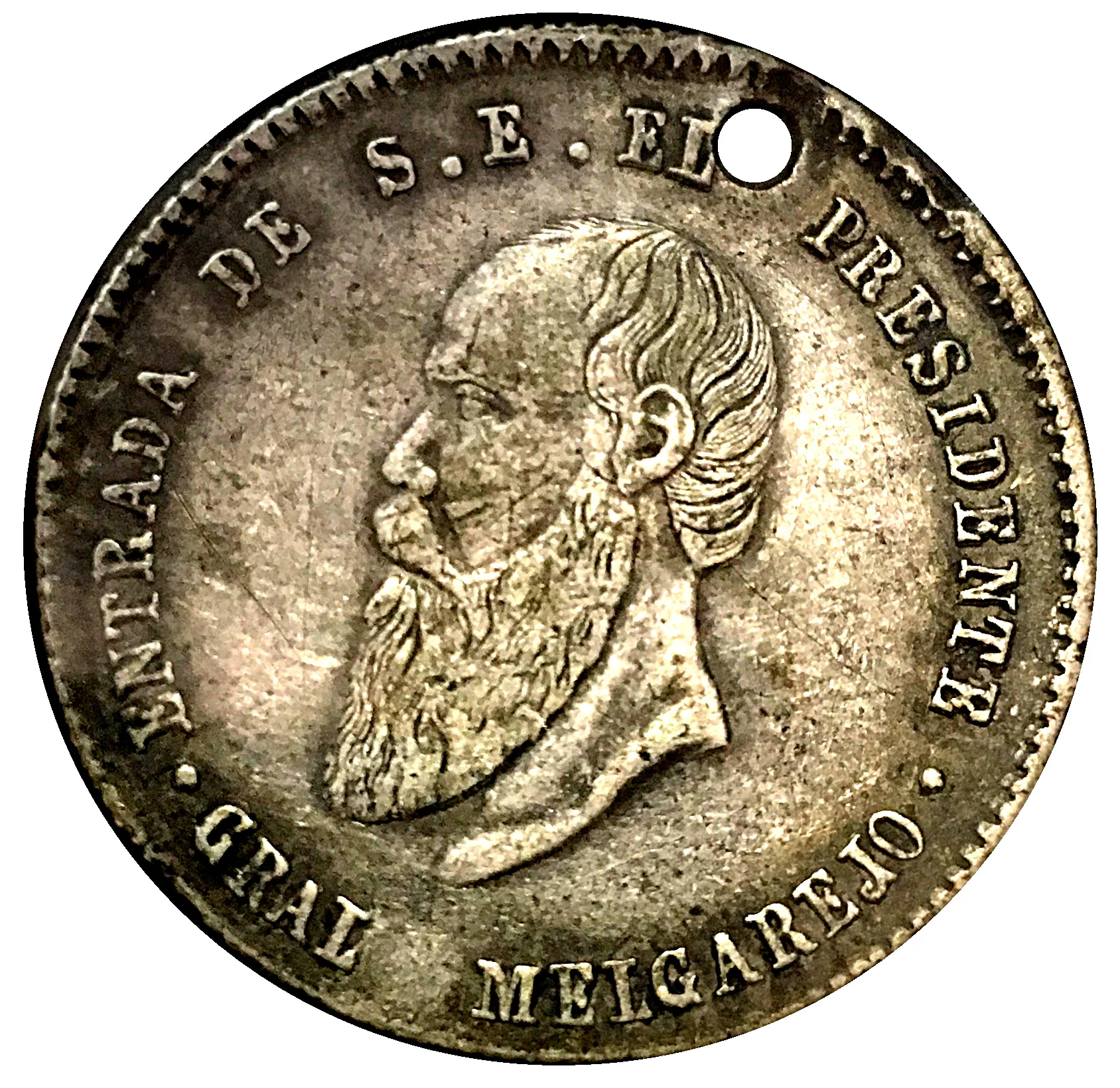
½ Melgarejo – Bolivia
Bolivia
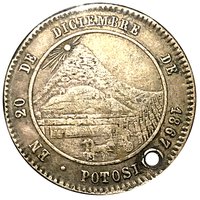
Obverse
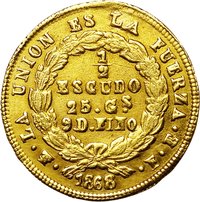
Reverse
Description:
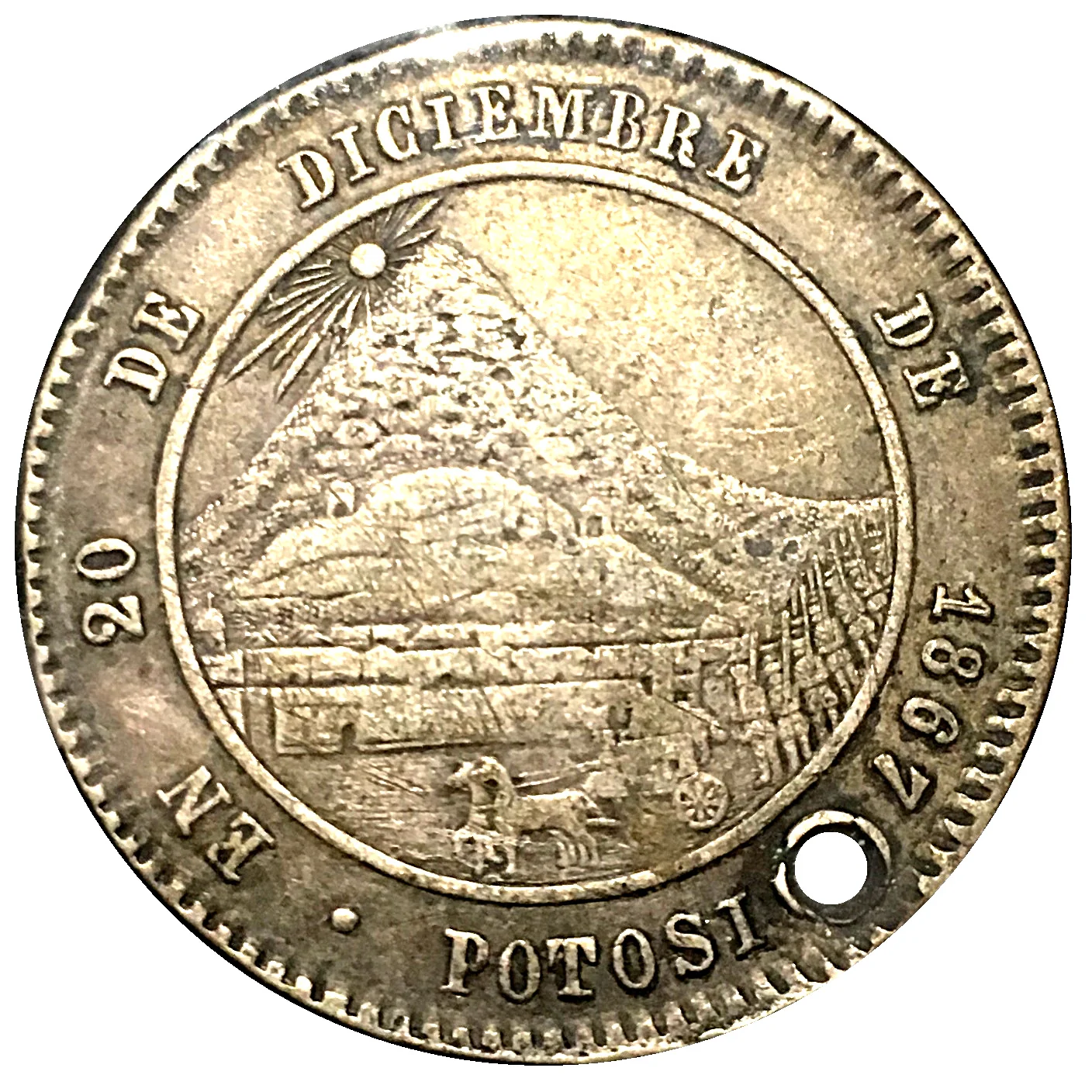
Sunrise over a peak; a horse-drawn carriage leads soldiers toward a village.
Inscription:
EN 20 DE DICIEMBRE DE 1867 / . POTOSI .
Script: Latin
Edge
Mintings
| Year | Mint Mark | Mintage | Quality | Collection |
|---|---|---|---|---|
| 1867 | — | — |
Historical background
In 1867, Bolivia’s currency situation was characterized by profound instability and fragmentation, a direct legacy of the economic devastation following the War of the Pacific (1879-1884) and earlier regional conflicts. While the war itself lay in the future, the financial foundations were already weak. The country operated without a unified national mint for decades after independence in 1825, leading to a chaotic circulation of diverse coins. These included worn Spanish colonial pieces, coins from neighboring republics like Peru and Chile, and even counterfeit macuquinos (crudely cut coins), all of varying weight and purity. This lack of a standardized, trustworthy medium of exchange severely hampered domestic commerce and state revenue collection.
The government of President Mariano Melgarejo (1864-1871) attempted to address this during this period through a controversial and ultimately disastrous policy. In a bid to modernize the currency and generate immediate revenue, Melgarejo decreed the demonetization of the old, worn silver coins that formed the bulk of circulation. He ordered these to be exchanged for new, minted currency at a severe discount, with the state seizing the difference. This act, known as the "ley de moneda feble" (law of weak currency), functioned as a forced devaluation and a heavy tax on the populace, particularly the indigenous communities who held their wealth in silver.
Consequently, the year 1867 falls within a era of state-driven monetary predation rather than stability. Melgarejo's decree did not create a sound system but instead caused widespread economic hardship, inflation, and deep public resentment. It exemplified how Bolivia's chronic fiscal shortfalls and political turbulence were directly reflected in its monetary policy, with the state manipulating currency as an instrument of emergency finance at the expense of economic confidence, a pattern that would persist long after Melgarejo's overthrow.
The government of President Mariano Melgarejo (1864-1871) attempted to address this during this period through a controversial and ultimately disastrous policy. In a bid to modernize the currency and generate immediate revenue, Melgarejo decreed the demonetization of the old, worn silver coins that formed the bulk of circulation. He ordered these to be exchanged for new, minted currency at a severe discount, with the state seizing the difference. This act, known as the "ley de moneda feble" (law of weak currency), functioned as a forced devaluation and a heavy tax on the populace, particularly the indigenous communities who held their wealth in silver.
Consequently, the year 1867 falls within a era of state-driven monetary predation rather than stability. Melgarejo's decree did not create a sound system but instead caused widespread economic hardship, inflation, and deep public resentment. It exemplified how Bolivia's chronic fiscal shortfalls and political turbulence were directly reflected in its monetary policy, with the state manipulating currency as an instrument of emergency finance at the expense of economic confidence, a pattern that would persist long after Melgarejo's overthrow.
💎 Extremely Rare