

1 thaler – Austrian Empire
Add to wishlist
Non-circulating coins
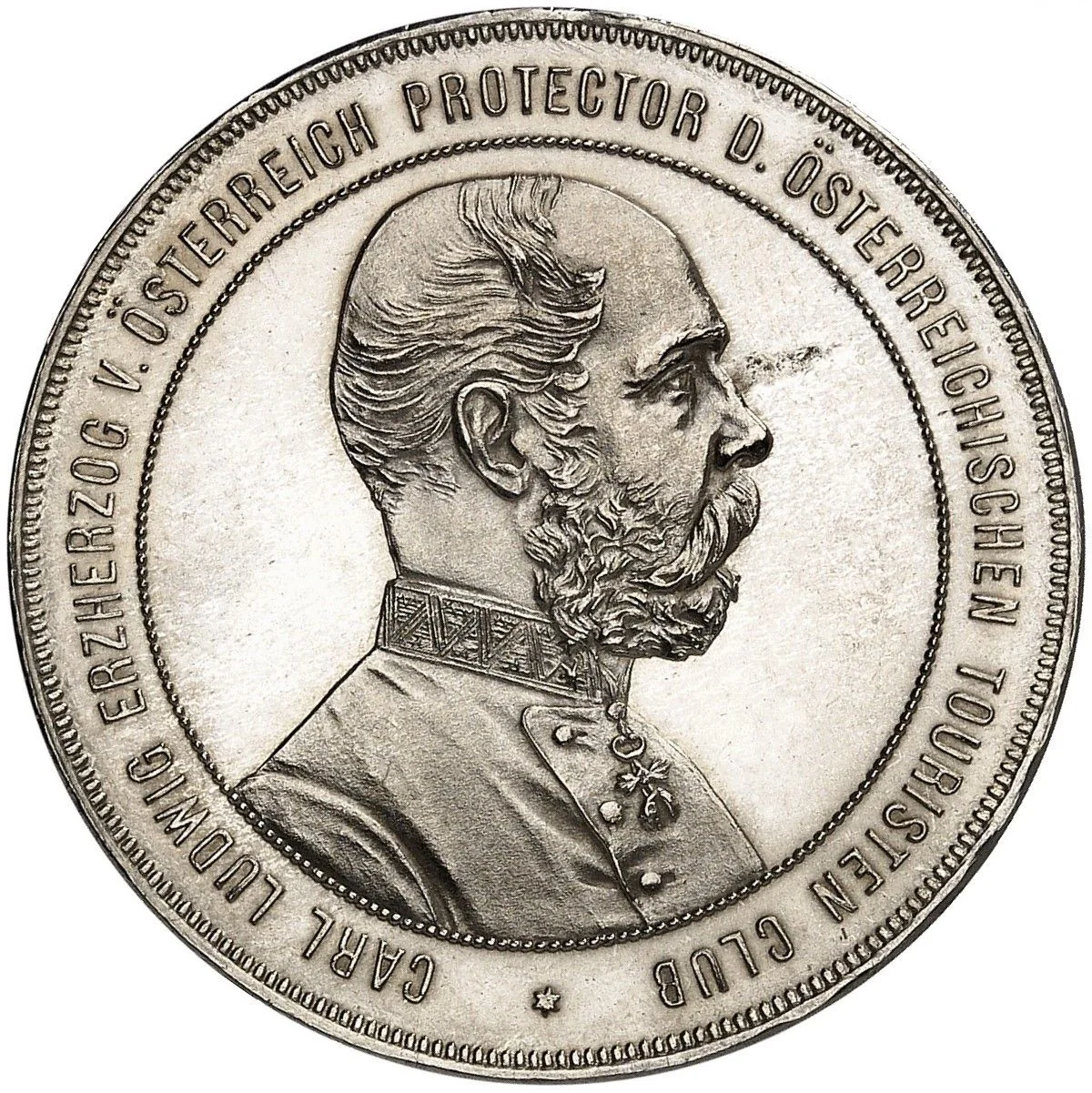
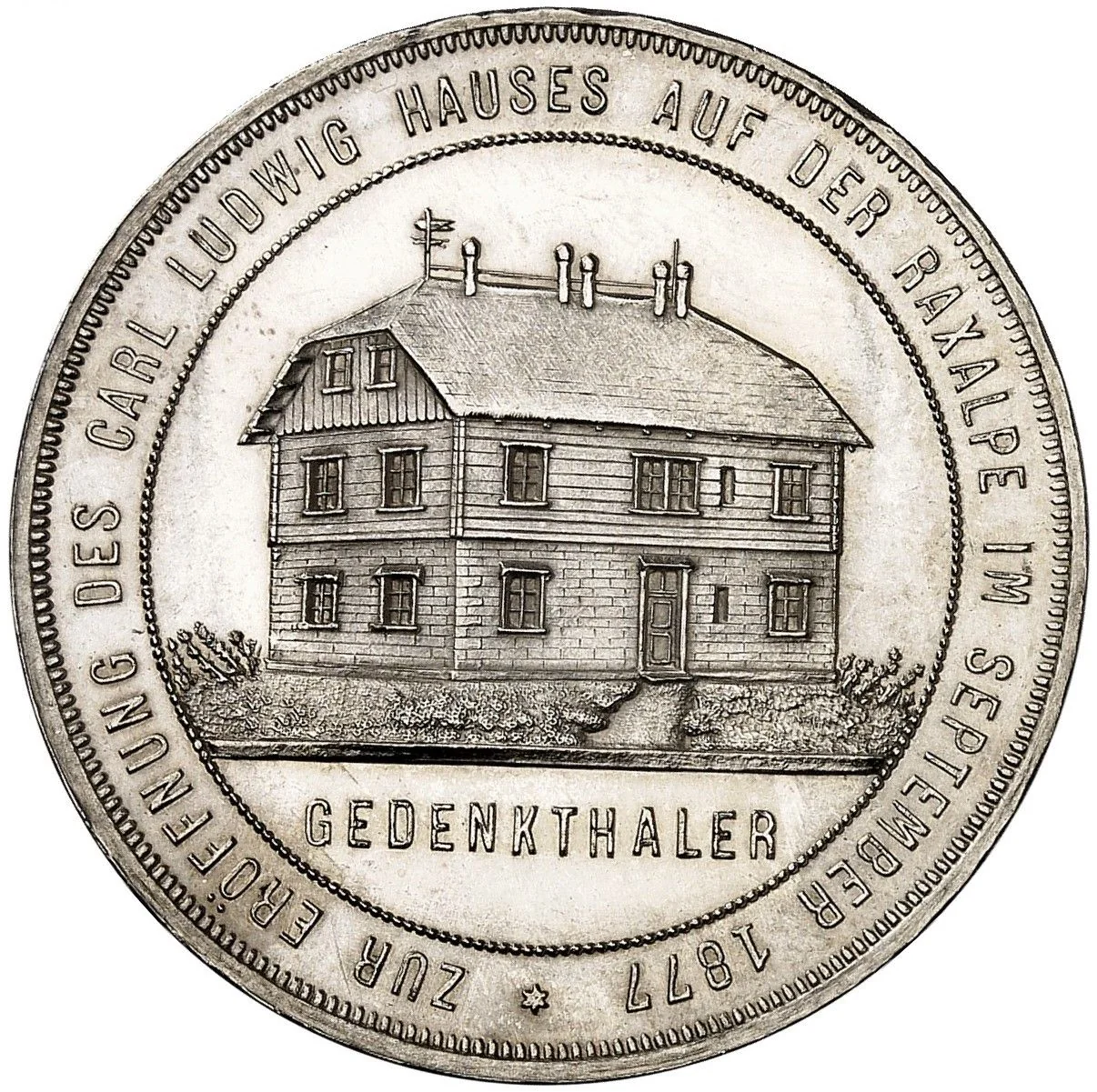
Commemoration: Opening of the Carl-Ludwig-House
Austria
Context
Year: 1877
Country: Austria
Issuer: Austrian Empire
Ruler: Francis Joseph I
Currency:
(1857—1892)
Demonetized: Yes
Material
References
Numista: #354670
Value
Bullion value: $46.21
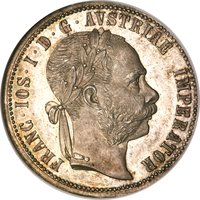
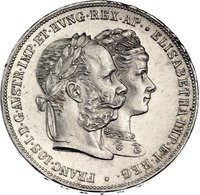
Obverse
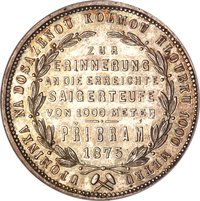
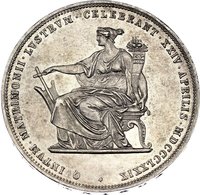
Reverse
Edge
Categories
| Building |
Mints
| Name | Mark |
|---|---|
| Münze Österreich | — |
Mintings
| Year | Mint Mark | Mintage | Quality | Collection |
|---|---|---|---|---|
| 1877 | — | — |
Historical background
By 1877, the currency situation in the Austrian Empire (formally Austria-Hungary after the 1867 Compromise) was defined by a prolonged and challenging transition towards a modern, unified monetary system. The empire was still operating under the paper currency regime of the Austro-Hungarian Gulden (Florin), which was not convertible to silver. This fiat currency, known as "paper gulden", had been introduced during the revolutionary period of 1848 and maintained due to state financial necessity, leading to frequent fluctuations in value against hard currency. The coexistence of this paper money with older, silver-convertible notes created a complex and often confusing dual system that hampered both domestic commerce and international trade.
The central financial goal of the Dual Monarchy's governments was to establish a stable, gold-convertible currency to foster economic confidence and integration into the European financial system. After years of preparation, the 1878 plan to introduce the Goldkrone (crown) was already in advanced legislative stages by 1877. This new currency, defined as 1 Krone = 100 Heller and pegged to the gold standard, was designed to replace the gulden at a rate of 2 kronen = 1 gulden. Thus, 1877 represents the final full year of the old system, with state finances being carefully managed to accumulate the necessary gold reserves and stabilize the exchange rate in anticipation of the imminent reform.
Consequently, the economic atmosphere in 1877 was one of cautious expectation. While the paper gulden remained the daily medium of exchange, its value was being deliberately steered by the Austro-Hungarian Bank toward the fixed conversion rate required for the upcoming switch. The process was politically delicate, requiring coordination between the Austrian and Hungarian halves of the empire, and economically fraught, as it demanded fiscal discipline to avoid inflation before the launch. Therefore, the currency situation was not static but a carefully managed interim, setting the stage for the historic monetary transition that would formally begin with the passage of the laws in 1878 and the introduction of the new gold-based kronen into circulation in the following years.
The central financial goal of the Dual Monarchy's governments was to establish a stable, gold-convertible currency to foster economic confidence and integration into the European financial system. After years of preparation, the 1878 plan to introduce the Goldkrone (crown) was already in advanced legislative stages by 1877. This new currency, defined as 1 Krone = 100 Heller and pegged to the gold standard, was designed to replace the gulden at a rate of 2 kronen = 1 gulden. Thus, 1877 represents the final full year of the old system, with state finances being carefully managed to accumulate the necessary gold reserves and stabilize the exchange rate in anticipation of the imminent reform.
Consequently, the economic atmosphere in 1877 was one of cautious expectation. While the paper gulden remained the daily medium of exchange, its value was being deliberately steered by the Austro-Hungarian Bank toward the fixed conversion rate required for the upcoming switch. The process was politically delicate, requiring coordination between the Austrian and Hungarian halves of the empire, and economically fraught, as it demanded fiscal discipline to avoid inflation before the launch. Therefore, the currency situation was not static but a carefully managed interim, setting the stage for the historic monetary transition that would formally begin with the passage of the laws in 1878 and the introduction of the new gold-based kronen into circulation in the following years.
✨ Legendary