

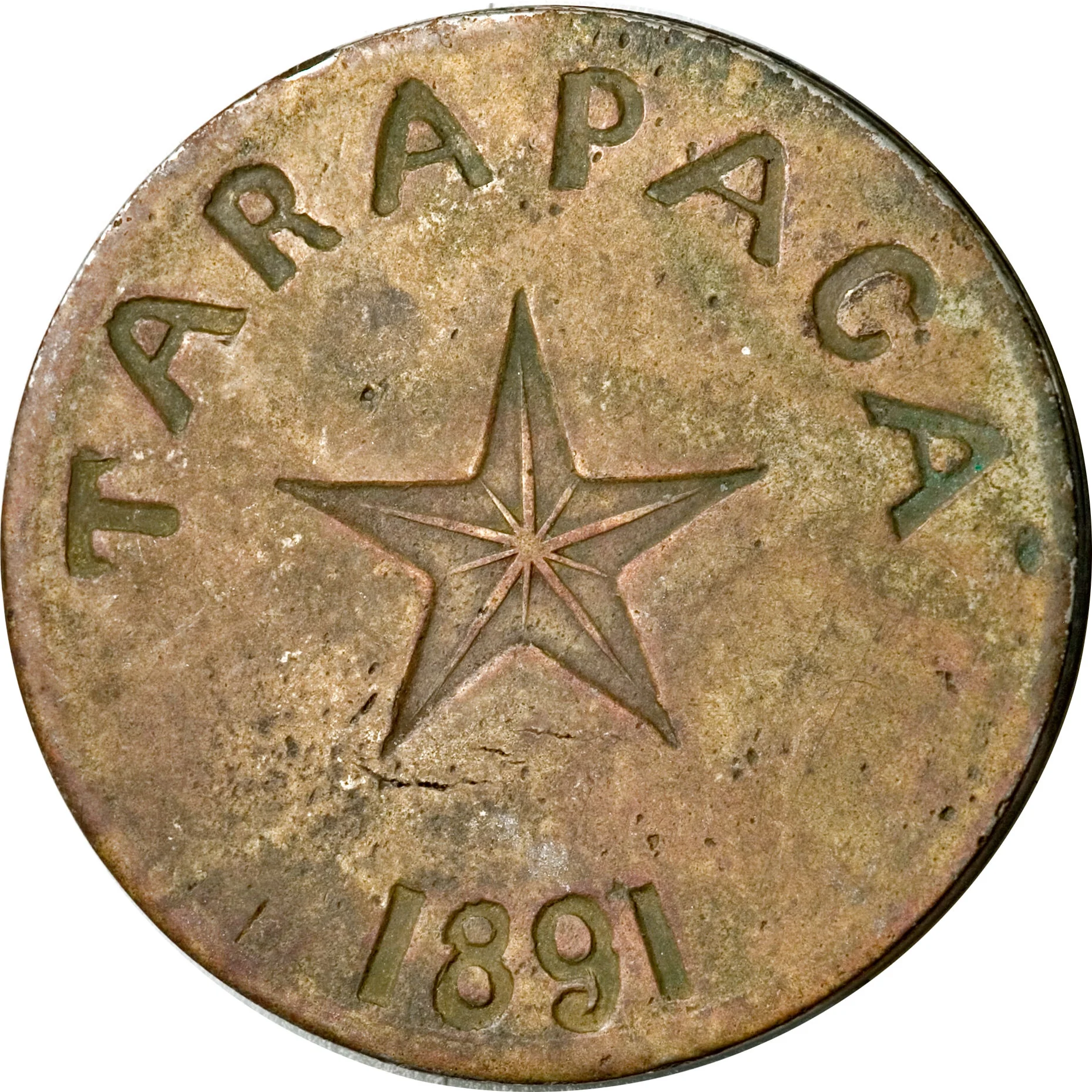
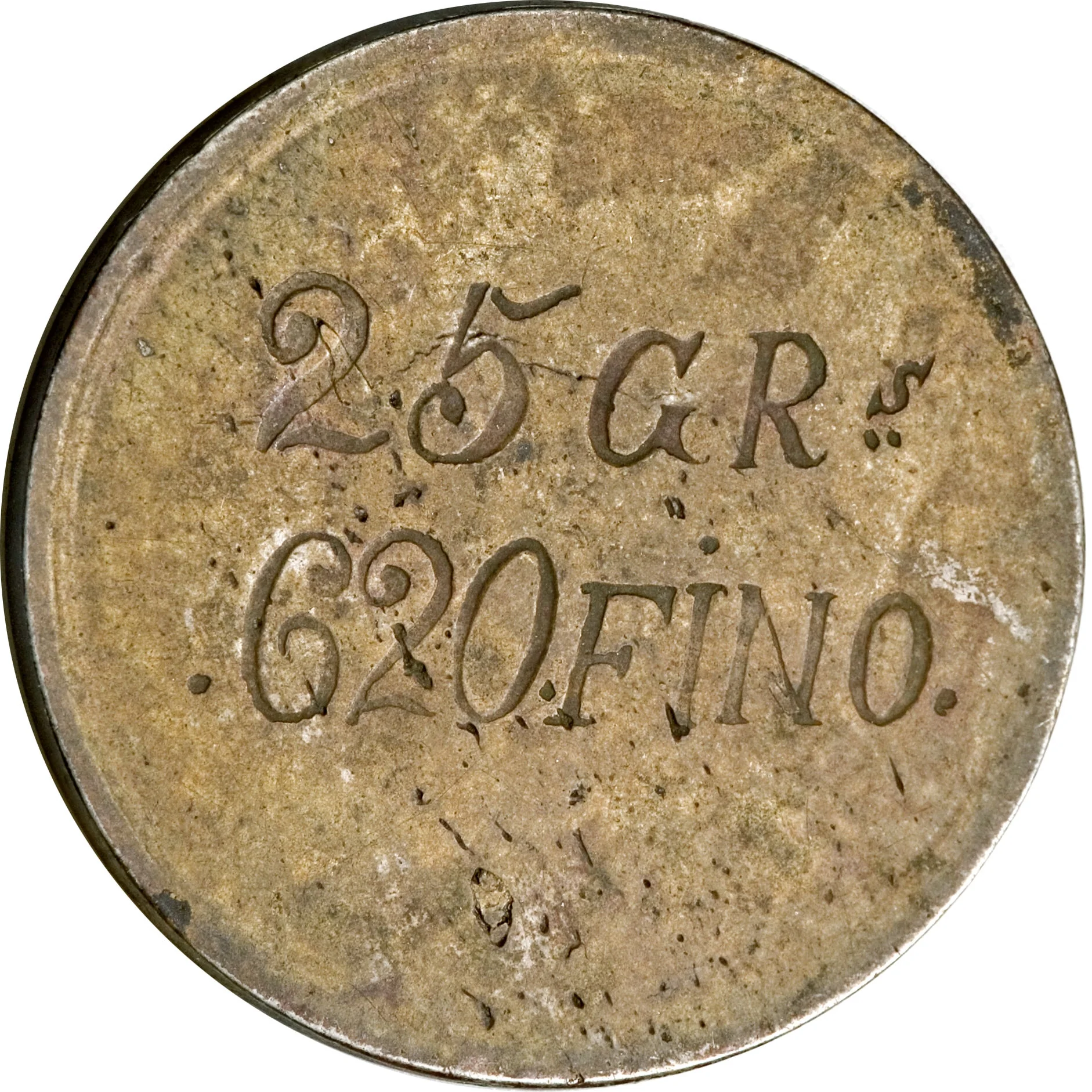
1 Peso – Tarapacá Region
Chile

Mintings
| Year | Mint Mark | Mintage | Quality | Collection |
|---|---|---|---|---|
| 1891 | — | — |
Historical background
In 1891, the Tarapacá Region was at the epicenter of a profound monetary crisis, a direct consequence of its contested status and the Chilean Civil War. Following the War of the Pacific (1879-1883), Chile had annexed the nitrate-rich territory from Peru, but its integration was still incomplete. The region operated on a complex and unstable monetary system, a legacy of its previous Peruvian administration, where Peruvian soles, Bolivian bolivianos, and Chilean pesos circulated simultaneously, creating confusion and facilitating speculative exchange rates that harmed workers and small merchants.
The outbreak of the Congressionalist versus Balmacedista civil war in January 1891 severely exacerbated this instability. President José Manuel Balmaceda, controlling the national treasury in Santiago, cut off funds to the Congressionalist forces who had seized power in the north, including the vital port of Iquique. Facing a desperate shortage of official currency to pay troops and civil servants, the Congressionalist Junta de Gobierno resorted to emergency measures. Most notably, they authorized the issuance of local paper currency, known as "billetes fiscales" or "billetes de emisión fiscal," which were essentially promissory notes printed by the nitrate oficinas and local banks under junta authority.
This makeshift currency, backed only by the promise of future redemption by a potential Congressionalist victory, led to rapid depreciation and widespread distrust. The value of these notes fluctuated wildly based on war news, creating a speculative market and deepening economic hardship for the population. Therefore, by late 1891, Tarapacá's currency situation was one of chaotic pluralism, defined by the scarcity of legitimate coin, the circulation of devalued emergency paper, and a monetary environment that mirrored the profound political and economic uncertainty of the civil war itself.
The outbreak of the Congressionalist versus Balmacedista civil war in January 1891 severely exacerbated this instability. President José Manuel Balmaceda, controlling the national treasury in Santiago, cut off funds to the Congressionalist forces who had seized power in the north, including the vital port of Iquique. Facing a desperate shortage of official currency to pay troops and civil servants, the Congressionalist Junta de Gobierno resorted to emergency measures. Most notably, they authorized the issuance of local paper currency, known as "billetes fiscales" or "billetes de emisión fiscal," which were essentially promissory notes printed by the nitrate oficinas and local banks under junta authority.
This makeshift currency, backed only by the promise of future redemption by a potential Congressionalist victory, led to rapid depreciation and widespread distrust. The value of these notes fluctuated wildly based on war news, creating a speculative market and deepening economic hardship for the population. Therefore, by late 1891, Tarapacá's currency situation was one of chaotic pluralism, defined by the scarcity of legitimate coin, the circulation of devalued emergency paper, and a monetary environment that mirrored the profound political and economic uncertainty of the civil war itself.
✨ Legendary