

Chile
Context

Material
References
KM: #Click to copy to clipboard125
Numista: #35377
Value
Bullion value: $13.05
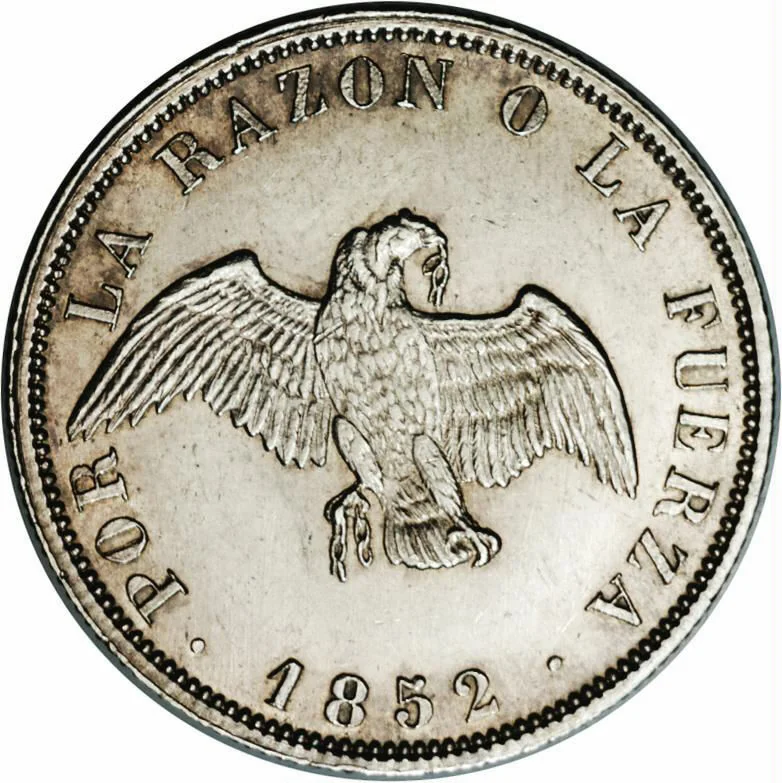
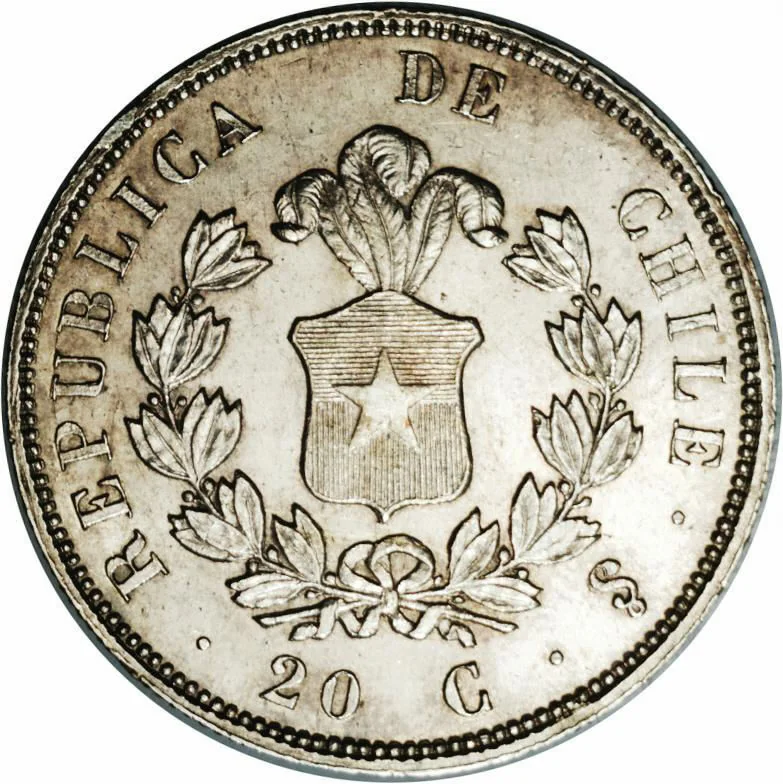
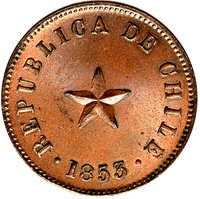
Obverse
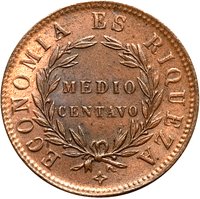
Reverse
Edge
Mintings
| Year | Mint Mark | Mintage | Quality | Collection |
|---|---|---|---|---|
| 1852 | So | 77,000 | ||
| 1853 | So | 906,000 | ||
| 1854 | So | 417,000 | ||
| 1855 | So | 325,000 | ||
| 1856 | So | 396,000 | ||
| 1857 | So | 748,000 | ||
| 1858 | So | 532,000 | ||
| 1859 | So | 120,000 |
Historical background
In 1852, Chile's currency situation was characterized by a chaotic and unstable system of multiple, competing forms of money. The official currency was the peso, but its value was not anchored to a specific metallic standard, leading to severe depreciation. The most significant problem was the widespread circulation of private banknotes and "fichas" (tokens) issued by mining companies, haciendas, and merchants. These fiduciary currencies, often of dubious backing and quality, created a fragmented monetary landscape where their acceptance and value were highly localized and unreliable, hindering national commerce and credit.
This instability was a direct legacy of Chile's post-independence economic policies and the mining boom. The state, lacking strong central banking institutions after the abolition of the Casa de Moneda's short-lived banking functions, had failed to provide a uniform and trustworthy circulating medium. As the economy grew, especially in the northern mining regions, businesses filled the void with their own private currencies to pay workers and facilitate transactions. The result was a system vulnerable to counterfeiting, sudden loss of confidence, and complex exchange calculations that stifled economic development.
The year 1852 itself fell within a period of mounting pressure for reform, which would culminate just a few years later. The government, recognizing the detrimental effects on national revenue, foreign trade, and internal markets, was actively moving toward a decisive solution. This push led to the landmark Currency Law of 1853, which established a bimetallic standard (pegging the peso to both gold and silver) and, crucially, granted the newly chartered Bank of Valparaíso (and soon the Bank of Chile) the exclusive right to issue banknotes convertible to specie. Thus, 1852 represents the final year of Chile's chaotic monetary pluralism, immediately preceding the state's decisive reassertion of control over the currency.
This instability was a direct legacy of Chile's post-independence economic policies and the mining boom. The state, lacking strong central banking institutions after the abolition of the Casa de Moneda's short-lived banking functions, had failed to provide a uniform and trustworthy circulating medium. As the economy grew, especially in the northern mining regions, businesses filled the void with their own private currencies to pay workers and facilitate transactions. The result was a system vulnerable to counterfeiting, sudden loss of confidence, and complex exchange calculations that stifled economic development.
The year 1852 itself fell within a period of mounting pressure for reform, which would culminate just a few years later. The government, recognizing the detrimental effects on national revenue, foreign trade, and internal markets, was actively moving toward a decisive solution. This push led to the landmark Currency Law of 1853, which established a bimetallic standard (pegging the peso to both gold and silver) and, crucially, granted the newly chartered Bank of Valparaíso (and soon the Bank of Chile) the exclusive right to issue banknotes convertible to specie. Thus, 1852 represents the final year of Chile's chaotic monetary pluralism, immediately preceding the state's decisive reassertion of control over the currency.
⭐ Rare