

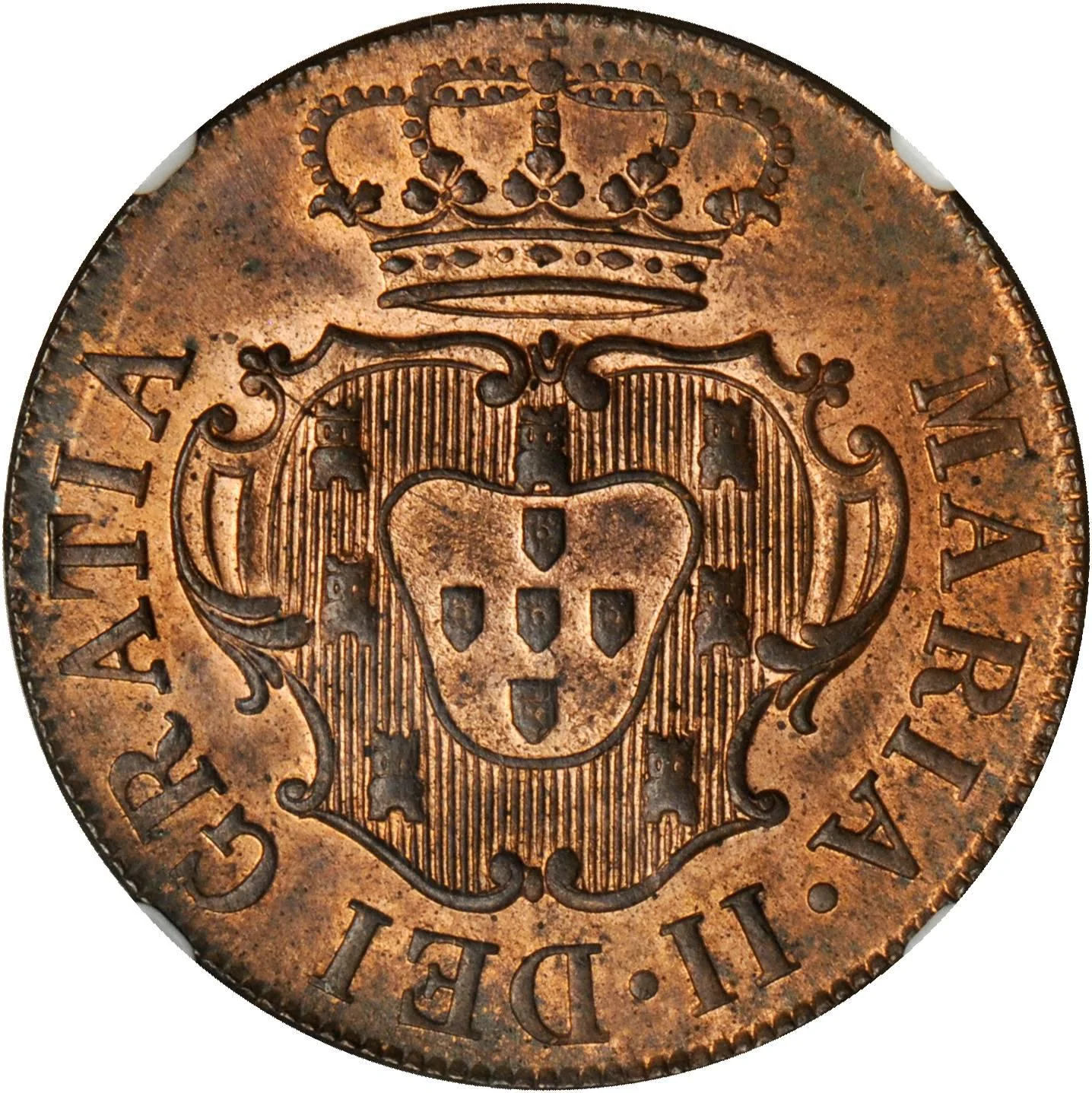
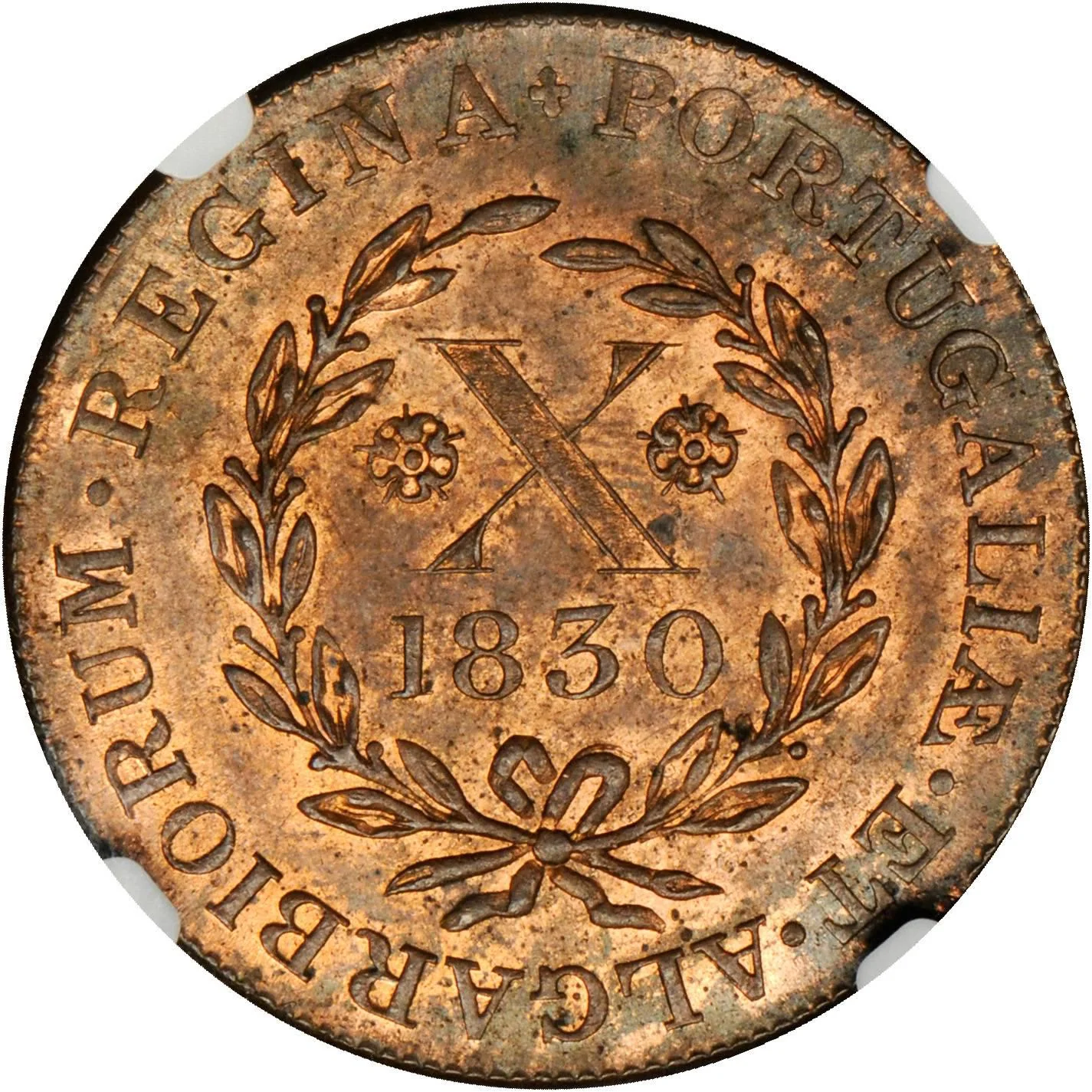
10 réis – Azores
Add to wishlist
Portugal
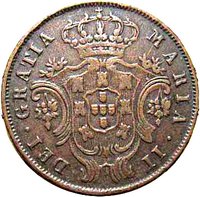
Obverse
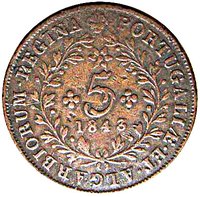
Reverse
Edge
Plain
Categories
| Symbols> Coat of Arms |
| Symbol> Crown |
Mints
| Name | Mark |
|---|---|
| Royal Mint (Tower Hill) | — |
Mintings
| Year | Mint Mark | Mintage | Quality | Collection |
|---|---|---|---|---|
| 1830 | — | — |
Historical background
In 1830, the Azores archipelago, like mainland Portugal, was navigating a complex and unstable currency situation following the Liberal Wars (1828-1834). The conflict between absolutist and constitutionalist forces had fractured the nation's monetary system. On the islands, this meant a circulation of diverse and often devalued coinage, including older Portuguese réis from various reigns, alongside a significant influx of counterfeit coins. The scarcity of official, high-value currency hampered larger commercial transactions and created general economic uncertainty.
The monetary chaos was exacerbated by the Azores' strategic position in the Atlantic. Foreign coins, particularly Brazilian réis and Spanish reales, circulated widely due to trade links and the presence of foreign whaling and merchant ships. This created a de facto multi-currency environment where exchange rates were fluid and locally negotiated, rather than set by a central authority. The lack of a uniform and trustworthy medium of exchange stifled internal trade between islands and complicated the archipelago's vital export economy, which relied on oranges, wine, and spirits.
Ultimately, the currency situation in 1830 was a reflection of the Azores' political limbo during the civil war. With the central authority in Lisbon contested, there was no effective mechanism to regulate currency supply or quality. The instability would only begin to resolve after the war's conclusion, with the eventual victory of the liberal forces under Pedro IV, who would work to unify and standardize the Portuguese monetary system, a process that would gradually extend its reach to the Azores in the following decades.
The monetary chaos was exacerbated by the Azores' strategic position in the Atlantic. Foreign coins, particularly Brazilian réis and Spanish reales, circulated widely due to trade links and the presence of foreign whaling and merchant ships. This created a de facto multi-currency environment where exchange rates were fluid and locally negotiated, rather than set by a central authority. The lack of a uniform and trustworthy medium of exchange stifled internal trade between islands and complicated the archipelago's vital export economy, which relied on oranges, wine, and spirits.
Ultimately, the currency situation in 1830 was a reflection of the Azores' political limbo during the civil war. With the central authority in Lisbon contested, there was no effective mechanism to regulate currency supply or quality. The instability would only begin to resolve after the war's conclusion, with the eventual victory of the liberal forces under Pedro IV, who would work to unify and standardize the Portuguese monetary system, a process that would gradually extend its reach to the Azores in the following decades.
⭐ Rare