

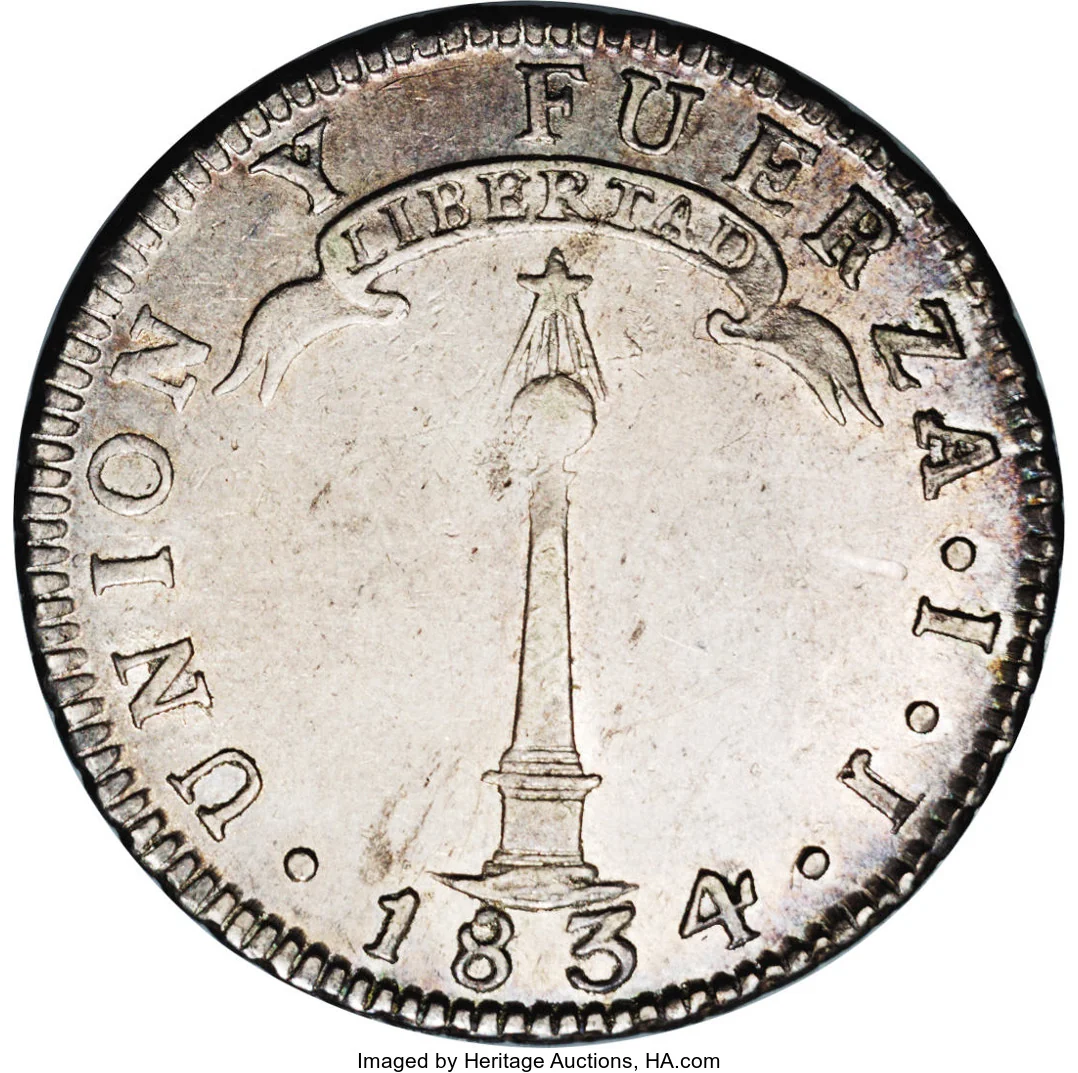
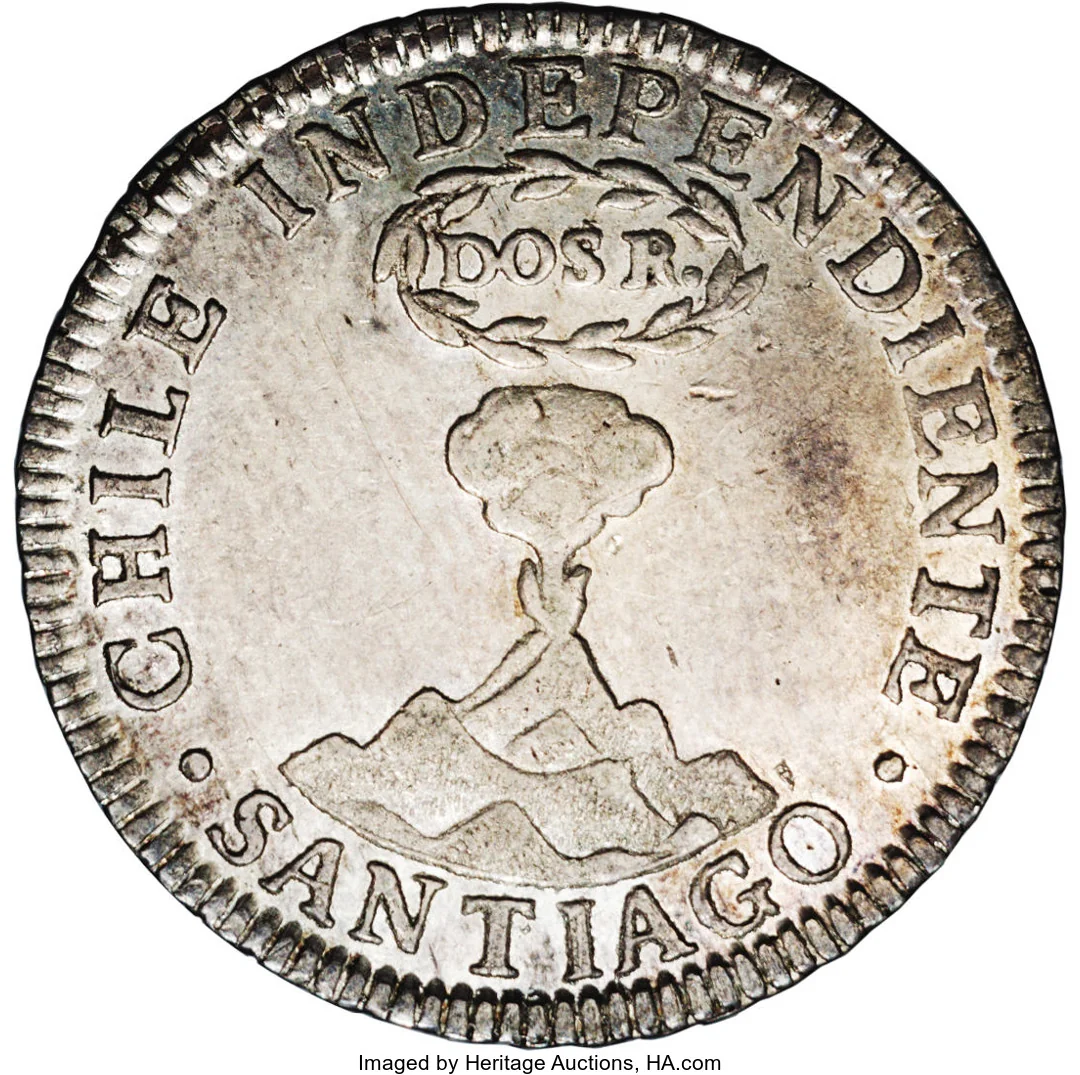

Mints
| Name | Mark |
|---|---|
| Casa de Moneda de Chile | — |
Mintings
| Year | Mint Mark | Mintage | Quality | Collection |
|---|---|---|---|---|
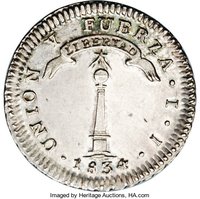
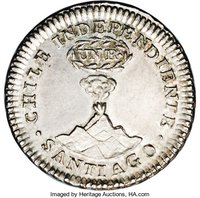
| 1834 | IJ | 25,767 |
Historical background
In 1834, Chile's currency situation was characterized by a chaotic and fragmented monetary system, a direct legacy of the colonial era and the turbulent early years of independence. The primary circulating coins were the Spanish colonial peso (or "real de a ocho") and its fractional parts, but these existed alongside a confusing array of coins from other former Spanish colonies like Peru and Bolivia, as well as various foreign currencies. Crucially, the value and weight of these coins, particularly the silver peso, varied significantly, leading to widespread confusion in commerce and undermining economic stability. The new republican government, having consolidated power after the 1833 Constitution, recognized that establishing a uniform national currency was essential for asserting sovereignty, facilitating trade, and promoting economic development.
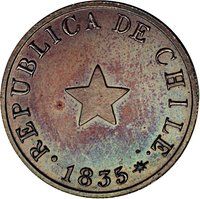
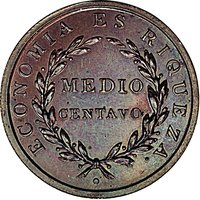
The pivotal response to this disorder was the Currency Law of 1834, enacted on June 25. This legislation formally established the Chilean peso as the sole national monetary unit, defining it with a specific metallic content: 1 peso was to contain 22.5 grams of pure silver. The law also created a decimal system with the centavo (one-hundredth of a peso) as a subdivision. To physically implement this system, the government commissioned the minting of new, distinct national coinage at the Casa de Moneda in Santiago. These coins, bearing the republic's coat of arms, were intended to gradually replace the heterogeneous mix of foreign and old colonial coins in circulation, providing a tangible symbol of the centralized state.
The reform of 1834 was a foundational step in Chile's economic modernization, successfully creating a stable and unified monetary standard for the nation. By fixing the silver content of the peso, Chile effectively placed itself on a silver standard, which provided a reliable store of value and a consistent unit of account for decades. This stability proved vital for the coming economic boom driven by mining and agricultural exports. While the system would later face challenges, such as the global fluctuation of silver prices, the 1834 law successfully ended the monetary anarchy of the post-independence period and laid the institutional groundwork for Chile's 19th-century commercial expansion.
The pivotal response to this disorder was the Currency Law of 1834, enacted on June 25. This legislation formally established the Chilean peso as the sole national monetary unit, defining it with a specific metallic content: 1 peso was to contain 22.5 grams of pure silver. The law also created a decimal system with the centavo (one-hundredth of a peso) as a subdivision. To physically implement this system, the government commissioned the minting of new, distinct national coinage at the Casa de Moneda in Santiago. These coins, bearing the republic's coat of arms, were intended to gradually replace the heterogeneous mix of foreign and old colonial coins in circulation, providing a tangible symbol of the centralized state.
The reform of 1834 was a foundational step in Chile's economic modernization, successfully creating a stable and unified monetary standard for the nation. By fixing the silver content of the peso, Chile effectively placed itself on a silver standard, which provided a reliable store of value and a consistent unit of account for decades. This stability proved vital for the coming economic boom driven by mining and agricultural exports. While the system would later face challenges, such as the global fluctuation of silver prices, the 1834 law successfully ended the monetary anarchy of the post-independence period and laid the institutional groundwork for Chile's 19th-century commercial expansion.
💎 Extremely Rare