

50 cents – South Africa
Add to wishlist
Non-circulating coins
Commemoration: Silver Wildlife series
South Africa
Context
Material
References
KM: #
Numista: #139804
Value
Exchange value: 0.50 ZAR
Bullion value: $176.73
Inflation-adjusted value: 1.49 ZAR
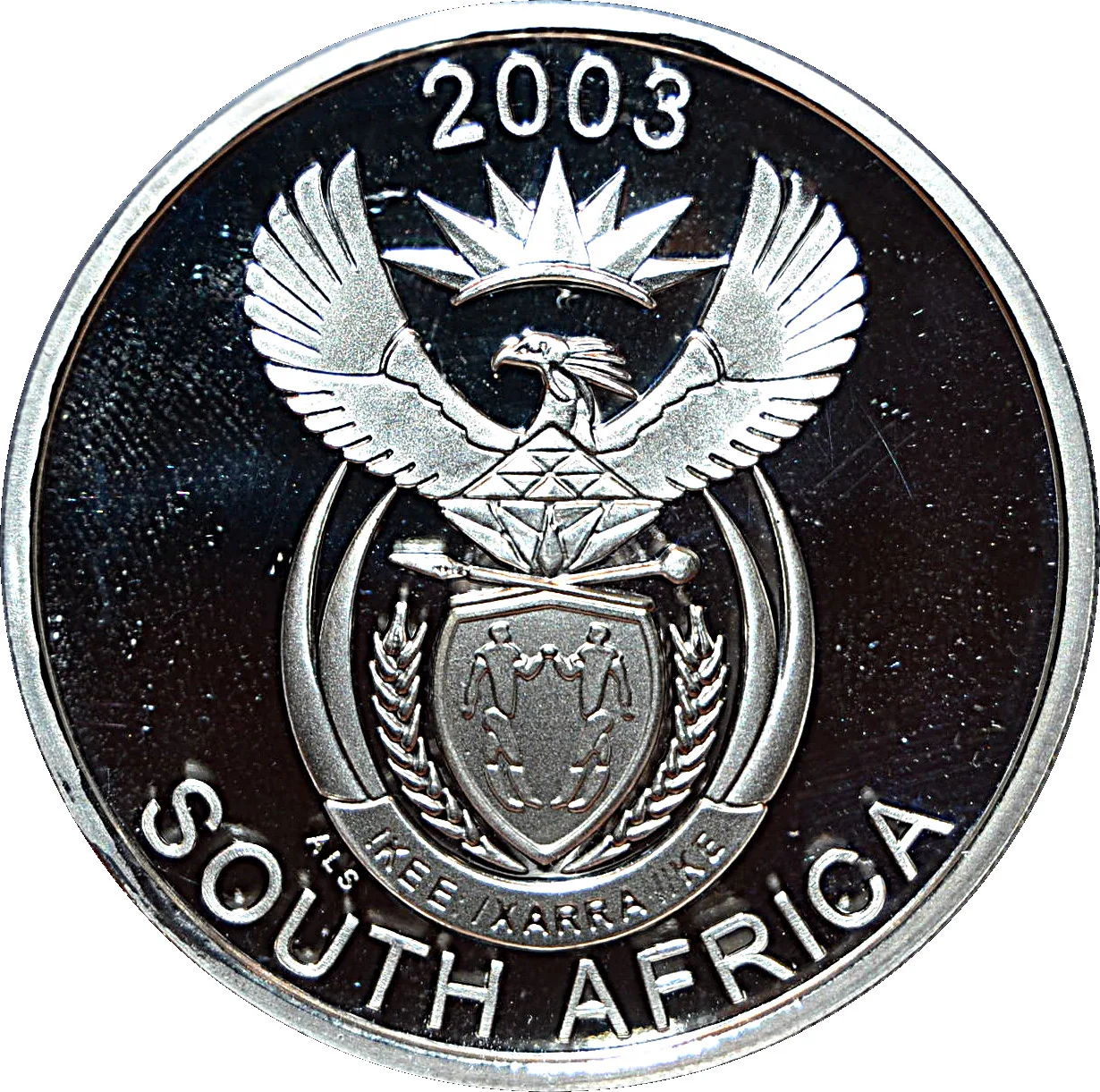
Obverse
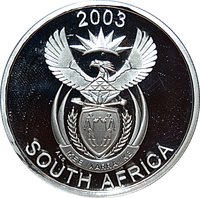
Description:
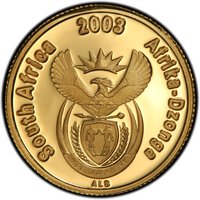
National Coat of Arms
Inscription:
2003
!KE E: /XARRA //KE
ALS
South Africa
!KE E: /XARRA //KE
ALS
South Africa
Translation:
2003
!KE E: /XARRA //KE
UNITY IN DIVERSITY
South Africa
!KE E: /XARRA //KE
UNITY IN DIVERSITY
South Africa
Script: Latin
Engraver: Arthur Sutherland
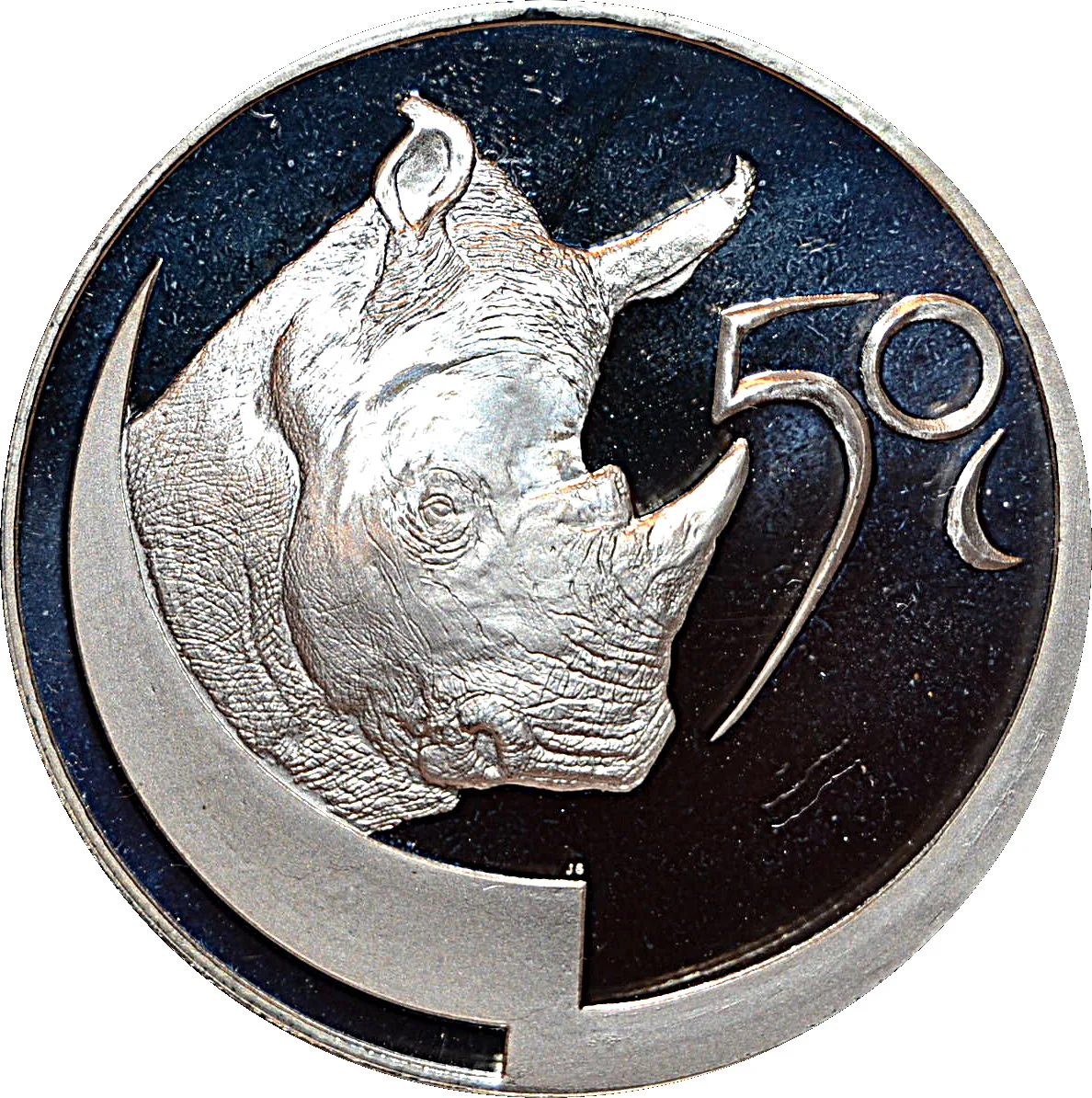
Reverse
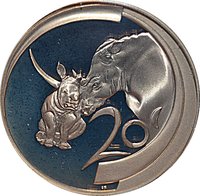
Description:
White rhino head facing right.
Inscription:
50C
JS
JS
Translation:
Fifty Cents
Script: Latin
Language: English
Engraver: Johan Steyn
Edge
Reeded
Categories
| Symbols> Coat of Arms |
Mintings
| Year | Mint Mark | Mintage | Quality | Collection |
|---|---|---|---|---|
| 2003 | — | 312 | Proof |
Historical background
In 2003, South Africa's currency landscape was dominated by the sustained and dramatic strength of the Rand, a phenomenon that presented a complex mix of economic benefits and challenges. Following a historic low of nearly R13.90/USD in late 2001, the Rand embarked on a remarkable recovery, appreciating by over 50% to trade around R6.60/USD by the end of 2003. This surge, dubbed the "Rand rally," was driven by a combination of high domestic interest rates, a global commodity boom that boosted export revenues, and significant capital inflows as South Africa was increasingly viewed as an attractive emerging market following its political transition.
This sharp appreciation created a severe policy dilemma. While it helped to curb inflation—allowing the South African Reserve Bank (SARB) to cut interest rates—and reduced the cost of imports like oil, it simultaneously placed immense pressure on the country's export-oriented and import-competing industries. Key sectors such as mining, manufacturing, and agriculture struggled with declining competitiveness, leading to job losses and heightened concerns about deindustrialization. The government and the SARB faced criticism for not intervening more directly to weaken the currency, but they largely maintained a stance of non-intervention, emphasizing inflation targeting and a free-floating exchange rate.
The 2003 currency situation thus laid bare the tensions inherent in South Africa's reintegration into the global financial system. The strong Rand was a signal of international confidence and macroeconomic stability, yet it also exacerbated structural economic problems, including high unemployment and inequality. This period set the stage for ongoing debates about currency management, industrial policy, and how to balance the benefits of financial openness with the need to protect and grow the real economy.
This sharp appreciation created a severe policy dilemma. While it helped to curb inflation—allowing the South African Reserve Bank (SARB) to cut interest rates—and reduced the cost of imports like oil, it simultaneously placed immense pressure on the country's export-oriented and import-competing industries. Key sectors such as mining, manufacturing, and agriculture struggled with declining competitiveness, leading to job losses and heightened concerns about deindustrialization. The government and the SARB faced criticism for not intervening more directly to weaken the currency, but they largely maintained a stance of non-intervention, emphasizing inflation targeting and a free-floating exchange rate.
The 2003 currency situation thus laid bare the tensions inherent in South Africa's reintegration into the global financial system. The strong Rand was a signal of international confidence and macroeconomic stability, yet it also exacerbated structural economic problems, including high unemployment and inequality. This period set the stage for ongoing debates about currency management, industrial policy, and how to balance the benefits of financial openness with the need to protect and grow the real economy.
✨ Legendary