

1 dollar (Sir Charles Kingsford Smith) – Australia
Add to wishlist
Non-circulating coins
Commemoration: 100th Anniversary of Sir Charles Kingsford Smith
Australia
Context
Material
References
KM: #
Numista: #139794
Value
Exchange value: 1 AUD
Bullion value: $29.70
Inflation-adjusted value: 2.09 AUD
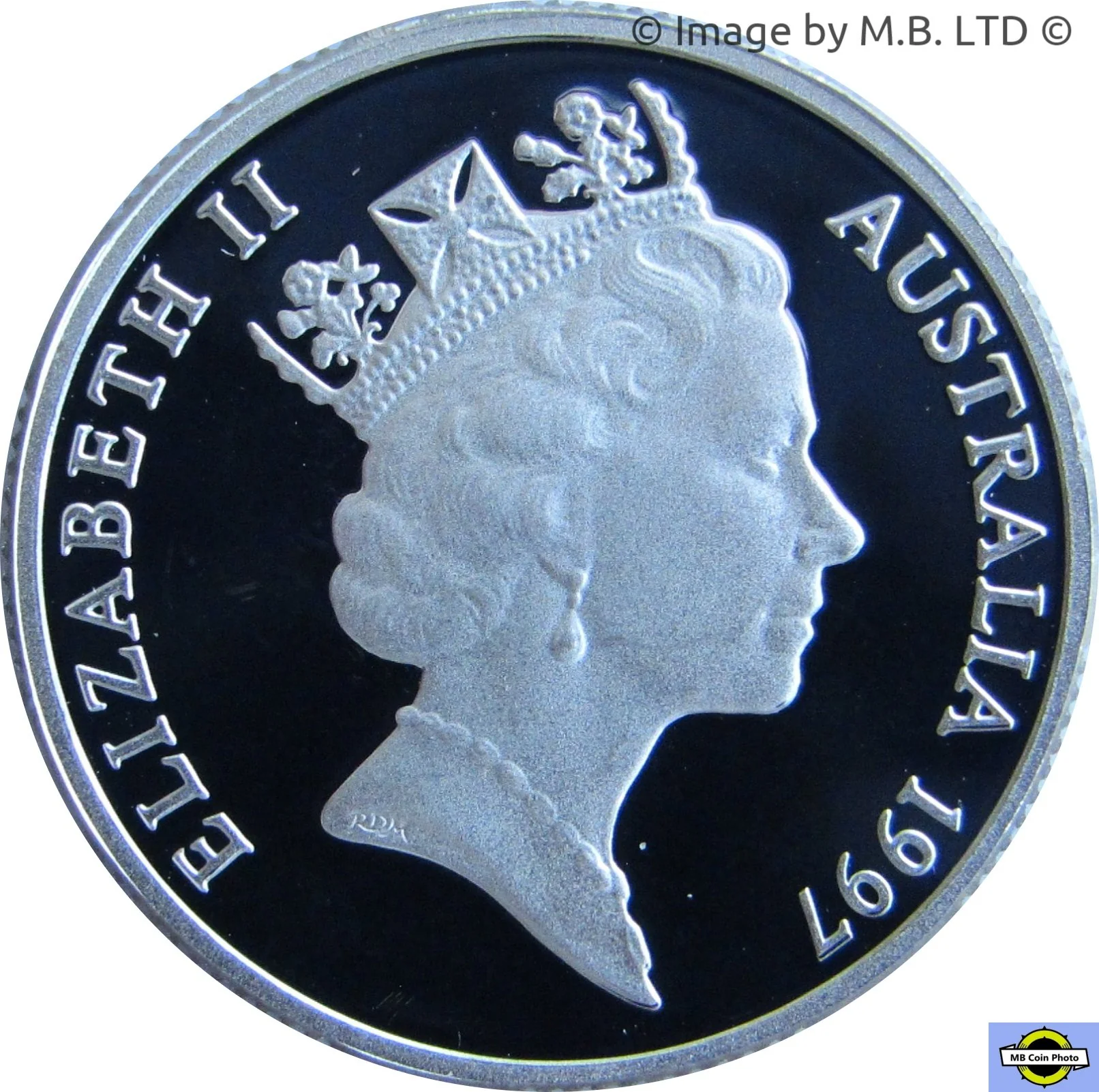
Obverse
Description:
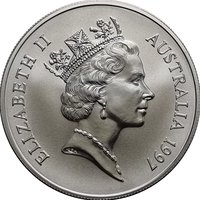
Queen Elizabeth III facing right in the King George IV State Diadem.
Inscription:
ELIZABETH II
AUSTRALIA 1997
RDM
AUSTRALIA 1997
RDM
Script: Latin
Designer: Raphael David Maklouf
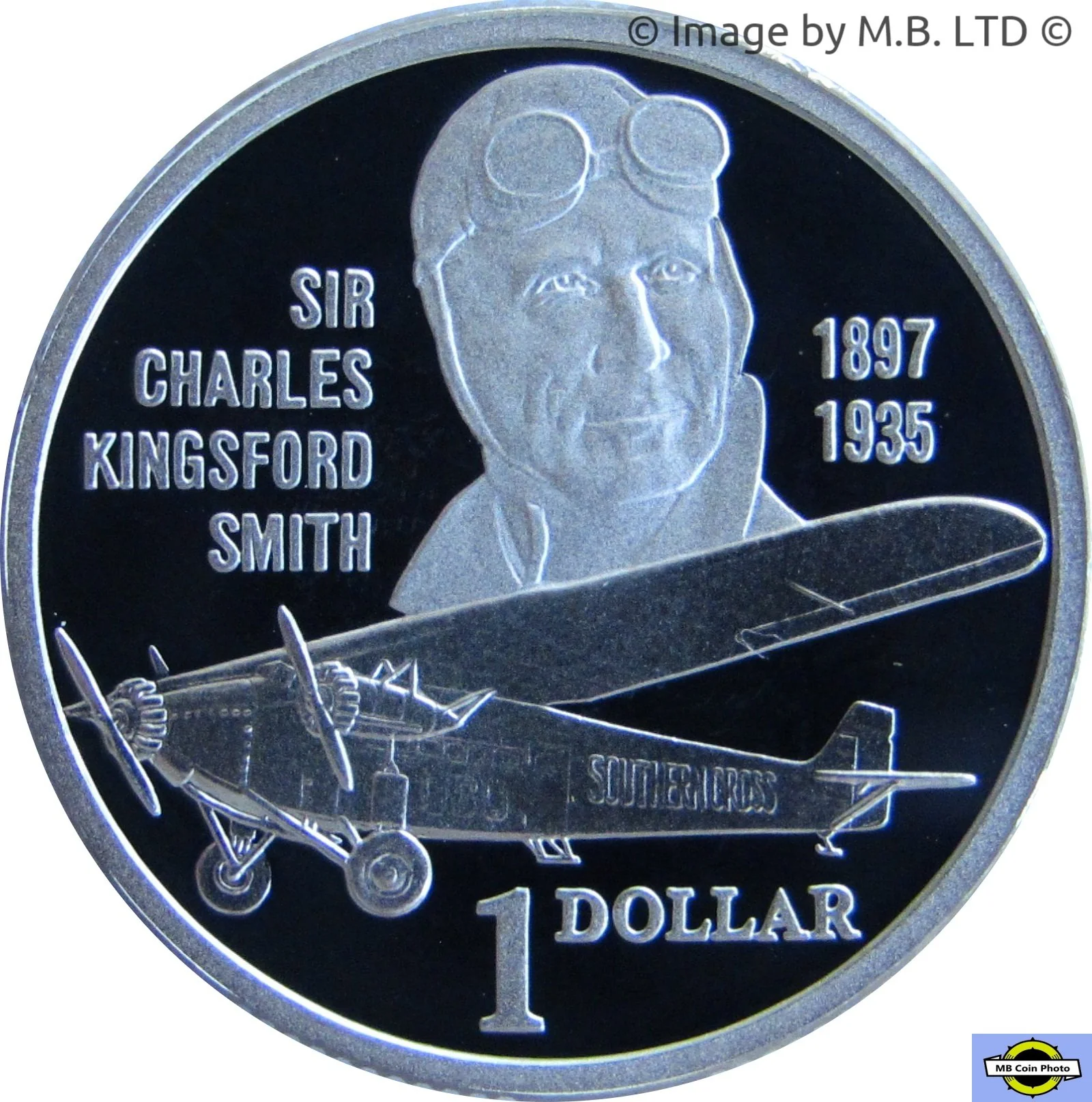
Reverse
Description:
Sir Charles Kingsford-Smith with his Fokker Tri-motor, the Southern Cross.
Inscription:
SIR
CHARLES 1897
KINGSFORD 1935
SMITH
1 DOLLAR
CHARLES 1897
KINGSFORD 1935
SMITH
1 DOLLAR
Script: Latin
Designer: Wojciech Pietranik
Edge
7 shorter smooth segments between 7 reeded segments (11 grooves each)
Categories
| Transportation> Aircraft |
Mints
| Name | Mark |
|---|---|
| Royal Australian Mint | — |
Mintings
| Year | Mint Mark | Mintage | Quality | Collection |
|---|---|---|---|---|
| 1997 | — | 4,000 | Proof |
Historical background
In 1997, Australia's currency situation was characterised by a period of relative stability and strength for the Australian dollar (AUD), operating under a floating exchange rate regime that had been in place since 1983. This stability was underpinned by robust economic fundamentals, including low inflation, steady growth, and a credible monetary policy framework managed by the Reserve Bank of Australia (RBA). The AUD benefited from strong foreign investment inflows, particularly into the country's mining and resources sector, which helped maintain its value against major currencies like the US dollar.
However, the year was significantly defined by external shock from the Asian Financial Crisis, which erupted in mid-1997. As the crisis spread through Southeast and East Asia, it created substantial volatility and downward pressure on the AUD. Australia's important trade and economic links with the region meant the crisis threatened export demand and investor confidence. Consequently, the AUD faced sharp depreciation pressures, falling from around 77 US cents in early 1997 to briefly dip below 63 cents by the end of the year, reflecting market concerns over regional contagion and its impact on the Australian economy.
The RBA's response was measured, opting to allow the currency to act as a shock absorber rather than intervening heavily to defend a specific level. This depreciation, while a symptom of stress, ultimately helped cushion the domestic economy by making exports more competitive outside the crisis-affected region. Thus, the 1997 currency narrative transitioned from one of domestic stability to managing a volatile external environment, setting the stage for the AUD's role in weathering the regional turmoil while highlighting Australia's deepening economic integration with Asia.
However, the year was significantly defined by external shock from the Asian Financial Crisis, which erupted in mid-1997. As the crisis spread through Southeast and East Asia, it created substantial volatility and downward pressure on the AUD. Australia's important trade and economic links with the region meant the crisis threatened export demand and investor confidence. Consequently, the AUD faced sharp depreciation pressures, falling from around 77 US cents in early 1997 to briefly dip below 63 cents by the end of the year, reflecting market concerns over regional contagion and its impact on the Australian economy.
The RBA's response was measured, opting to allow the currency to act as a shock absorber rather than intervening heavily to defend a specific level. This depreciation, while a symptom of stress, ultimately helped cushion the domestic economy by making exports more competitive outside the crisis-affected region. Thus, the 1997 currency narrative transitioned from one of domestic stability to managing a volatile external environment, setting the stage for the AUD's role in weathering the regional turmoil while highlighting Australia's deepening economic integration with Asia.
💎 Extremely Rare