

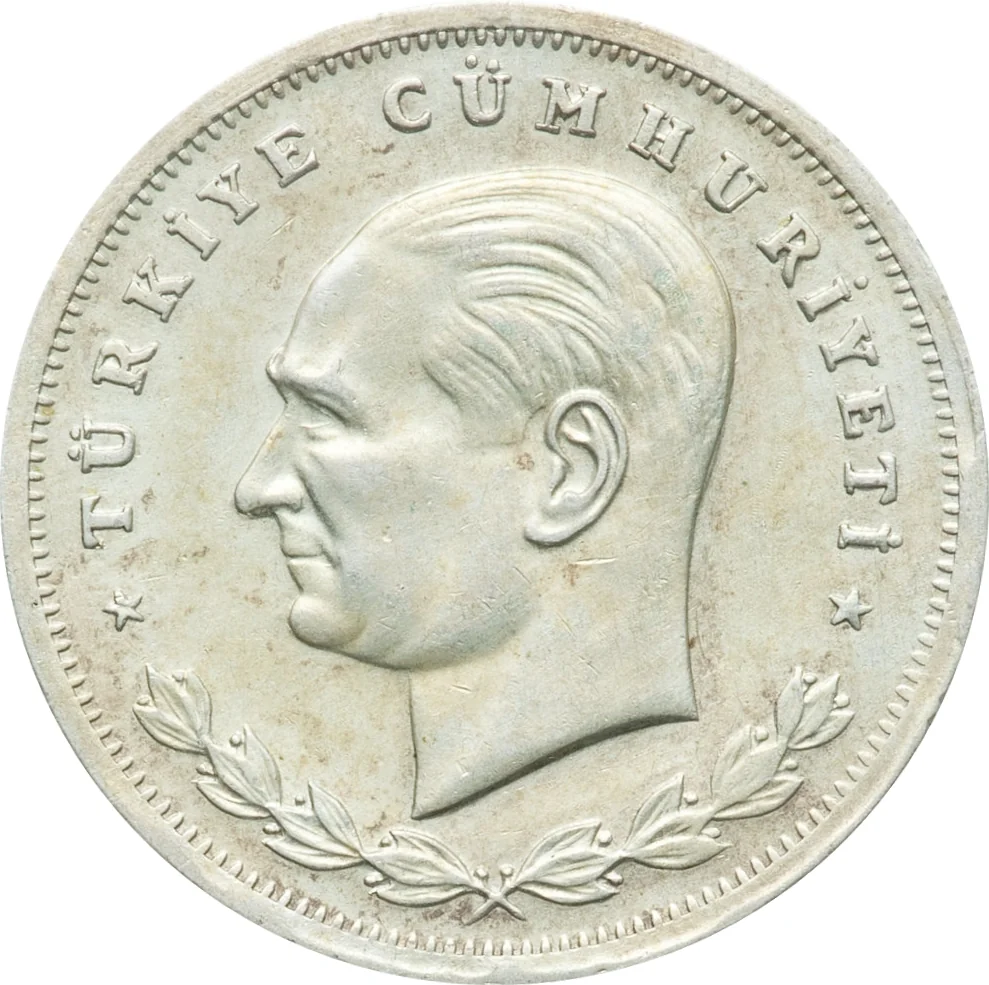

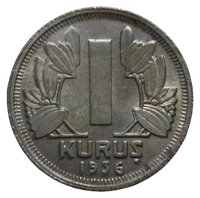
Obverse
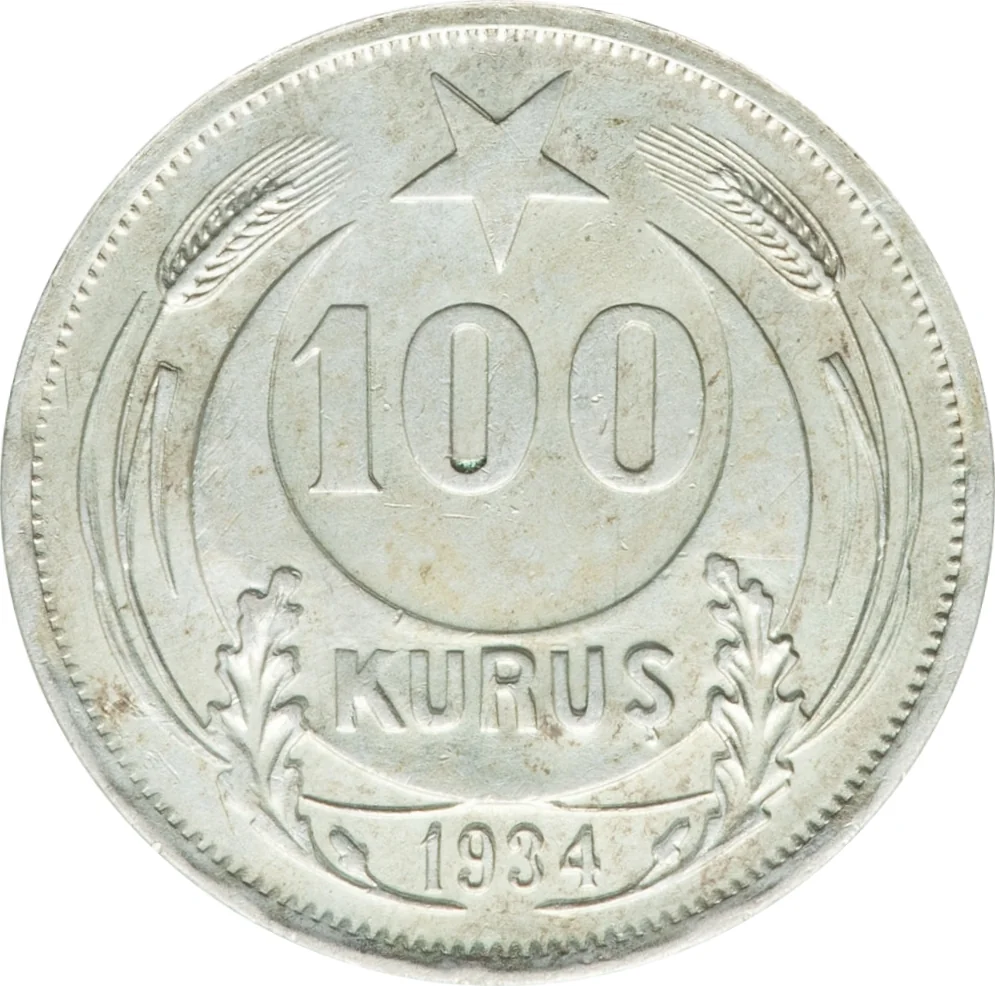
Reverse
Edge
Mints
| Name | Mark |
|---|---|
| Turkish State Mint | — |
Mintings
| Year | Mint Mark | Mintage | Quality | Collection |
|---|---|---|---|---|
| 1934 | — | 718,000 |
Historical background
In 1934, Turkey’s currency situation was defined by the early stability of the newly established Turkish Republic, which had successfully navigated the economic turmoil of its founding decade. The republic had replaced the deeply depreciated Ottoman currency with the Turkish lira in 1926, pegging it to a gold standard and to the British pound sterling. This move, managed by the newly founded Central Bank of the Republic of Turkey (established in 1930), provided a crucial period of monetary stability and international credibility, which was a significant achievement following the financial chaos of the post-World War I and Independence War years.
Economically, 1934 fell within the period of Turkey’s first Five-Year Industrial Plan (1934-1938), a state-led push for industrialization and economic self-sufficiency. This required careful currency management to finance imports of machinery and infrastructure while maintaining external balance. The government, under the statist (devletçilik) policies of the single-party rule, exercised strict control over foreign exchange and credit allocation to prioritize these industrial goals. The lira's fixed peg provided a predictable environment for state planning, though it also meant monetary policy was largely subordinate to the needs of the development plan and the maintenance of foreign reserves.
Consequently, the currency was stable but not without underlying pressures. The global context of the Great Depression, while somewhat mitigated by Turkey’s relatively insulated economy, still affected export commodity prices. Furthermore, the ambitious investment program began to strain resources, leading to a gradual increase in money supply to fund state enterprises—a precursor to inflationary pressures that would become more pronounced in later decades. Thus, 1934 represents a point of apparent calm, where a managed and pegged lira supported national development objectives, but within a controlled system that deferred the challenges of balancing growth with monetary stability.
Economically, 1934 fell within the period of Turkey’s first Five-Year Industrial Plan (1934-1938), a state-led push for industrialization and economic self-sufficiency. This required careful currency management to finance imports of machinery and infrastructure while maintaining external balance. The government, under the statist (devletçilik) policies of the single-party rule, exercised strict control over foreign exchange and credit allocation to prioritize these industrial goals. The lira's fixed peg provided a predictable environment for state planning, though it also meant monetary policy was largely subordinate to the needs of the development plan and the maintenance of foreign reserves.
Consequently, the currency was stable but not without underlying pressures. The global context of the Great Depression, while somewhat mitigated by Turkey’s relatively insulated economy, still affected export commodity prices. Furthermore, the ambitious investment program began to strain resources, leading to a gradual increase in money supply to fund state enterprises—a precursor to inflationary pressures that would become more pronounced in later decades. Thus, 1934 represents a point of apparent calm, where a managed and pegged lira supported national development objectives, but within a controlled system that deferred the challenges of balancing growth with monetary stability.

⭐ Somewhat Rare