

1 yuan – Fukien Province
Add to wishlist
China
Context
Year: 1899
Country: China
Issuer: Fukien Province
Ruler: Guangxu
Currency:
(1896—1949)
Demonetized: Yes
Material
References
Y: #
Numista: #34899
Value
Bullion value: $62.09
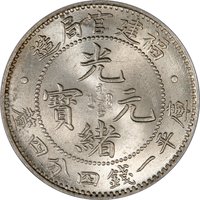
Obverse
Description:
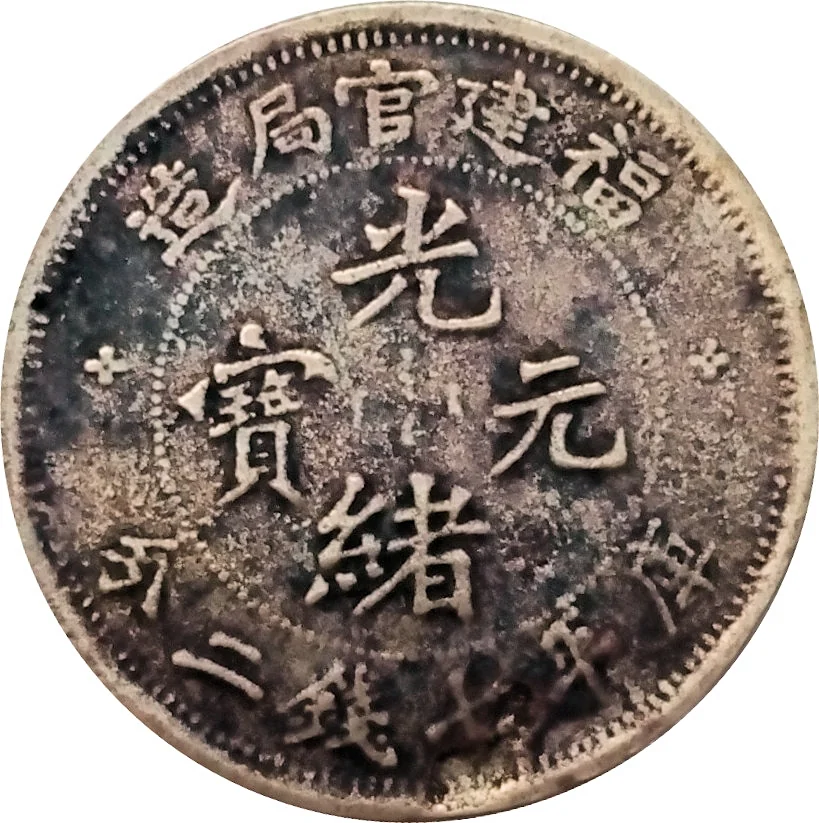
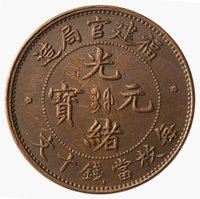
Chinese ideograms top to bottom, right to left, with central Manchu text, all encircled by more Chinese characters.
Inscription:
造局官建福
光
ᠪᠠᡩᠠᡵᠠᠩᡤᠠ
寶 ᠶᡠᠸᠠᠨ ᠪᠣᠣ 元
ᡩᠣᡵᠣ
緒
分二錢七平庫
光
ᠪᠠᡩᠠᡵᠠᠩᡤᠠ
寶 ᠶᡠᠸᠠᠨ ᠪᠣᠣ 元
ᡩᠣᡵᠣ
緒
分二錢七平庫
Translation:
Mint Official Jianfu
Guang
Badarangga
Yuan Bao
Doro
Xu
2 Fen, 7 Candareens, Treasury Standard
Guang
Badarangga
Yuan Bao
Doro
Xu
2 Fen, 7 Candareens, Treasury Standard
Scripts: Chinese, Mongolian / Manchu
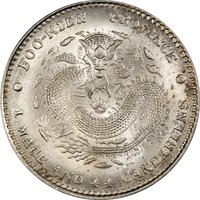
Reverse
Description:
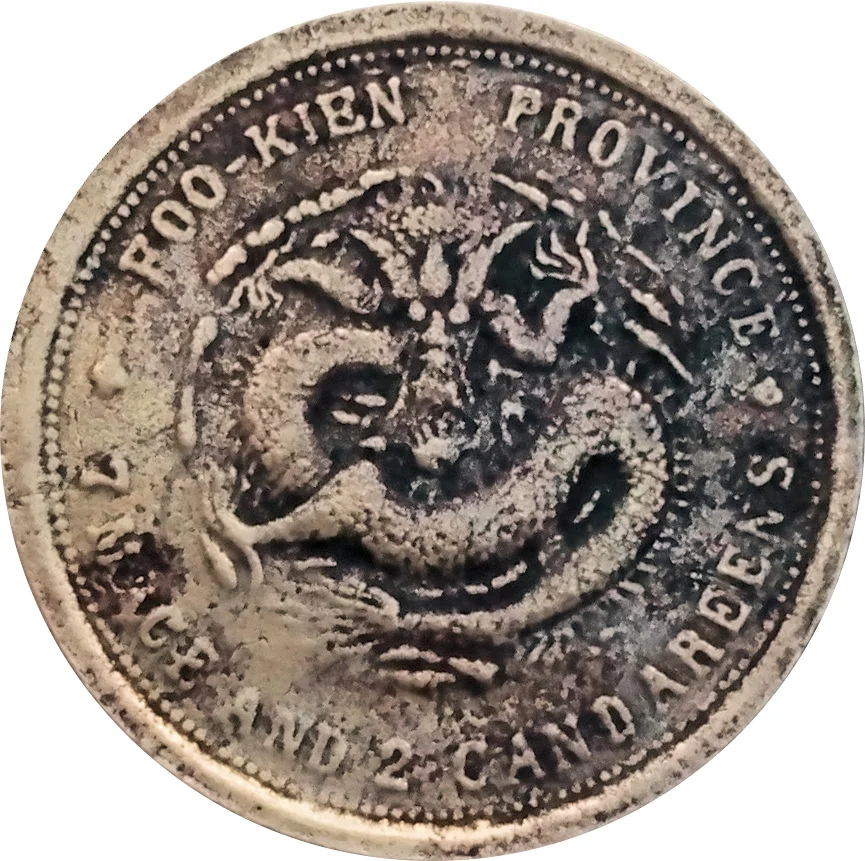
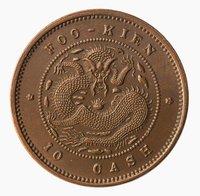
Dragon encircling a pearl, surrounded by English text.
Inscription:
FOO-KIEN PROVINCE
7 MACE AND 2 CANDAREENS
7 MACE AND 2 CANDAREENS
Script: Latin
Edge
Reeded.
Categories
| Mythology> Fantastic animal |
Mintings
| Year | Mint Mark | Mintage | Quality | Collection |
|---|---|---|---|---|
| 1899 | — | — |
Historical background
In 1899, Fukien (Fujian) Province operated within a complex and fragmented monetary system, typical of late Qing China. The official currency was the silver tael, a unit of weight rather than a coin, leading to countless local variants like the Fukien Kuping tael. However, the primary medium for everyday transactions was a flood of foreign silver dollars, particularly Mexican "Eagle" dollars and, increasingly, Japanese Yen from nearby Taiwan (ceded to Japan in 1895). These coins circulated alongside a vast array of Chinese silver and copper-alloy cash coins, as well as privately issued banknotes from native banks (qianzhuang) and, significantly, from foreign banks operating in treaty ports like Fuzhou and Xiamen.
This monetary chaos created severe economic instability. Exchange rates between silver dollars, tael units, and copper cash fluctuated constantly, harming merchants and peasants alike. The situation was exacerbated by debased coinage and counterfeit cash, which eroded public trust. Furthermore, the province's deep economic ties to the Chinese diaspora in Southeast Asia meant remittances in various foreign currencies further complicated the financial landscape, while the growing presence of Japanese economic interests added a layer of geopolitical tension to the currency competition.
The Qing government's attempts at centralization, including discussions of a national currency reform, had little immediate effect in Fukien. The province's monetary disorder in 1899 was therefore a microcosm of the wider Qing dynasty's struggle with sovereignty and economic control. It reflected the corrosive effects of the unequal treaty system, which empowered foreign currencies, and highlighted the dynasty's inability to impose a uniform monetary standard, leaving local economies to navigate a precarious system of multiple, competing mediums of exchange.
This monetary chaos created severe economic instability. Exchange rates between silver dollars, tael units, and copper cash fluctuated constantly, harming merchants and peasants alike. The situation was exacerbated by debased coinage and counterfeit cash, which eroded public trust. Furthermore, the province's deep economic ties to the Chinese diaspora in Southeast Asia meant remittances in various foreign currencies further complicated the financial landscape, while the growing presence of Japanese economic interests added a layer of geopolitical tension to the currency competition.
The Qing government's attempts at centralization, including discussions of a national currency reform, had little immediate effect in Fukien. The province's monetary disorder in 1899 was therefore a microcosm of the wider Qing dynasty's struggle with sovereignty and economic control. It reflected the corrosive effects of the unequal treaty system, which empowered foreign currencies, and highlighted the dynasty's inability to impose a uniform monetary standard, leaving local economies to navigate a precarious system of multiple, competing mediums of exchange.
💎 Extremely Rare