

100 pounds – Egypt
Add to wishlist
Non-circulating coins
Commemoration: Diamond Jubilee of Egyptian Council of State
Egypt
Context
Year: 2021
Islamic (Hijri) Year:: 1443
Issuer: Egypt
Period:
(since 1971)
Currency:
(since 1916)
Total mintage: 7,000
Material
References
KM: #
Numista: #348714
Value
Exchange value: 100 EGP
Bullion value: $52.98
Obverse
Description:
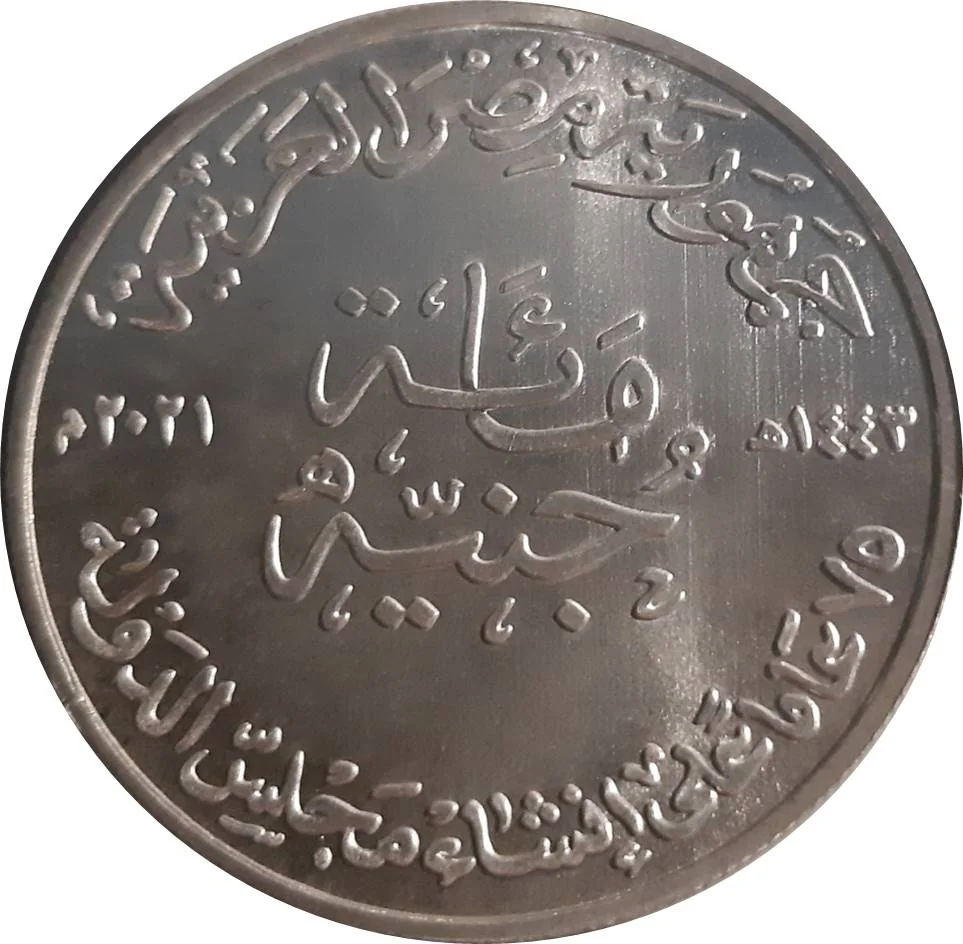
Country, denomination, and year (Gregorian and Hijri) in Arabic.
Inscription:
جمهورية مصر العربية
ماءة جنيه
٢٠٢١م - ١٤٤٢هـ
٧٥ عاما على آنشاء مجلس الدولة
ماءة جنيه
٢٠٢١م - ١٤٤٢هـ
٧٥ عاما على آنشاء مجلس الدولة
Translation:
Arab Republic of Egypt
One Hundred Pounds
2021 AD - 1442 AH
75 Years Since the Establishment of the State Council
One Hundred Pounds
2021 AD - 1442 AH
75 Years Since the Establishment of the State Council
Script: Arabic (naskh)
Language: Arabic
Designers: Mohamed Elgebally, Taha Abbas
Reverse
Description:
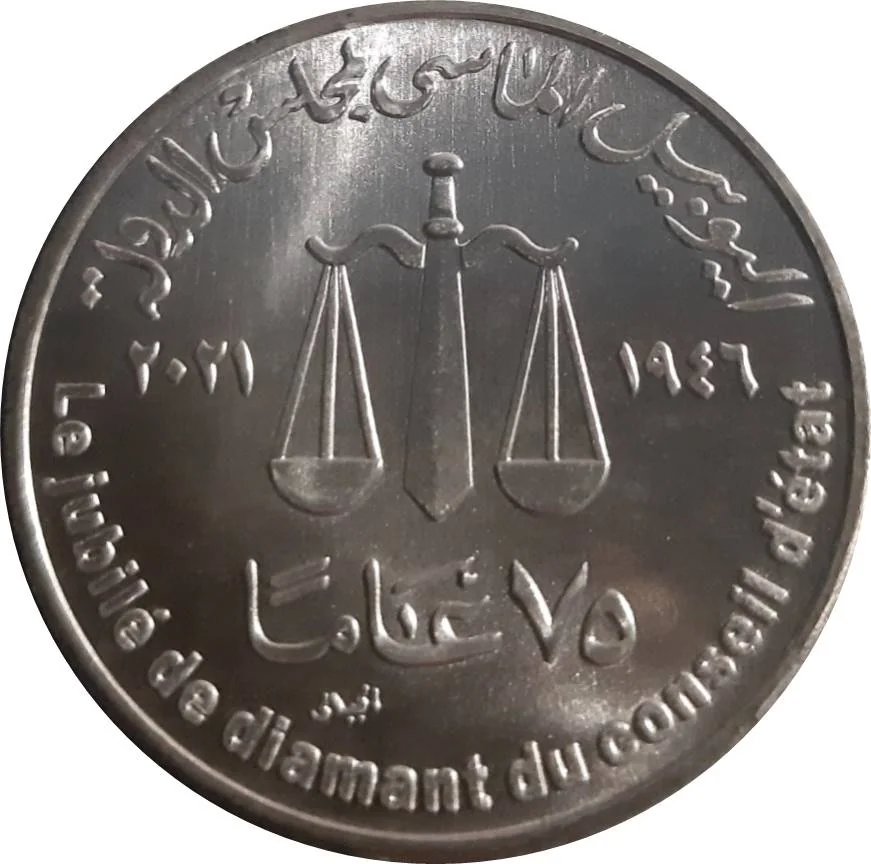
Council of State logo (Egypt)
Inscription:
اليوبيل الماسى لمجلس الدولة
١٩٤٦ ٢٠٢١
٧٥ عاما
Le jubilé de diamant du conseil d'état
١٩٤٦ ٢٠٢١
٧٥ عاما
Le jubilé de diamant du conseil d'état
Translation:
The Diamond Jubilee of the Council of State
1946 2021
75 Years
1946 2021
75 Years
Designers: Mohamed Elgebally, Taha Abbas
Edge
Reeded
Mints
| Name | Mark |
|---|---|
| Egyptian Mint Authority | — |
Mintings
| Year | Mint Mark | Mintage | Quality | Collection |
|---|---|---|---|---|
| 2021 | — | 7,000 |
Historical background
In 2021, Egypt continued to navigate a complex currency situation characterized by a managed float of the Egyptian pound (EGP) that had been in place since a major devaluation in 2016. The Central Bank of Egypt (CBE) maintained a policy of relative stability for the pound against the US dollar, with the official exchange rate hovering around 15.7 EGP for much of the year. This stability was actively defended through high-interest rates and significant foreign exchange reserves, which were bolstered by substantial borrowing from international markets and continued inflows from remittances, tourism, and Suez Canal revenues. However, this official stability masked a persistent and growing pressure on the currency, with a significant gap emerging between the official bank rate and the much higher black-market rate, indicating underlying demand pressures and a shortage of hard currency in the formal banking system.
The pressure stemmed from several structural challenges. Egypt remained heavily import-dependent for essential goods like wheat and medicine, creating consistent demand for dollars. Furthermore, the economic disruptions caused by the COVID-19 pandemic in 2020 had severely impacted key foreign currency-earning sectors like tourism, while also leading to capital outflows from emerging markets. Although these sectors showed signs of recovery in 2021, the scars remained. Consequently, the parallel market rate for the dollar rose to approximately 18-19 EGP, reflecting market skepticism about the official valuation and creating a two-tier system that discouraged formal remittances and distorted business planning.
The government's strategy to manage this situation was multifaceted, focusing on attracting foreign currency through non-debt instruments to avoid increasing the already high public debt burden. This included a renewed push for its ambitious privatization program, selling state-owned assets to foreign investors, and promoting direct investment in sectors like green energy and technology. The authorities also maintained capital controls and import restrictions to conserve dollars. By the end of 2021, the currency situation was in a fragile equilibrium—officially stable but under clear strain, setting the stage for the more decisive measures, including a further devaluation and a shift to a more flexible exchange rate regime, that would follow in early 2022 in agreement with the International Monetary Fund.
The pressure stemmed from several structural challenges. Egypt remained heavily import-dependent for essential goods like wheat and medicine, creating consistent demand for dollars. Furthermore, the economic disruptions caused by the COVID-19 pandemic in 2020 had severely impacted key foreign currency-earning sectors like tourism, while also leading to capital outflows from emerging markets. Although these sectors showed signs of recovery in 2021, the scars remained. Consequently, the parallel market rate for the dollar rose to approximately 18-19 EGP, reflecting market skepticism about the official valuation and creating a two-tier system that discouraged formal remittances and distorted business planning.
The government's strategy to manage this situation was multifaceted, focusing on attracting foreign currency through non-debt instruments to avoid increasing the already high public debt burden. This included a renewed push for its ambitious privatization program, selling state-owned assets to foreign investors, and promoting direct investment in sectors like green energy and technology. The authorities also maintained capital controls and import restrictions to conserve dollars. By the end of 2021, the currency situation was in a fragile equilibrium—officially stable but under clear strain, setting the stage for the more decisive measures, including a further devaluation and a shift to a more flexible exchange rate regime, that would follow in early 2022 in agreement with the International Monetary Fund.
✨ Legendary