

50 cents – Solomon Islands
Add to wishlist
Solomon Islands
Context
Material
Diameter: 29.5 mm
Weight: 10 g
Thickness: 1.9 mm
Shape: Dodecagonal
Composition: Copper-nickel
Magnetic: No
Technique: Milled
Alignment: Medal alignment
flip

References
KM: #
Numista: #3487
Value
Exchange value: 0.50 SBD
Obverse
Description:
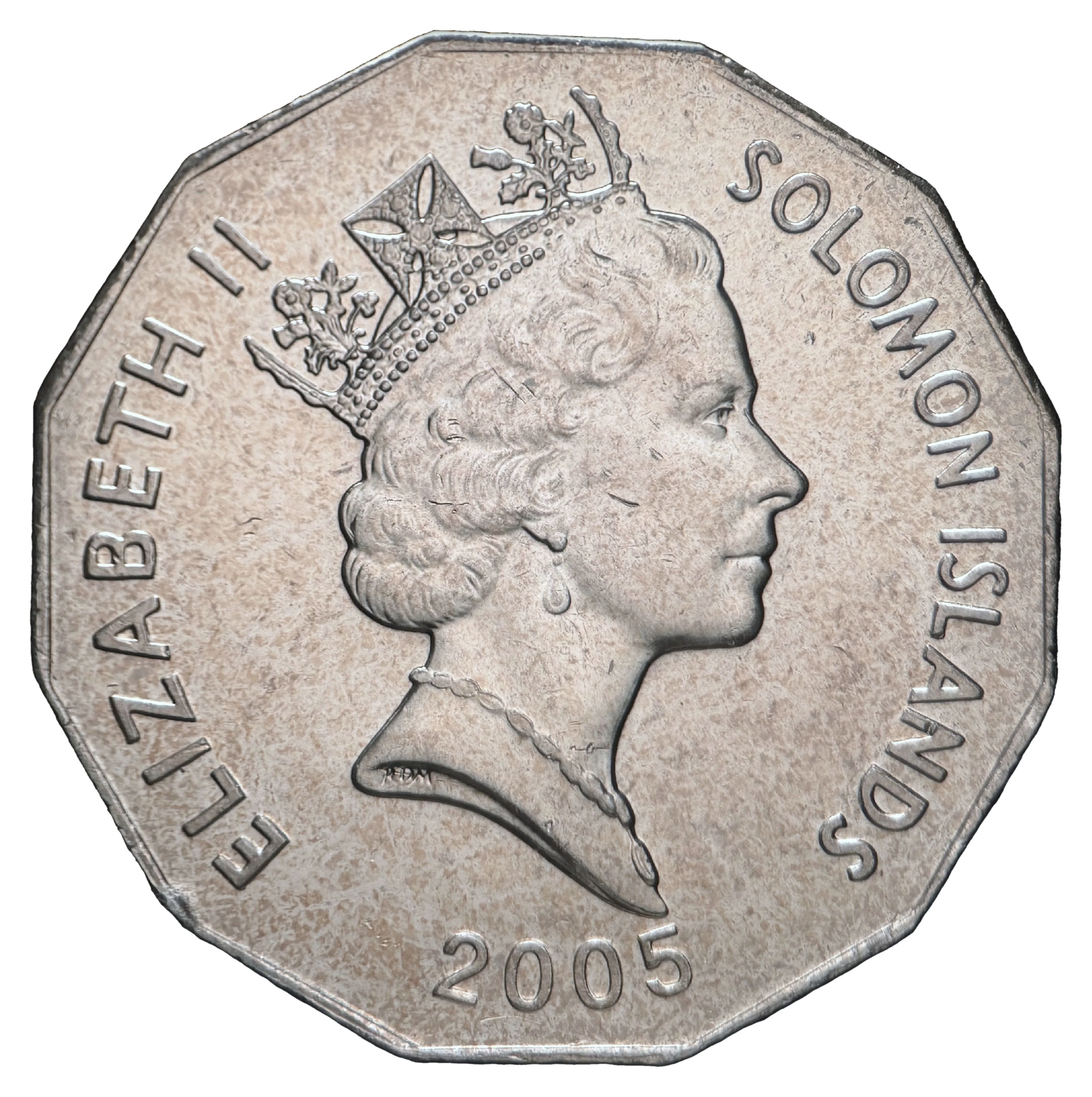
Queen Elizabeth II facing right, engraver's initials in truncation.
Inscription:
ELIZABETH II SOLOMON ISLANDS
RDM
2005
RDM
2005
Translation:
ELIZABETH II SOLOMON ISLANDS
REGINA DEDIT MONETAM
2005
REGINA DEDIT MONETAM
2005
Script: Latin
Engraver: Raphael David Maklouf
Reverse
Description:
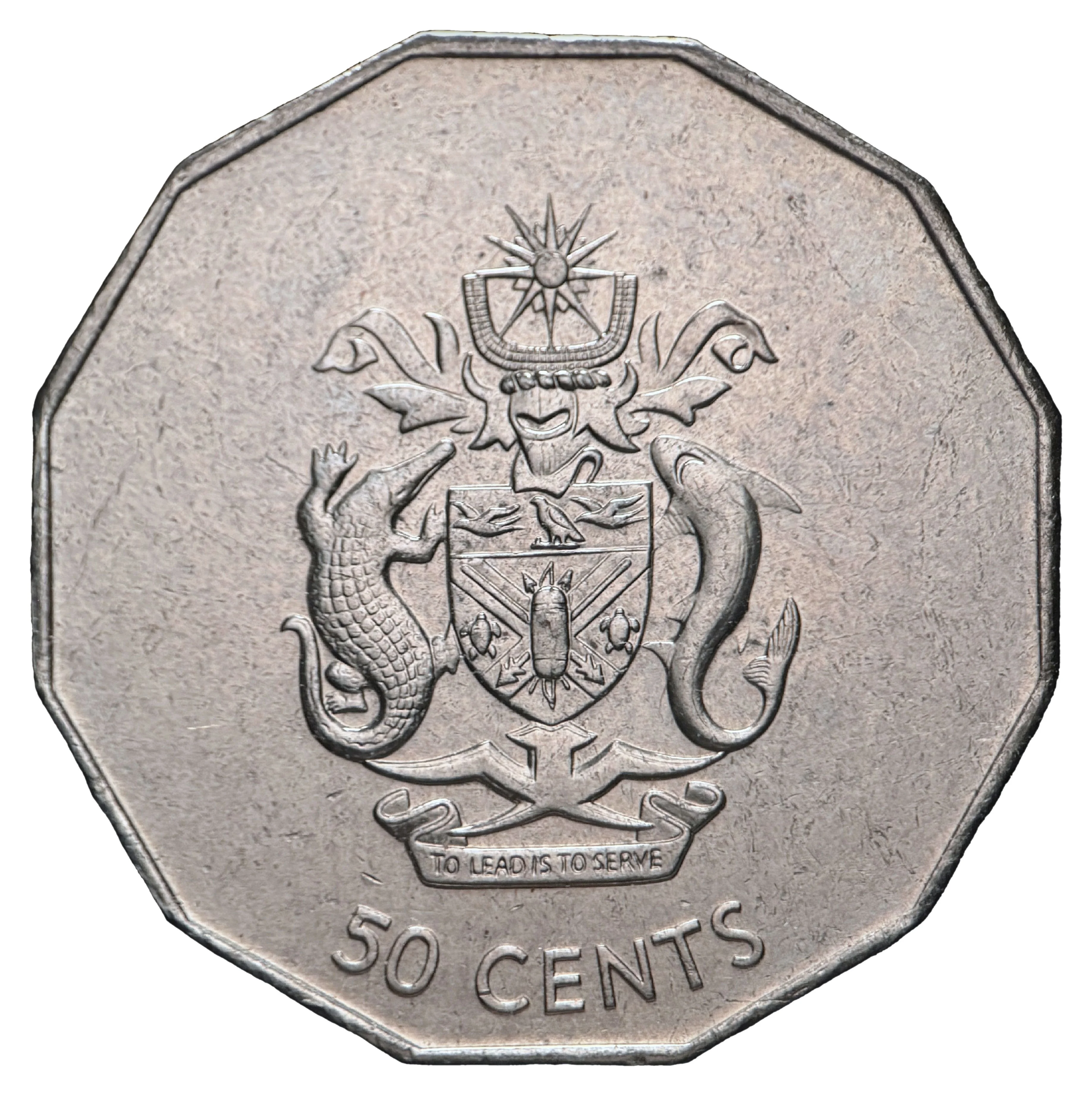
Arms with supporters above value.
Inscription:
TO LEAD IS TO SERVE
50 CENTS
50 CENTS
Script: Latin
Edge
Plain
Categories
| Person> Monarch |
| Symbols> Coat of Arms |
| Animal> Fish |
| Animal> Reptile |
| Symbol> Sun |
| Symbol> Crown |
Mintings
| Year | Mint Mark | Mintage | Quality | Collection |
|---|---|---|---|---|
| 1990 | — | — | ||
| 1995 | — | — | ||
| 1996 | — | — | ||
| 1997 | — | — | ||
| 2005 | — | — |
Historical background
In 1990, the Solomon Islands' currency situation was defined by its use of the Solomon Islands dollar (SBD), which had been established as the national currency a decade earlier in 1977, replacing the Australian dollar. The currency was, and remains, managed by the Central Bank of Solomon Islands (CBSI). During this period, the SBD operated under a managed float, but in practice, it was heavily pegged to a basket of currencies, predominantly weighted towards the Australian dollar. This linkage aimed to provide stability for an economy heavily reliant on imports and vulnerable to external shocks.
The economic backdrop of 1990 was one of significant strain. The country faced a substantial trade deficit, with exports of key commodities like timber, fish, and palm oil failing to keep pace with the cost of imported goods, machinery, and petroleum. This pressure contributed to a gradual depreciation of the Solomon Islands dollar throughout the late 1980s and into 1990, raising the cost of living. Furthermore, government finances were under duress, with budgetary deficits leading to a growing dependence on foreign aid and concessional loans, particularly from Australia and other regional partners, to support the balance of payments.
Consequently, monetary policy in 1990 was primarily focused on managing foreign exchange reserves to defend the currency's value and ensure the availability of essential imports. The Central Bank's interventions were cautious, as reserves were limited. Inflation was a concern, driven by both currency weakness and the high import content of the local economy. Overall, the currency situation reflected the broader challenges of a small, developing island nation navigating dependence on primary exports, volatile global commodity prices, and the constant need to maintain sufficient foreign exchange for economic stability.
The economic backdrop of 1990 was one of significant strain. The country faced a substantial trade deficit, with exports of key commodities like timber, fish, and palm oil failing to keep pace with the cost of imported goods, machinery, and petroleum. This pressure contributed to a gradual depreciation of the Solomon Islands dollar throughout the late 1980s and into 1990, raising the cost of living. Furthermore, government finances were under duress, with budgetary deficits leading to a growing dependence on foreign aid and concessional loans, particularly from Australia and other regional partners, to support the balance of payments.
Consequently, monetary policy in 1990 was primarily focused on managing foreign exchange reserves to defend the currency's value and ensure the availability of essential imports. The Central Bank's interventions were cautious, as reserves were limited. Inflation was a concern, driven by both currency weakness and the high import content of the local economy. Overall, the currency situation reflected the broader challenges of a small, developing island nation navigating dependence on primary exports, volatile global commodity prices, and the constant need to maintain sufficient foreign exchange for economic stability.




🌱 Common