

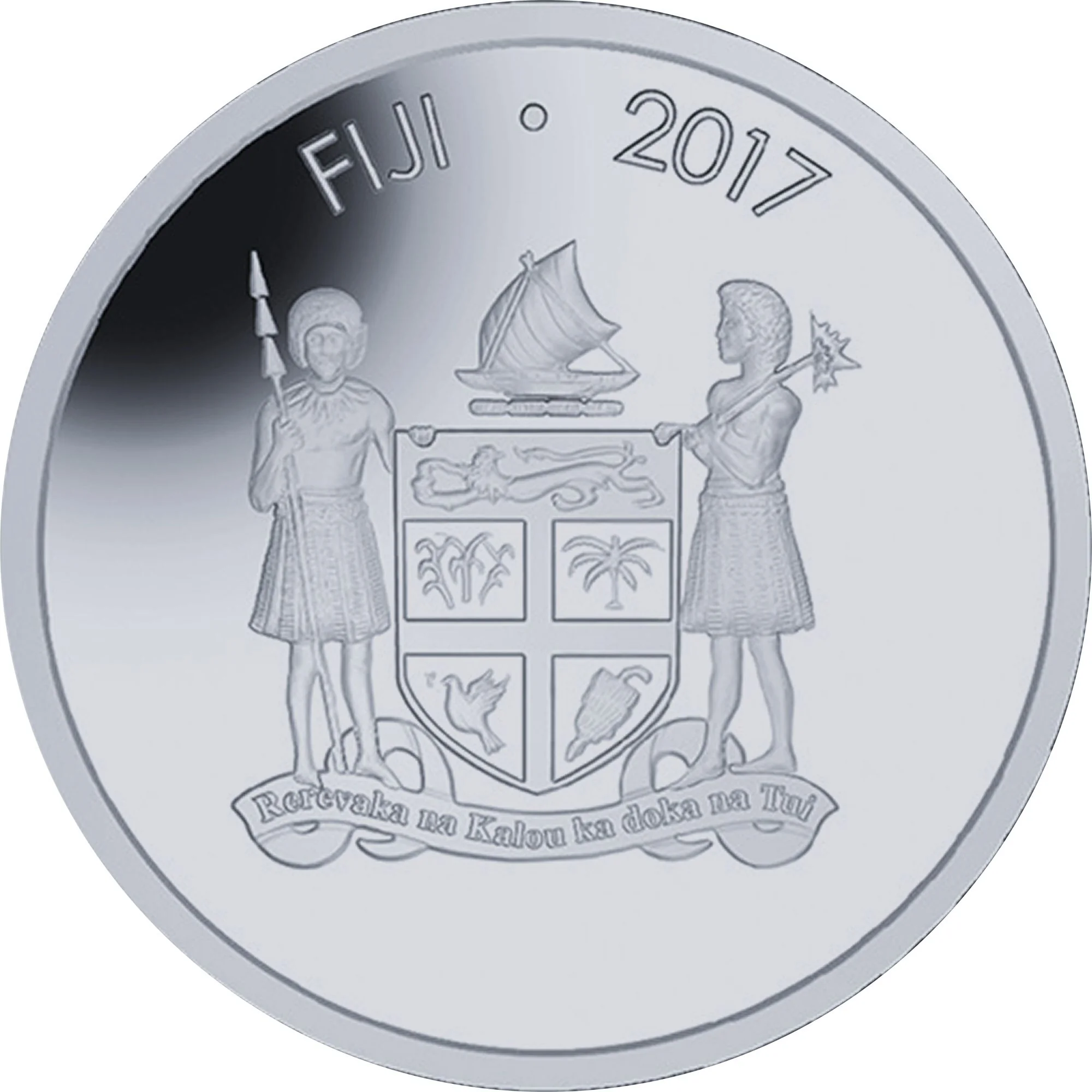

2 Dollars – Fiji
Non-circulating coins
Commemoration: 2018 Winter Olympics
Fiji
Context

Material
References
KM: #Click to copy to clipboard686
Numista: #347511
Value
Exchange value: 2 FJD
Bullion value: $74.36
Obverse
Reverse
Description:
Skier above, snowboarder below.
Inscription:
SOUTH KOREA - OLYMPIC
2018
TWO DOLLARS
2018
TWO DOLLARS
Script: Latin
Edge
Reeded
Categories
| Sport> Winter Olympic Games |
| Sport> Ski |
Mints
| Name | Mark |
|---|---|
| Pobjoy Mint | PM |
Mintings
| Year | Mint Mark | Mintage | Quality | Collection |
|---|---|---|---|---|
| 2017 | — | 2,000 | Proof |
Historical background
In 2017, Fiji's currency situation was characterised by relative stability and deliberate policy management by the Reserve Bank of Fiji (RBF). The Fijian dollar (FJD), which is pegged to a weighted basket of currencies of its major trading partners (including the Australian dollar, US dollar, New Zealand dollar, euro, and Japanese yen), maintained its peg without significant pressure. This stability was underpinned by healthy foreign reserve levels, which remained comfortably above the RBF's benchmark of sufficient import cover for 4.5 months, providing a strong buffer against external shocks.
The year's monetary policy was broadly accommodative, aimed at supporting post-Tropical Cyclone Winston reconstruction efforts and stimulating continued economic growth. The RBF kept its Overnight Policy Rate (OPR) at a historic low of 0.5% throughout 2017 to encourage low-cost credit for investment. Key concerns for the central bank included managing inflationary pressures, which saw consumer price inflation rise to around 3.5% by year-end—driven largely by higher food and fuel prices—and ensuring that credit growth was channeled into productive sectors of the economy rather than fueling excessive consumption.
Overall, 2017 represented a period of consolidation for Fiji's currency and monetary framework. The successful maintenance of the peg, robust reserves, and controlled inflation provided a stable macroeconomic platform. This environment supported a year of solid economic expansion, with GDP growth exceeding 4%, bolstered by strong tourism, construction, and sugar sectors, demonstrating the effectiveness of the RBF's cautious and growth-oriented policy stance during this period.
The year's monetary policy was broadly accommodative, aimed at supporting post-Tropical Cyclone Winston reconstruction efforts and stimulating continued economic growth. The RBF kept its Overnight Policy Rate (OPR) at a historic low of 0.5% throughout 2017 to encourage low-cost credit for investment. Key concerns for the central bank included managing inflationary pressures, which saw consumer price inflation rise to around 3.5% by year-end—driven largely by higher food and fuel prices—and ensuring that credit growth was channeled into productive sectors of the economy rather than fueling excessive consumption.
Overall, 2017 represented a period of consolidation for Fiji's currency and monetary framework. The successful maintenance of the peg, robust reserves, and controlled inflation provided a stable macroeconomic platform. This environment supported a year of solid economic expansion, with GDP growth exceeding 4%, bolstered by strong tourism, construction, and sugar sectors, demonstrating the effectiveness of the RBF's cautious and growth-oriented policy stance during this period.


✨ Legendary