

5 euro (Marsupilami) – Belgium
Add to wishlist
Non-circulating coins
Commemoration: 70 years of Marsupilami
Belgium
Material
Diameter: 30 mm
Weight: 12.7 g
Shape: Round
Composition: Copper-nickel
Technique: Milled
Alignment: Medal alignment
flip
References
KM: #
Numista: #347348
Value
Exchange value: 5 EUR
Inflation-adjusted value: 5.80 EUR
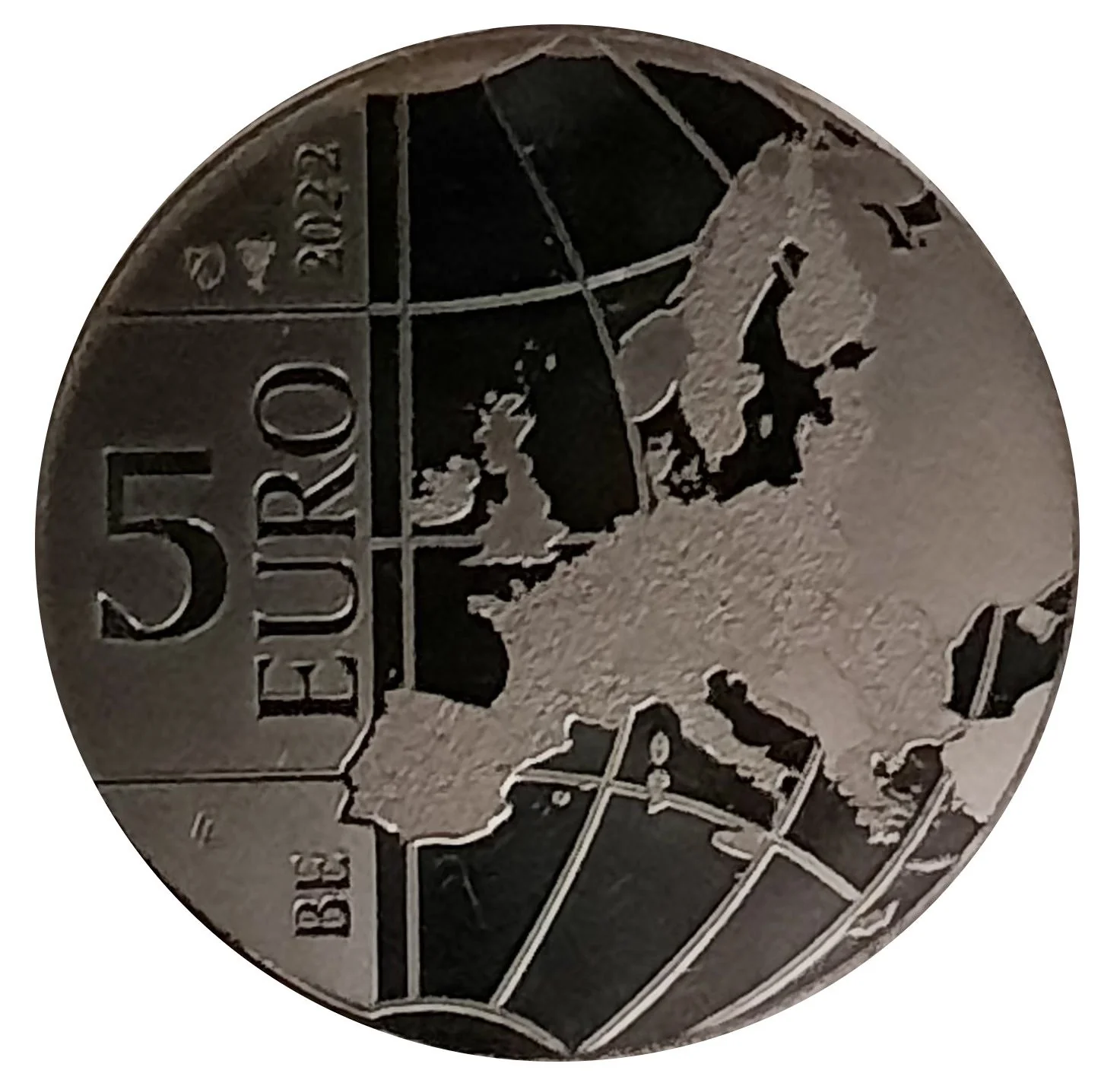
Obverse
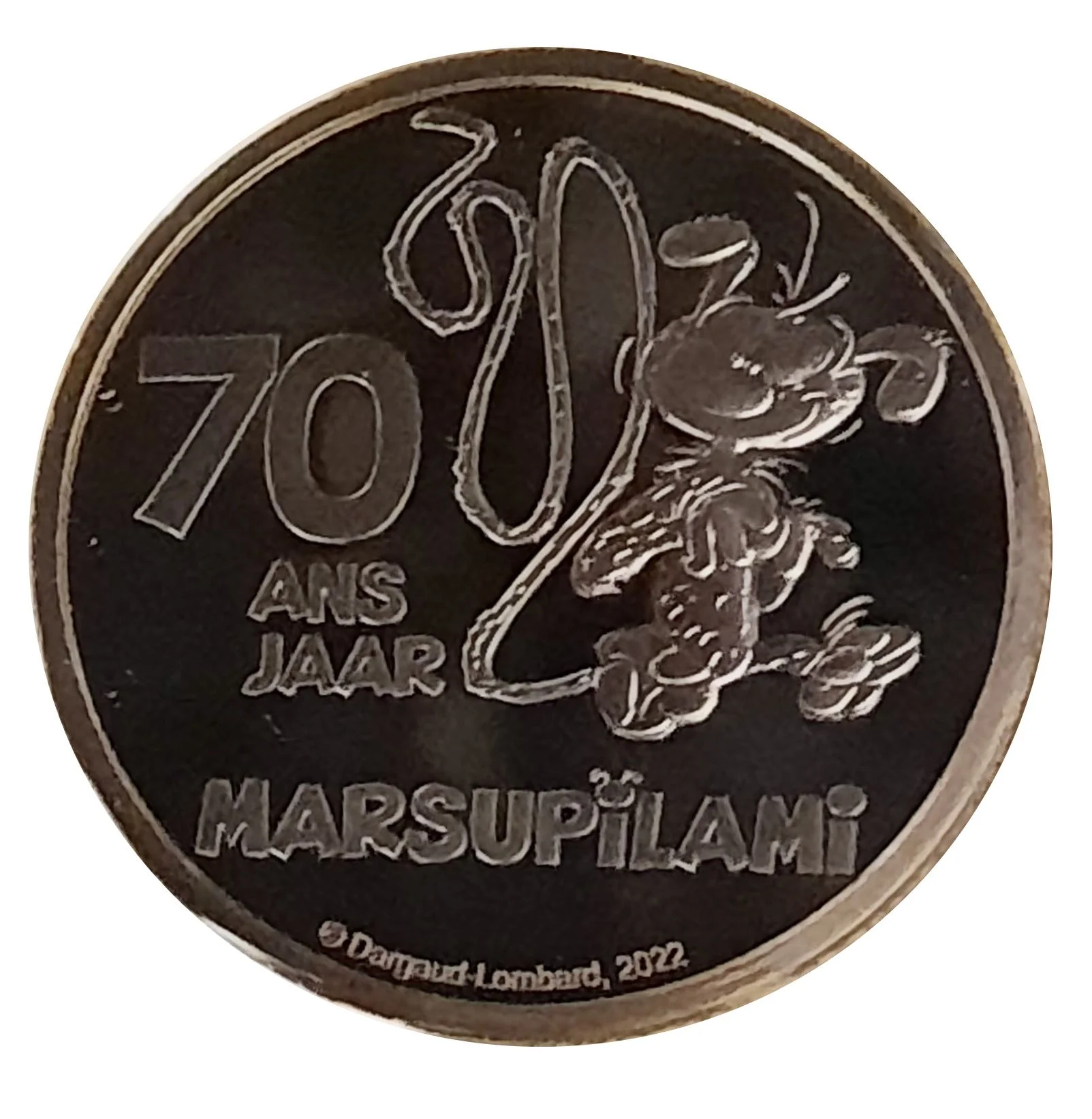
Reverse
Description:
The armored Jubilee Marsupipami, poised with its signature long tail.
Inscription:
70 ANS JAAR MARSUPILAMI
© Dargaud-Lombard. 2022
© Dargaud-Lombard. 2022
Script: Latin
Edge
Categories
| Art> Fictional character |
| Animal |
| Map |
Mints
| Name | Mark |
|---|---|
| Royal Dutch Mint | — |
Mintings
| Year | Mint Mark | Mintage | Quality | Collection |
|---|---|---|---|---|
| 2022 | — | 7,500 |
Historical background
In 2022, Belgium, as a founding member of the Eurozone, operated exclusively with the euro (EUR) as its national currency, having fully adopted it in 2002. The country's monetary policy was therefore not set domestically but by the European Central Bank (ECB), which faced a significant turning point that year. After a prolonged period of historically low and even negative interest rates, the ECB began a series of aggressive rate hikes in July 2022 to combat soaring inflation across the Eurozone, which had been exacerbated by the fallout from the Russia-Ukraine war and ongoing supply chain disruptions. This shift directly impacted Belgian businesses, mortgages, and government borrowing costs.
The national economic context was defined by high inflation, which peaked at over 12% in October 2022, severely eroding household purchasing power. This led to widespread indexation, a key feature of Belgium's wage system, where salaries and social benefits are automatically adjusted to inflation. While this mechanism protected incomes, it also raised concerns about a potential wage-price spiral, making the ECB's task of curbing inflation more complex. The strong euro indexation also contributed to Belgium having one of the highest unit labour costs in the Eurozone, affecting its competitive position.
Furthermore, the Belgian government faced specific fiscal challenges linked to the currency union. The need for energy support measures to shield consumers and businesses from price spikes, combined with the higher cost of servicing the country's substantial public debt (which exceeded 100% of GDP) in a rising interest rate environment, placed pressure on the national budget. Consequently, 2022 was a year where Belgium navigated the shared European currency's constraints and tools, balancing between ECB-driven monetary tightening and domestic fiscal policies aimed at mitigating a severe cost-of-living crisis.
The national economic context was defined by high inflation, which peaked at over 12% in October 2022, severely eroding household purchasing power. This led to widespread indexation, a key feature of Belgium's wage system, where salaries and social benefits are automatically adjusted to inflation. While this mechanism protected incomes, it also raised concerns about a potential wage-price spiral, making the ECB's task of curbing inflation more complex. The strong euro indexation also contributed to Belgium having one of the highest unit labour costs in the Eurozone, affecting its competitive position.
Furthermore, the Belgian government faced specific fiscal challenges linked to the currency union. The need for energy support measures to shield consumers and businesses from price spikes, combined with the higher cost of servicing the country's substantial public debt (which exceeded 100% of GDP) in a rising interest rate environment, placed pressure on the national budget. Consequently, 2022 was a year where Belgium navigated the shared European currency's constraints and tools, balancing between ECB-driven monetary tightening and domestic fiscal policies aimed at mitigating a severe cost-of-living crisis.

⭐ Rare