

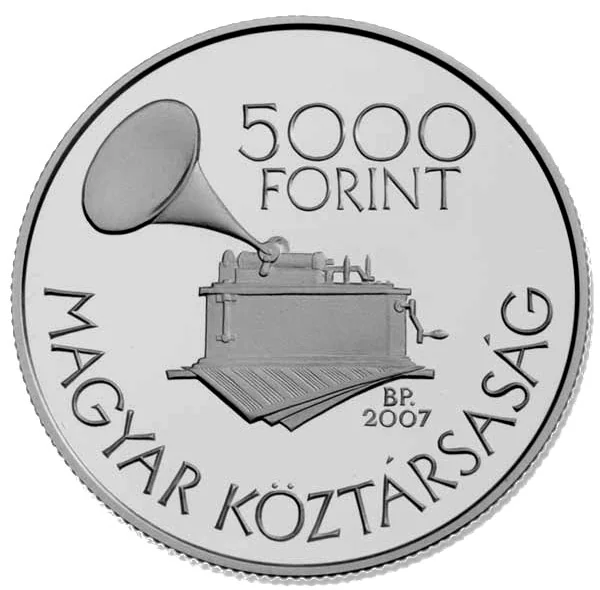
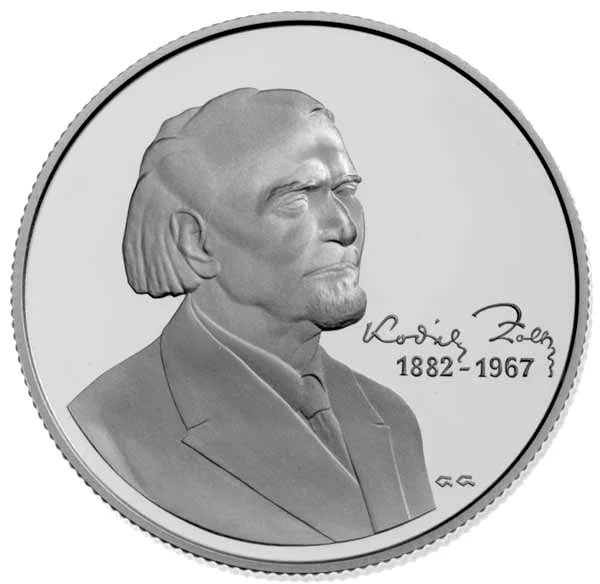
5000 forint (Zoltán Kodály) – Hungary
Add to wishlist
Non-circulating coins
Commemoration: 125th Anniversary of Birth of Zoltán Kodály
Hungary
Context
Material
Diameter: 38.6 mm
Weight: 31.46 g
Silver Weight:: 29.10 g
Shape: Round
Composition: 92.5% Silver
Standard: Silver ounce
Magnetic: No
Technique: Milled
References
KM: #
Numista: #34592
Value
Exchange value: 5000 HUF
Bullion value: $71.17
Inflation-adjusted value: 11839.00 HUF
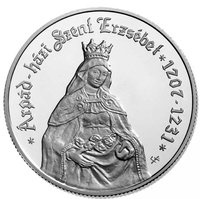
Obverse
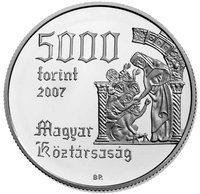
Reverse
Description:
Portrait of composer and music teacher Zoltán Kodály, with his signature.
Inscription:
Kodály Zoltán
1882 - 1967
1882 - 1967
Translation:
Zoltán Kodály
1882 - 1967
1882 - 1967
Scripts: Latin, Latin (cursive)
Language: Hungarian
Edge
Reeded
Categories
| Event> Birth anniversary |
| Art> Music |
Mints
| Name | Mark |
|---|---|
| Hungarian mint | BP. |
Historical background
In 2007, Hungary's currency situation was characterized by significant volatility and pressure on the Hungarian forint (HUF), stemming from a challenging combination of domestic fiscal imbalances and shifting global risk sentiment. The country was grappling with the aftermath of large fiscal deficits and high public debt, which had prompted the imposition of an unprecedented austerity program in 2006. This "széleskörű kiigazítás" (comprehensive adjustment) aimed to rein in the budget deficit but also slowed economic growth, undermining investor confidence and leading to a "risk premium" on Hungarian assets.
The forint, which traded in a managed float against the euro, was particularly sensitive to shifts in global liquidity and investor appetite for emerging market assets. Throughout the year, the currency experienced sharp fluctuations, often weakening on political uncertainty or broader financial market jitters. The National Bank of Hungary (MNB) faced a difficult policy dilemma: it needed to maintain relatively high interest rates to support the forint and combat stubbornly high inflation, but doing so also risked further dampening domestic economic activity and increasing the debt servicing costs for households with foreign-currency loans.
By the end of 2007, the situation was growing increasingly precarious as the early tremors of the global financial crisis began to emerge. While the forint had not yet entered a full-blown crisis, the underlying vulnerabilities—a large twin deficit, high external debt, and a heavy burden of Swiss franc and euro-denominated loans in the private sector—had created a fragile equilibrium. This set the stage for the severe currency stress that would erupt in 2008 when the global financial crisis fully hit, forcing Hungary to seek a joint rescue package from the IMF, the EU, and the World Bank.
The forint, which traded in a managed float against the euro, was particularly sensitive to shifts in global liquidity and investor appetite for emerging market assets. Throughout the year, the currency experienced sharp fluctuations, often weakening on political uncertainty or broader financial market jitters. The National Bank of Hungary (MNB) faced a difficult policy dilemma: it needed to maintain relatively high interest rates to support the forint and combat stubbornly high inflation, but doing so also risked further dampening domestic economic activity and increasing the debt servicing costs for households with foreign-currency loans.
By the end of 2007, the situation was growing increasingly precarious as the early tremors of the global financial crisis began to emerge. While the forint had not yet entered a full-blown crisis, the underlying vulnerabilities—a large twin deficit, high external debt, and a heavy burden of Swiss franc and euro-denominated loans in the private sector—had created a fragile equilibrium. This set the stage for the severe currency stress that would erupt in 2008 when the global financial crisis fully hit, forcing Hungary to seek a joint rescue package from the IMF, the EU, and the World Bank.
💎 Extremely Rare