

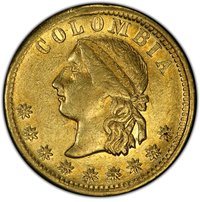
Obverse
Description:
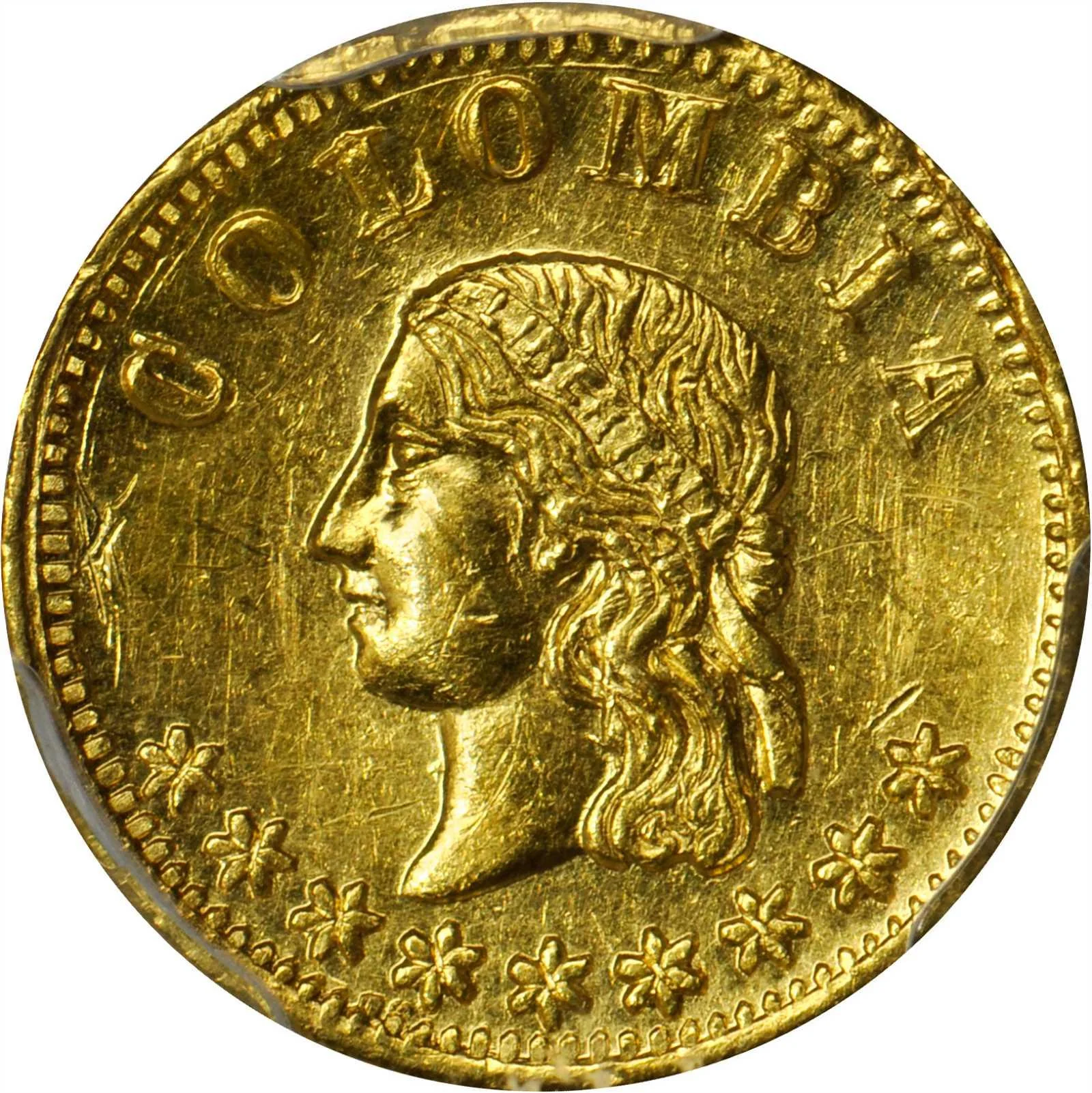
Liberty's head facing left, encircled by the country's name.
Inscription:
COLOMBIA
Script: Latin
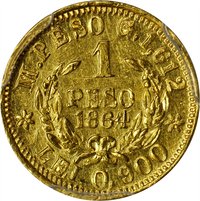
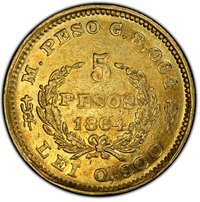
Reverse
Description:
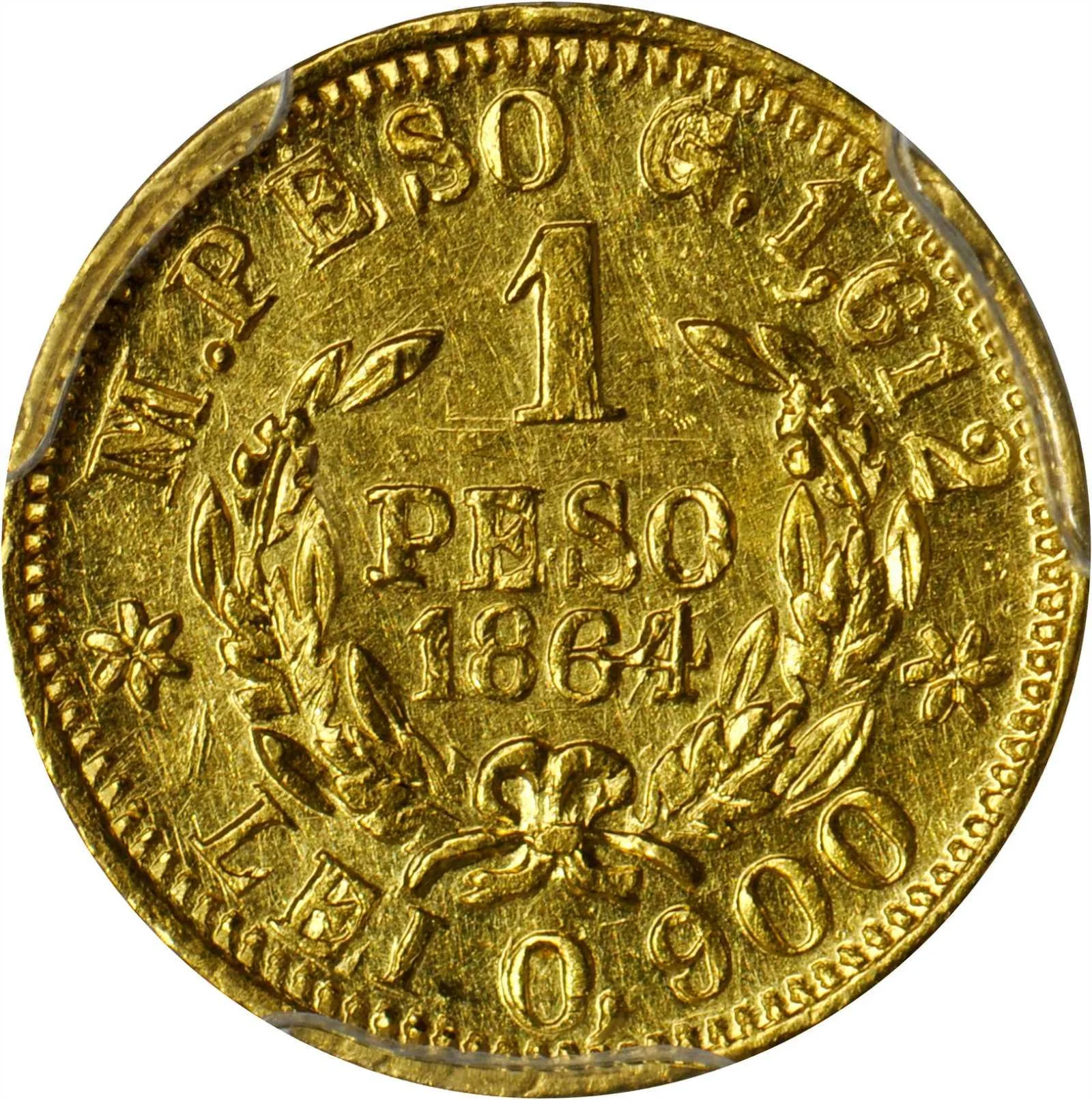
Denomination and year inside wreath; mint letter, weight, and fineness outside.
Inscription:
M. PESO G.1,612
1
PESO
1864
LEI 0,900
1
PESO
1864
LEI 0,900
Script: Latin
Edge
Mints
| Name | Mark |
|---|---|
| Casa de Moneda de Colombia | — |
Mintings
| Year | Mint Mark | Mintage | Quality | Collection |
|---|---|---|---|---|
| 1864 | — | 1,072 |
Historical background
In 1864, Colombia was navigating the complex monetary legacy of its post-independence era, characterized by fragmentation and instability. Following the dissolution of Gran Colombia, the country existed as the United States of Colombia, a decentralized federal republic where individual states held significant autonomy, including the power to issue their own currency. Consequently, a chaotic multitude of coins circulated, primarily consisting of old Spanish colonial coinage, coins from neighboring nations, and various low-quality fractional currency issued by private banks and state governments. This lack of a unified national currency severely hampered commerce and national economic integration.
The primary unit of account was the peso, theoretically divided into 10 reales, but its value was highly unstable. The monetary system was effectively bimetallic, based on both gold and silver, but without a fixed legal ratio, leading to the frequent disappearance of one metal from circulation (Gresham's Law). Most everyday transactions relied on devalued silver and billon coins, while gold coins were hoarded or used for large transactions and international trade. The federal government's attempts to assert control, such as the 1863 constitution which reserved the right to mint coins for the central authority, were largely ineffective in practice against the entrenched financial independence of the states.
This monetary disarray reflected the broader political and economic challenges of the Radical Olympus period (1863-1886). The extreme federalist model, while promoting liberal ideals, created a weak central state incapable of enforcing a uniform monetary policy. The proliferation of disparate currencies and the absence of a trusted national banknote fostered uncertainty, discouraged investment, and highlighted the urgent need for monetary centralization—a goal that would only begin to be realized decades later with the political recentralization under the 1886 constitution and the creation of the Banco Nacional in 1880.
The primary unit of account was the peso, theoretically divided into 10 reales, but its value was highly unstable. The monetary system was effectively bimetallic, based on both gold and silver, but without a fixed legal ratio, leading to the frequent disappearance of one metal from circulation (Gresham's Law). Most everyday transactions relied on devalued silver and billon coins, while gold coins were hoarded or used for large transactions and international trade. The federal government's attempts to assert control, such as the 1863 constitution which reserved the right to mint coins for the central authority, were largely ineffective in practice against the entrenched financial independence of the states.
This monetary disarray reflected the broader political and economic challenges of the Radical Olympus period (1863-1886). The extreme federalist model, while promoting liberal ideals, created a weak central state incapable of enforcing a uniform monetary policy. The proliferation of disparate currencies and the absence of a trusted national banknote fostered uncertainty, discouraged investment, and highlighted the urgent need for monetary centralization—a goal that would only begin to be realized decades later with the political recentralization under the 1886 constitution and the creation of the Banco Nacional in 1880.
✨ Legendary