

5000 forint – Hungary
Add to wishlist
Non-circulating coins
Commemoration: Károli Gáspár Reformed University
Hungary
Context
Material
Diameter: 38.61 mm
Weight: 31.46 g
Silver Weight:: 29.10 g
Thickness: 3 mm
Shape: Round
Composition: 92.5% Silver
Standard: Silver ounce
Magnetic: No
Technique: Milled
Alignment: Medal alignment
flip
References
KM: #
Numista: #34585
Value
Exchange value: 5000 HUF
Bullion value: $72.55
Inflation-adjusted value: 12742.30 HUF
Obverse
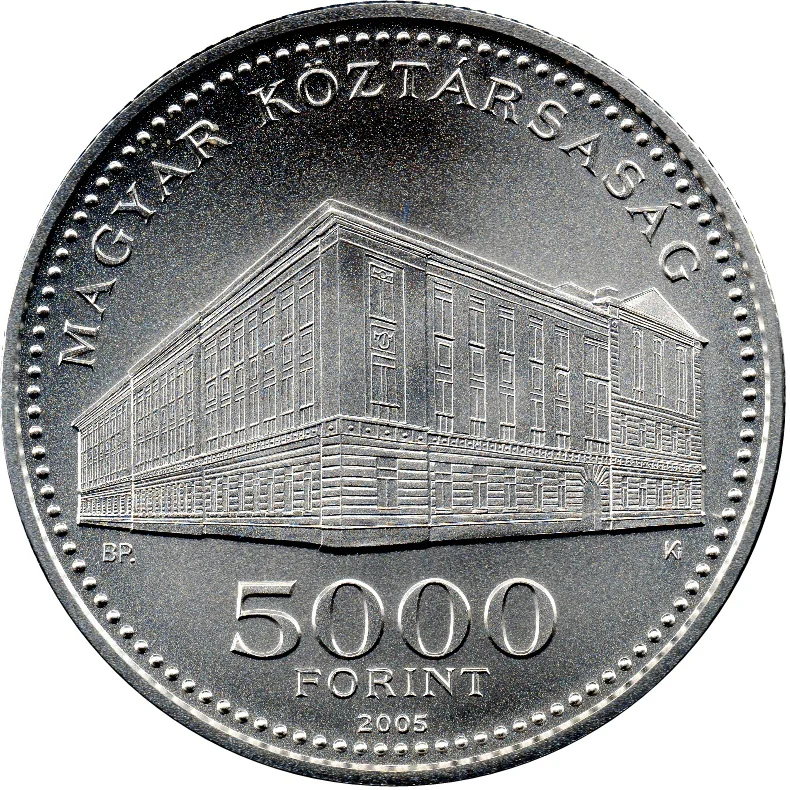
Description:
Academic facility
Inscription:
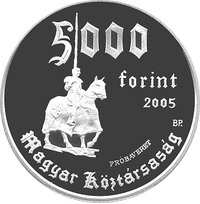
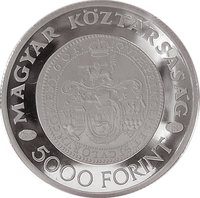
MAGYAR KÖZTÁRSASÁG
BP.
5000
FORINT
2005
BP.
5000
FORINT
2005
Translation:
HUNGARIAN REPUBLIC
BP.
5000
FORINT
2005
BP.
5000
FORINT
2005
Script: Latin
Language: Hungarian
Engraver: István Kósa
Reverse
Inscription:
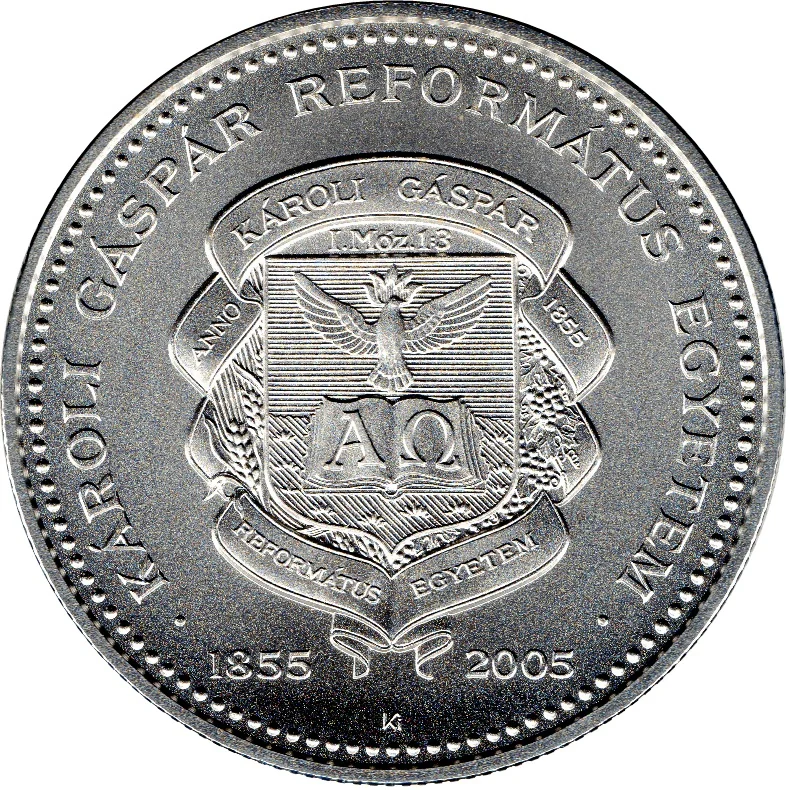
KÁROLI GÁSPÁR REFORMÁTUS EGYETEM
1855 2005
1855 2005
Translation:
Károli Gáspár Reformed University
1855 2005
1855 2005
Script: Latin
Language: Hungarian
Engraver: István Kósa
Edge
Reeded
Mints
| Name | Mark |
|---|---|
| Hungarian mint | BP. |
Historical background
In 2005, Hungary's currency situation was defined by the Forint's (HUF) participation in the European Union's Exchange Rate Mechanism II (ERM II), which it had entered in 2004 following EU accession. The primary goal was to eventually adopt the euro, requiring the forint to maintain stability against the euro within a fluctuation band of ±15%. However, this period was marked by significant upward pressure on the currency, driven by strong capital inflows from foreign investors attracted by high yields and the convergence story. The National Bank of Hungary (MNB) often intervened to prevent excessive appreciation, which hurt export competitiveness, creating a delicate balancing act between growth, inflation, and euro convergence targets.
Underlying this tension was a severe fiscal policy challenge, famously dubbed the "double deficit" problem. Hungary ran both a substantial budget deficit (exceeding 6% of GDP) and a large current account deficit (around 6-7% of GDP). This twin deficit made the economy vulnerable to shifts in investor sentiment, as it relied heavily on foreign financing. Consequently, the forint became highly sensitive to global risk appetite and political news, leading to periods of volatility despite the central bank's efforts. The high interest rates needed to attract capital and curb inflation further fueled the forint's strength, complicating the economic adjustment.
By the end of 2005, the currency situation had become unsustainable, setting the stage for a major shift. The market's tolerance for the twin deficits waned, and in 2006, following the revelation that the fiscal situation was even worse than previously disclosed, Hungary faced a full-blown currency and confidence crisis. The forint came under severe selling pressure, forcing the MNB to abandon its loose exchange rate band and sharply raise interest rates. Thus, the vulnerabilities accumulated and managed—but not resolved—through 2005 culminated in a stark economic and political reckoning the following year, delaying euro adoption plans indefinitely.
Underlying this tension was a severe fiscal policy challenge, famously dubbed the "double deficit" problem. Hungary ran both a substantial budget deficit (exceeding 6% of GDP) and a large current account deficit (around 6-7% of GDP). This twin deficit made the economy vulnerable to shifts in investor sentiment, as it relied heavily on foreign financing. Consequently, the forint became highly sensitive to global risk appetite and political news, leading to periods of volatility despite the central bank's efforts. The high interest rates needed to attract capital and curb inflation further fueled the forint's strength, complicating the economic adjustment.
By the end of 2005, the currency situation had become unsustainable, setting the stage for a major shift. The market's tolerance for the twin deficits waned, and in 2006, following the revelation that the fiscal situation was even worse than previously disclosed, Hungary faced a full-blown currency and confidence crisis. The forint came under severe selling pressure, forcing the MNB to abandon its loose exchange rate band and sharply raise interest rates. Thus, the vulnerabilities accumulated and managed—but not resolved—through 2005 culminated in a stark economic and political reckoning the following year, delaying euro adoption plans indefinitely.
✨ Legendary