

Obverse
Description:
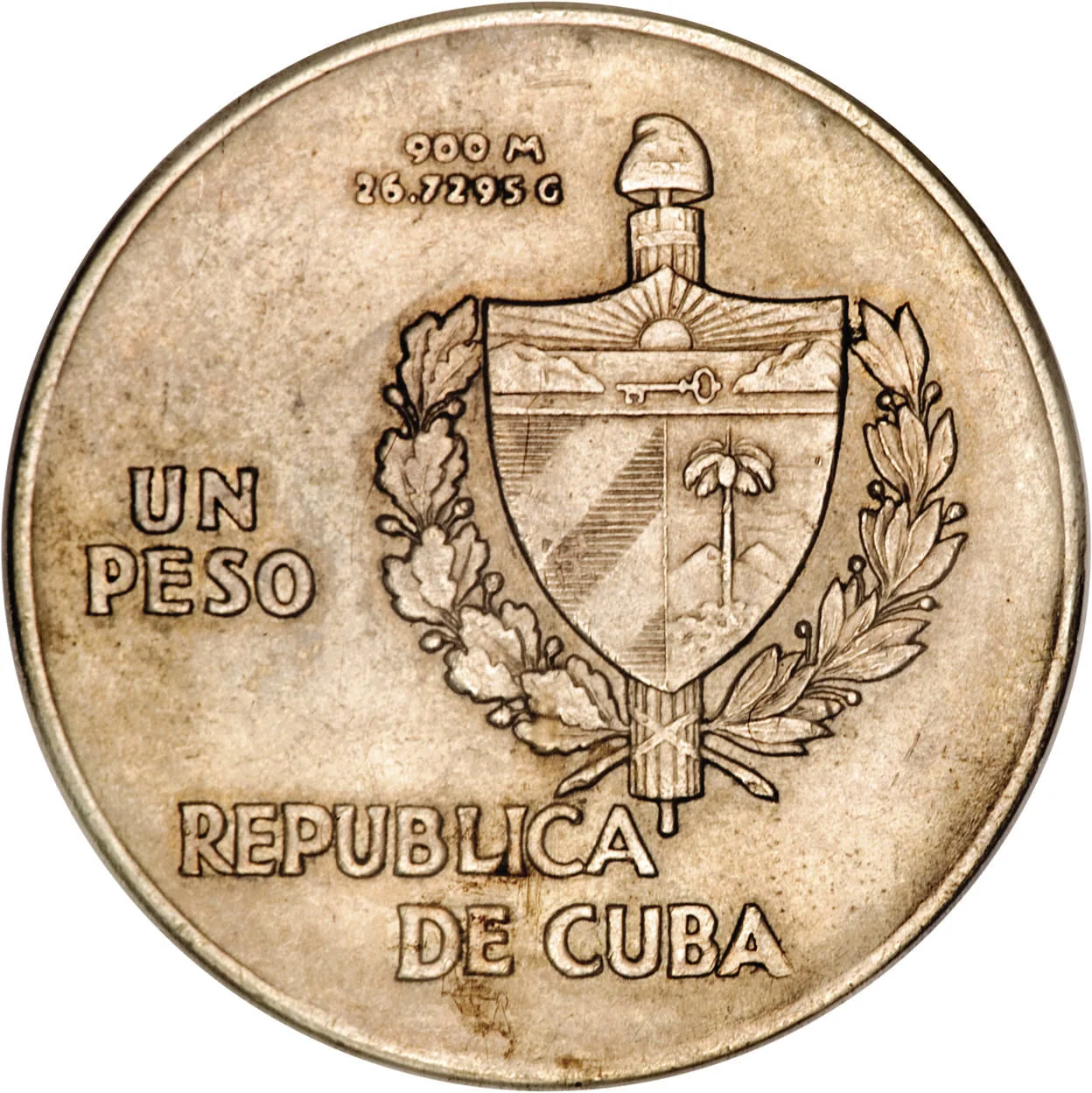
Cuban coat of arms left, face value right; country name below, fineness and weight above.
Inscription:
900 M
26.7295 G
UN PESO
REPUBLICA
DE CUBA
26.7295 G
UN PESO
REPUBLICA
DE CUBA
Translation:
Nine Hundred M
26.7295 G
One Peso
Republic
Of Cuba
26.7295 G
One Peso
Republic
Of Cuba
Script: Latin
Language: Spanish
Engraver: Jaime Valls Diaz
Reverse
Description:
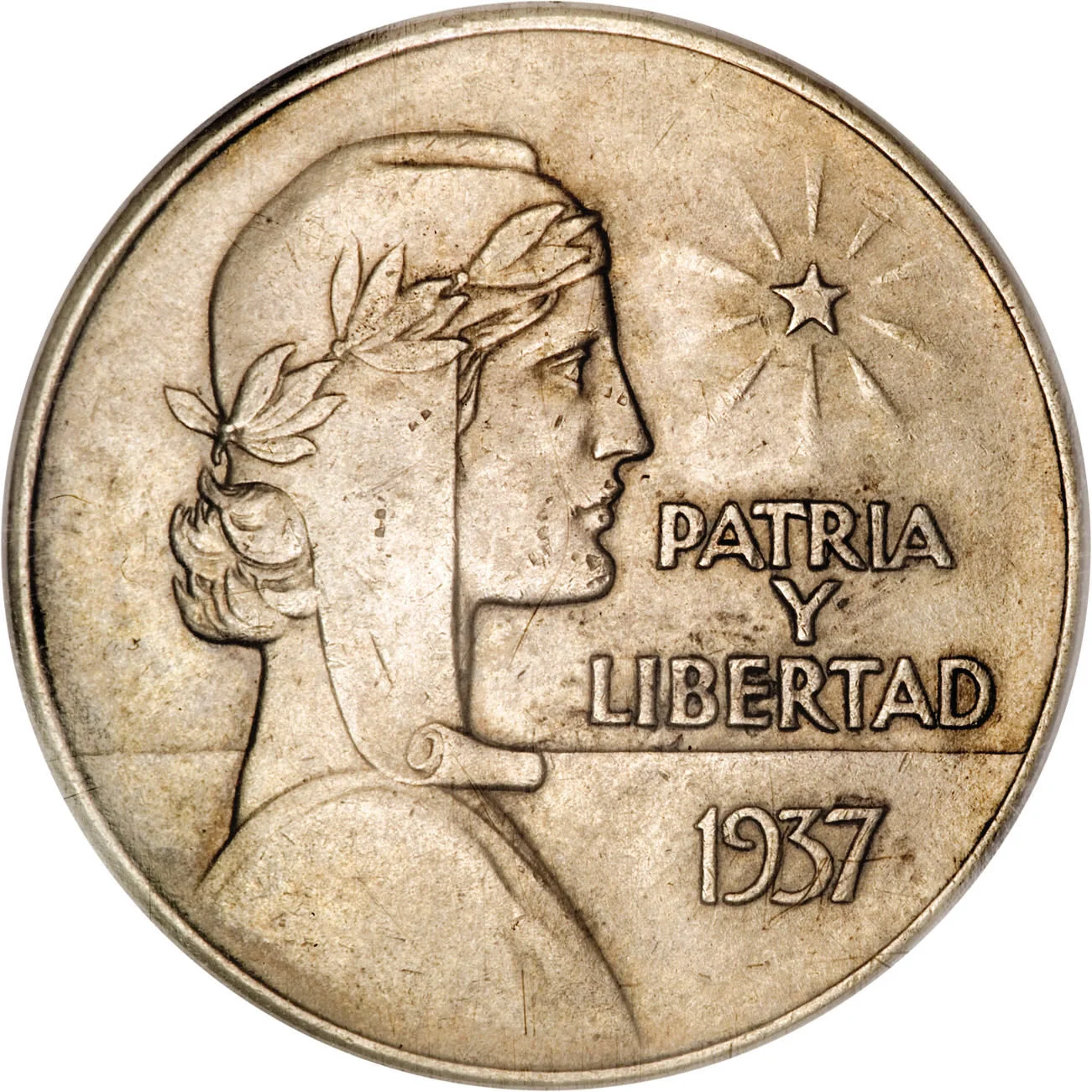
Image: "The Republic" with a star. To the right: motto "Patria y Libertad" and date below.
Inscription:
PATRIA
Y
LIBERTAD
1937
Y
LIBERTAD
1937
Translation:
Fatherland
And
Liberty
1937
And
Liberty
1937
Script: Latin
Language: Spanish
Engraver: Jaime Valls Diaz
Edge
Reeded
Categories
| Symbol> Allegory |
| Symbols> Coat of Arms |
Mints
| Name | Mark |
|---|---|
| United States Mint of Philadelphia | — |
Mintings
| Year | Mint Mark | Mintage | Quality | Collection |
|---|---|---|---|---|
| 1934 | — | — | Matte | |
| 1934 | — | 7,000,000 | ||
| 1934 | — | — | Proof | |
| 1935 | — | 12,500,000 | ||
| 1936 | — | 16,000,000 | ||
| 1937 | — | 11,500,000 | ||
| 1938 | — | 10,800,000 | ||
| 1939 | — | 9,200,000 |
Historical background
In 1934, Cuba’s currency situation was defined by the profound economic and political crisis following the overthrow of President Gerardo Machado in 1933. The island’s economy, heavily dependent on sugar exports, had been devastated by the Great Depression and the Smoot-Hawley Tariff, which slashed the crucial U.S. market. This collapse in export revenue crippled the government’s finances, leading to massive budget deficits and a default on its foreign debt. The national currency, the Cuban peso, which had been firmly pegged to the U.S. dollar since the 1914 Monetary Law, came under severe pressure as gold and dollar reserves drained away to service debt and cover trade imbalances.
The instability culminated in the abrogation of the Platt Amendment in 1934, a move that altered the political relationship with the United States but did not immediately solve the monetary crisis. The government, now under the influence of Colonel Fulgencio Batista, was forced to take drastic action. In January 1934, it passed Emergency Decree-Law 13, which devalued the peso by approximately 40%, breaking the long-standing one-to-one parity with the U.S. dollar and establishing a new official rate of 1.20 pesos per dollar. This devaluation was a desperate attempt to make Cuban sugar more competitive internationally and to stabilize the government's fiscal position by increasing the peso value of its dollar-denominated sugar export taxes.
This devaluation marked a pivotal end to the era of absolute monetary stability tied directly to the U.S. and initiated a period of managed currency. While it provided some short-term fiscal relief, it also eroded public confidence in the peso, increased the cost of imported goods, and highlighted Cuba's vulnerable position within the U.S. economic sphere. The 1934 devaluation set a precedent for future monetary management, embedding a legacy of instability that would influence Cuban economic policy for decades to come.
The instability culminated in the abrogation of the Platt Amendment in 1934, a move that altered the political relationship with the United States but did not immediately solve the monetary crisis. The government, now under the influence of Colonel Fulgencio Batista, was forced to take drastic action. In January 1934, it passed Emergency Decree-Law 13, which devalued the peso by approximately 40%, breaking the long-standing one-to-one parity with the U.S. dollar and establishing a new official rate of 1.20 pesos per dollar. This devaluation was a desperate attempt to make Cuban sugar more competitive internationally and to stabilize the government's fiscal position by increasing the peso value of its dollar-denominated sugar export taxes.
This devaluation marked a pivotal end to the era of absolute monetary stability tied directly to the U.S. and initiated a period of managed currency. While it provided some short-term fiscal relief, it also eroded public confidence in the peso, increased the cost of imported goods, and highlighted Cuba's vulnerable position within the U.S. economic sphere. The 1934 devaluation set a precedent for future monetary management, embedding a legacy of instability that would influence Cuban economic policy for decades to come.
🌟 Uncommon