

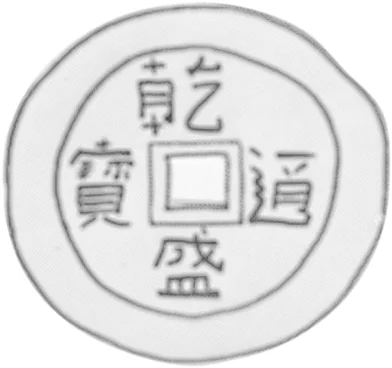

Obverse
Description:
Four Chinese characters read vertically, right to left.
Inscription:
乾
寶 通
盛
寶 通
盛
Translation:
Qian (Heavenly) Treasure
Circulating Treasure
of Sheng (Prosperous)
Circulating Treasure
of Sheng (Prosperous)
Scripts: Chinese (traditional, regular script)
Language: Chinese
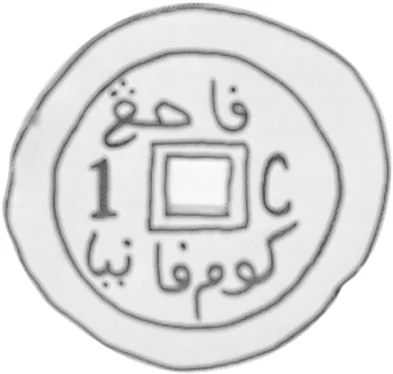
Reverse
Edge
Plain
Mintings
| Year | Mint Mark | Mintage | Quality | Collection |
|---|---|---|---|---|
| — | — | — |
Historical background
In 1884, the currency situation in the Sultanate of Pahang was characterized by a complex and often chaotic multiplicity of mediums of exchange, reflecting both its traditional economy and increasing foreign influence. The primary currency in circulation was the Mexican silver dollar, a widely accepted trade coin throughout the Straits Settlements and the Malay Peninsula. However, its use was supplemented by a variety of other silver coins, including Spanish dollars and Straits Settlements issues, as well as smaller fractional copper coins like the keping or pitis. This lack of a unified, state-issued currency created difficulties in trade and taxation, as the value and purity of coins had to be constantly assessed.
Complicating this picture was the severe financial distress of the Pahang royal court itself. The Pahang Civil War (1857-1863) had drained the treasury, and by 1884, Sultan Ahmad al-Mu’azzam Shah was deeply indebted to Chinese financiers and Straits merchants. The state's revenue, derived mainly from irregular trade taxes and limited tin exports, was insufficient to cover administrative costs or the Sultan's expenditures. This fiscal crisis meant the state had no capacity to issue or control a standard currency, leaving the monetary system to be dictated by market forces and the needs of foreign traders.
This unstable financial backdrop was a significant factor in the increasing pressure from the British in Singapore for greater influence in Pahang. British merchants, seeking secure investments in the peninsula's tin mining, desired a stable and predictable monetary and political environment. The currency chaos of 1884 thus exemplified the broader administrative and economic weaknesses that would, within a few years, lead to the appointment of a British Resident in 1888 and the incorporation of Pahang into the Federated Malay States, which would eventually impose a standardized currency system.
Complicating this picture was the severe financial distress of the Pahang royal court itself. The Pahang Civil War (1857-1863) had drained the treasury, and by 1884, Sultan Ahmad al-Mu’azzam Shah was deeply indebted to Chinese financiers and Straits merchants. The state's revenue, derived mainly from irregular trade taxes and limited tin exports, was insufficient to cover administrative costs or the Sultan's expenditures. This fiscal crisis meant the state had no capacity to issue or control a standard currency, leaving the monetary system to be dictated by market forces and the needs of foreign traders.
This unstable financial backdrop was a significant factor in the increasing pressure from the British in Singapore for greater influence in Pahang. British merchants, seeking secure investments in the peninsula's tin mining, desired a stable and predictable monetary and political environment. The currency chaos of 1884 thus exemplified the broader administrative and economic weaknesses that would, within a few years, lead to the appointment of a British Resident in 1888 and the incorporation of Pahang into the Federated Malay States, which would eventually impose a standardized currency system.
✨ Legendary