

25 euro (Livonian Diet) – Estonia
Add to wishlist
Non-circulating coins
Commemoration: 600th anniversary of the first meeting of the Livonian Diet
Estonia
Context
Material
Diameter: 18 mm
Weight: 3.11 g
Gold Weight:: 3.11 g
Shape: Round
Composition: 99.9% Gold
Standard: Gold tenth ounce
Magnetic: No
Technique: Milled
Alignment: Medal alignment
flip
References
KM: #
Numista: #344572
Value
Exchange value: 25 EUR
Bullion value: $473.66
Inflation-adjusted value: 34.29 EUR
Obverse
Description:
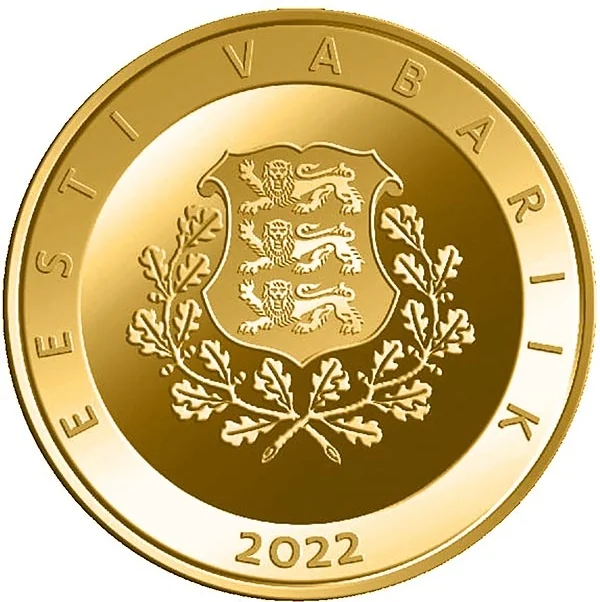
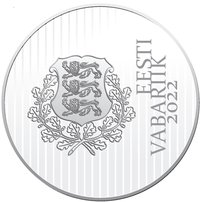
Obverse: Estonian coat of arms and 2022.
Inscription:
EESTI VABARIIK
2022
2022
Translation:
Republic of Estonia
2022
2022
Script: Latin
Language: Estonian
Designer: Riho Luuse
Reverse
Description:
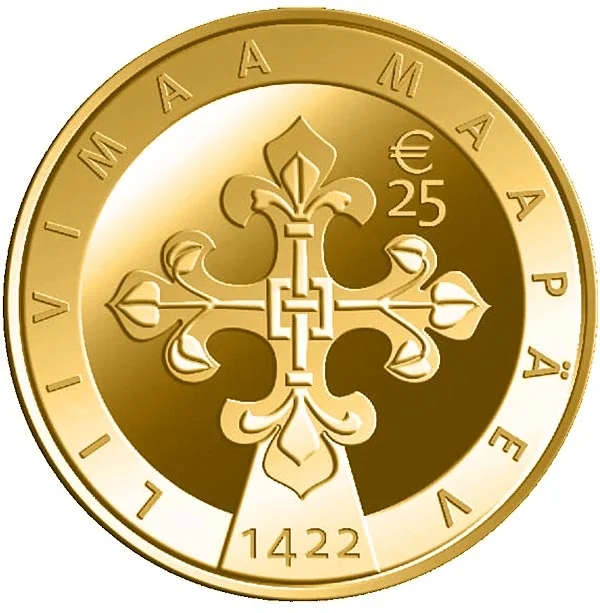
This coin features a cross adorned with leaves, inspired by a 14th-century carving in Karja Church. It symbolizes the steady growth of medieval Christianity and bears the year 1422 and the words "Liivimaa maapäev" (Livonian Diet).
Inscription:
€
25
LIIVIMAA MAAPÄEV
1422
25
LIIVIMAA MAAPÄEV
1422
Translation:
25
Livonian Regional Assembly
1422
Livonian Regional Assembly
1422
Script: Latin
Language: Estonian
Designer: Riho Luuse
Edge
Categories
| Symbols> Coat of Arms |
| Symbol> Cross |
Mints
| Name | Mark |
|---|---|
| Imprensa Nacional - Casa da Moeda | — |
Mintings
| Year | Mint Mark | Mintage | Quality | Collection |
|---|---|---|---|---|
| 2022 | — | 3,000 | Proof |
Historical background
In 2022, Estonia's currency situation was firmly anchored within the Eurozone, having adopted the euro in 2011. This meant the country used the euro (EUR) as its sole legal tender, with monetary policy set by the European Central Bank (ECB). The primary domestic financial focus was therefore on managing inflation, which surged to a peak of 25.2% in August 2022—the highest in the Eurozone—driven by soaring energy prices and broader supply chain disruptions following Russia's invasion of Ukraine.
The national debate centered not on currency choice, but on the economic pressures exacerbated by the common currency. As a small, open economy, Estonia felt the impact of the ECB's interest rate hikes acutely. While these measures aimed to curb Eurozone-wide inflation, they significantly increased borrowing costs for Estonian households and businesses, cooling a previously overheated housing market and slowing economic growth. The government's fiscal policy focused on mitigating the energy crisis through direct support measures, all while operating within the strict fiscal frameworks of EU membership.
Furthermore, the geopolitical shock reinforced the strategic and economic importance of Estonia's euro membership. It provided monetary stability and solidified the country's integration with core European financial and security structures, a critical consideration given its geographic location. There was no serious political discussion about leaving the euro; instead, the currency was seen as a pillar of security and a symbol of Estonia's irreversible Western alignment, especially in a year of profound regional uncertainty.
The national debate centered not on currency choice, but on the economic pressures exacerbated by the common currency. As a small, open economy, Estonia felt the impact of the ECB's interest rate hikes acutely. While these measures aimed to curb Eurozone-wide inflation, they significantly increased borrowing costs for Estonian households and businesses, cooling a previously overheated housing market and slowing economic growth. The government's fiscal policy focused on mitigating the energy crisis through direct support measures, all while operating within the strict fiscal frameworks of EU membership.
Furthermore, the geopolitical shock reinforced the strategic and economic importance of Estonia's euro membership. It provided monetary stability and solidified the country's integration with core European financial and security structures, a critical consideration given its geographic location. There was no serious political discussion about leaving the euro; instead, the currency was seen as a pillar of security and a symbol of Estonia's irreversible Western alignment, especially in a year of profound regional uncertainty.
✨ Legendary