

5 Yuan – People's Republic of China
Circulating commemorative coins
Commemoration: Famous Sights in China Series - 2nd edition - Imperial Palace
China
Context
Year: 2003
Country: China 
Issuer: People's Republic of China
Period:
(since 1949)
Currency:
(since 1955)
Material
References
KM: #Click to copy to clipboard1464
Numista: #13891
Value
Exchange value: 5 CNY = $0.73
Inflation-adjusted value: 8.14 CNY
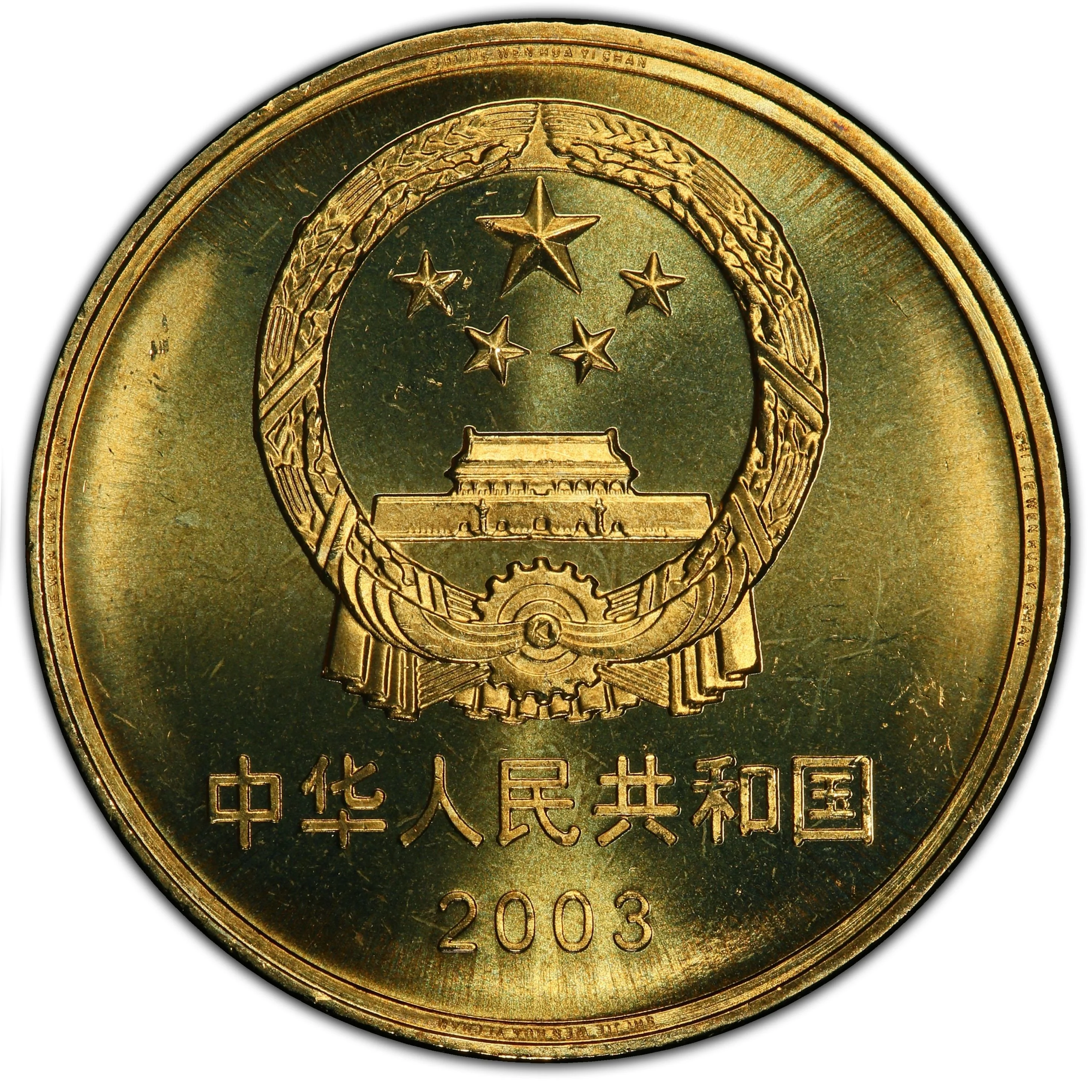
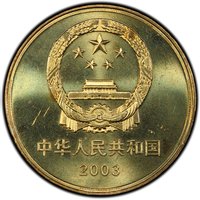
Obverse
Description:
National symbol
Script: Chinese
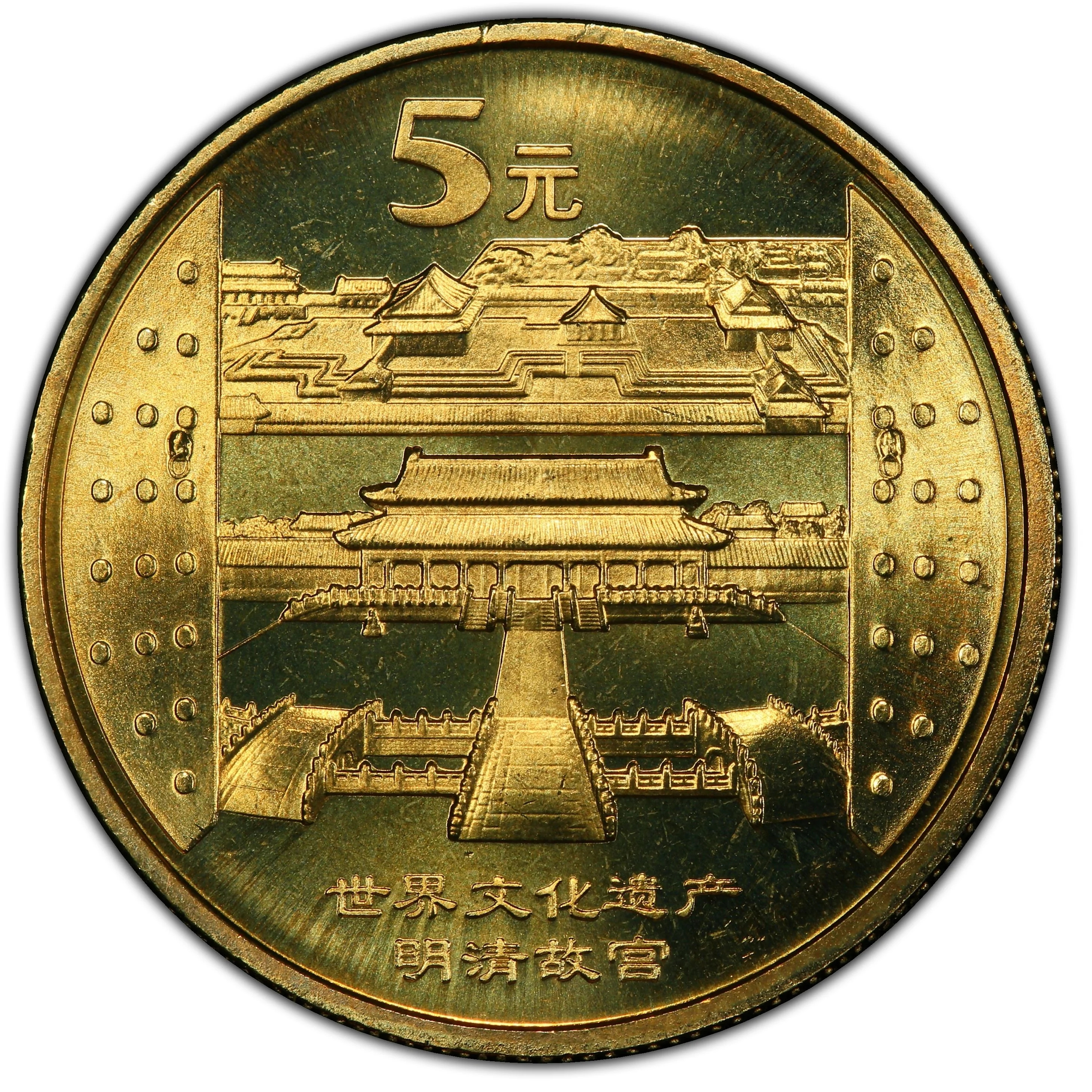
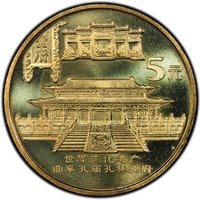
Reverse
Description:
Forbidden City
Script: Chinese
Edge
Mintings
| Year | Mint Mark | Mintage | Quality | Collection |
|---|---|---|---|---|
| 2003 | — | — |
Historical background
In 2003, the currency situation in the People's Republic of China was defined by a tightly managed exchange rate regime and mounting international pressure for reform. The Chinese yuan (Renminbi, RMB) was pegged to the US dollar at a fixed rate of approximately 8.28 RMB/USD, a policy maintained since the Asian Financial Crisis of 1997-98. This peg provided stability for China's export-oriented economy, fueling its rapid integration into global trade and attracting massive foreign direct investment. However, it drew criticism from major trading partners, particularly the United States, which argued the yuan was significantly undervalued, giving Chinese exports an unfair price advantage and contributing to large global trade imbalances.
Domestically, the fixed exchange rate, combined with a growing current account surplus and substantial inflows of foreign capital, created complex challenges for the People's Bank of China (PBOC). To maintain the peg, the central bank was forced to engage in heavy sterilization activities—buying incoming foreign currency and issuing domestic bonds—to prevent excessive growth in the money supply that could fuel inflation. This led to a rapid accumulation of foreign exchange reserves, which surpassed $400 billion in 2003. While this reserve hoard provided a buffer against financial instability, it also represented a significant opportunity cost and complicated domestic monetary policy.
By the end of 2003, the groundwork for a major policy shift was being laid. The pressure, both external and from internal market forces, became increasingly difficult to manage. Chinese leaders acknowledged the need for greater exchange rate flexibility in the long term, initiating reforms to develop the foreign exchange market and relax some capital controls. These steps set the stage for the historic move that would come on July 21, 2005, when China abandoned the dollar peg in favor of a managed float against a basket of currencies, allowing the yuan to appreciate gradually. Thus, 2003 was a pivotal year of mounting tension and quiet preparation for a fundamental change in China's currency policy.
Domestically, the fixed exchange rate, combined with a growing current account surplus and substantial inflows of foreign capital, created complex challenges for the People's Bank of China (PBOC). To maintain the peg, the central bank was forced to engage in heavy sterilization activities—buying incoming foreign currency and issuing domestic bonds—to prevent excessive growth in the money supply that could fuel inflation. This led to a rapid accumulation of foreign exchange reserves, which surpassed $400 billion in 2003. While this reserve hoard provided a buffer against financial instability, it also represented a significant opportunity cost and complicated domestic monetary policy.
By the end of 2003, the groundwork for a major policy shift was being laid. The pressure, both external and from internal market forces, became increasingly difficult to manage. Chinese leaders acknowledged the need for greater exchange rate flexibility in the long term, initiating reforms to develop the foreign exchange market and relax some capital controls. These steps set the stage for the historic move that would come on July 21, 2005, when China abandoned the dollar peg in favor of a managed float against a basket of currencies, allowing the yuan to appreciate gradually. Thus, 2003 was a pivotal year of mounting tension and quiet preparation for a fundamental change in China's currency policy.
🌟 Uncommon