

5 rand – South Africa
Add to wishlist
Non-circulating coins
Commemoration: UNESCO Kogelberg Biosphere Reserve
South Africa
Context
Material
References
Numista: #138894
Value
Exchange value: 5 ZAR
Bullion value: $75.71
Inflation-adjusted value: 7.91 ZAR
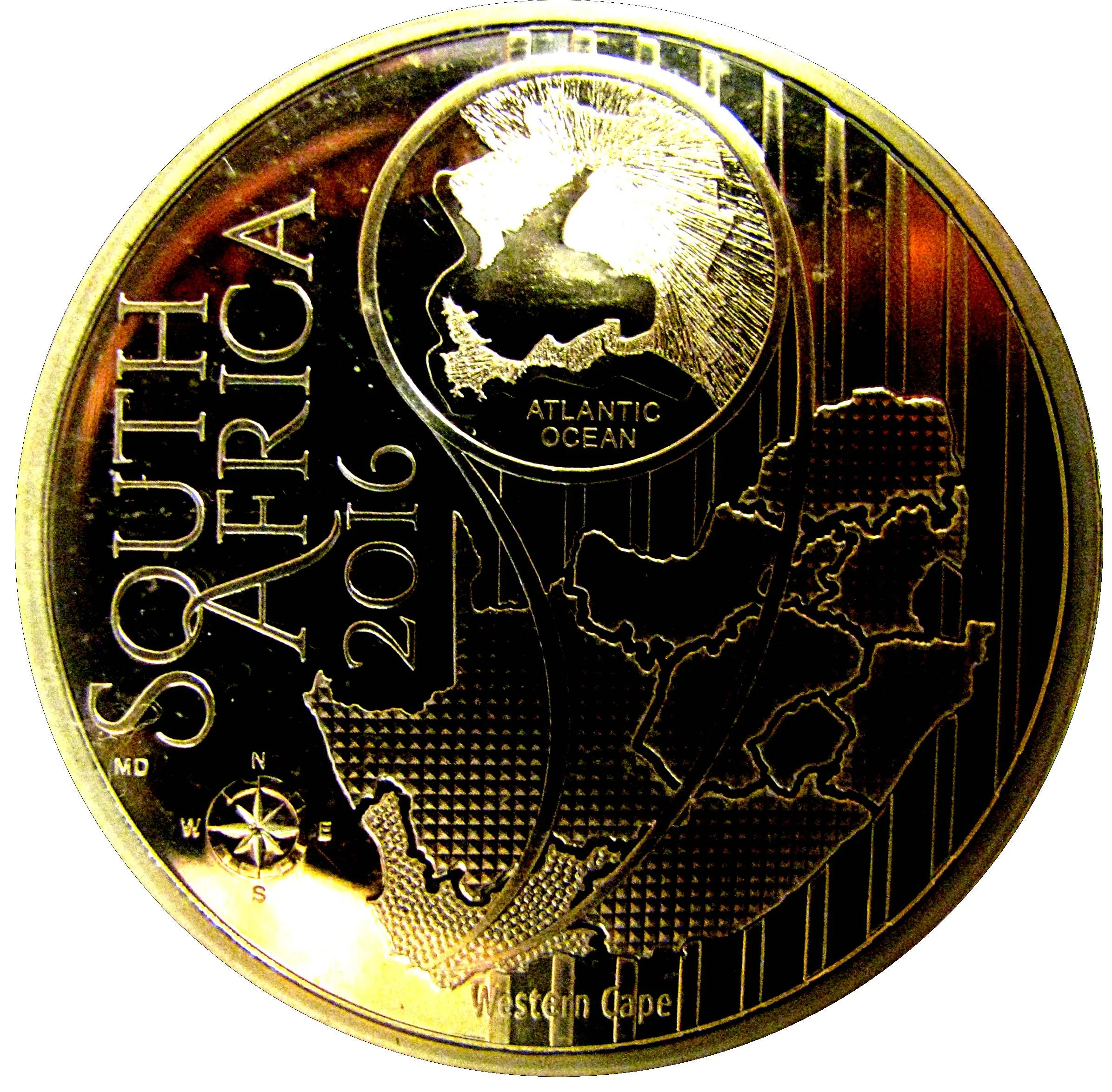
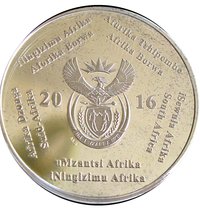
Obverse
Description:
South African reserve map.
Inscription:
South Africa
2016
Atlantic Ocean
MD
Western Cape
2016
Atlantic Ocean
MD
Western Cape
Script: Latin
Engraver: Motshabi Daisy Mothobela
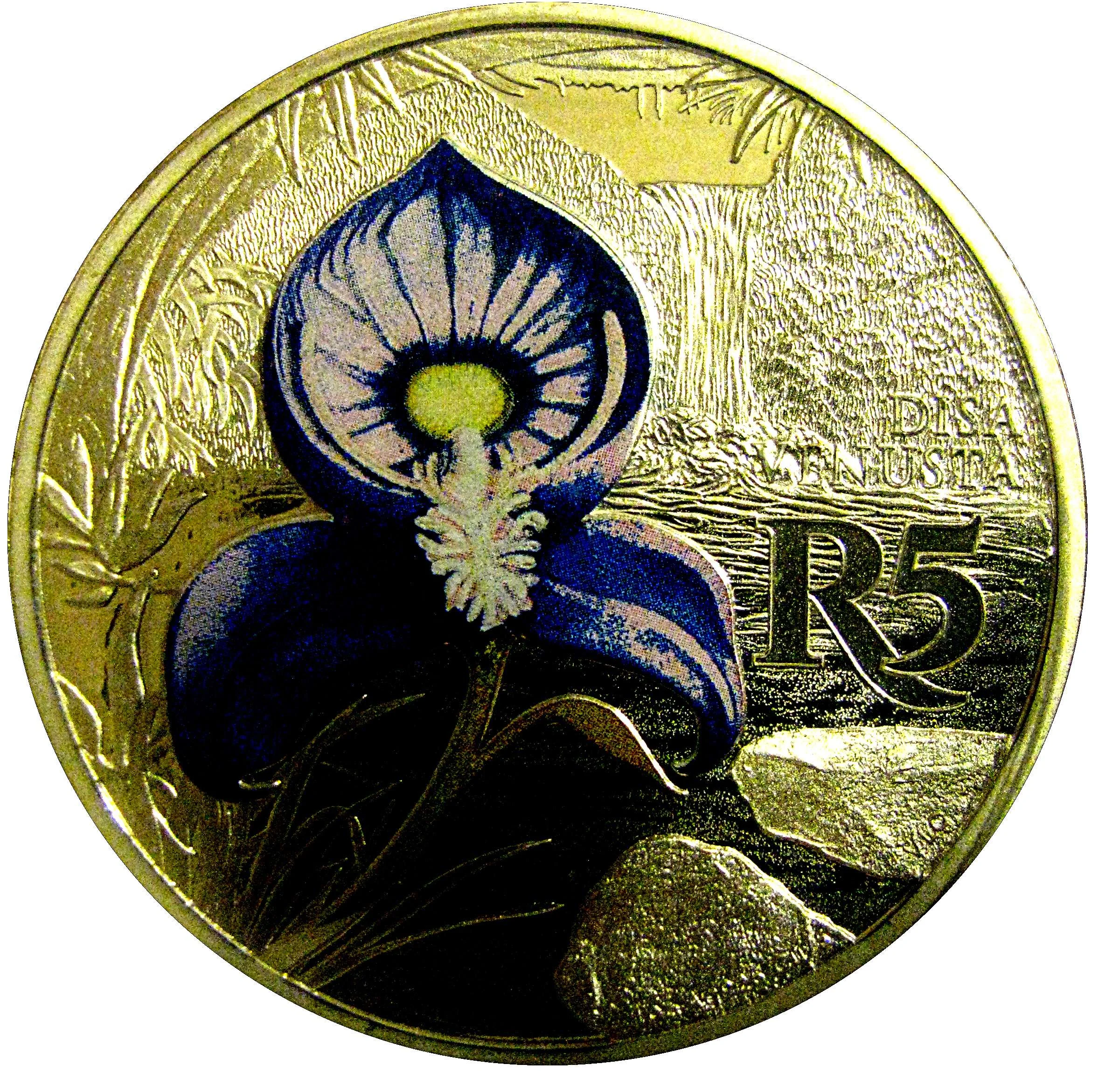
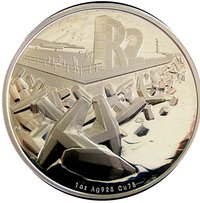
Reverse
Description:
Colored flower
Inscription:
DISA
VENUSTA
R5
VLC
VENUSTA
R5
VLC
Translation:
Goddess
Venusta
R5
VLC
Venusta
R5
VLC
Script: Latin
Language: Latin
Engraver: Vincent Chipa
Edge
Reeded
Mintings
| Year | Mint Mark | Mintage | Quality | Collection |
|---|---|---|---|---|
| 2016 | — | 476 | Proof |
Historical background
In 2016, South Africa's currency, the rand, experienced significant volatility and depreciation, largely driven by a combination of domestic political turmoil and adverse global conditions. The year began with the currency hitting a historic low of nearly R17 to the US dollar in January, following President Jacob Zuma's unexpected removal of the respected finance minister, Nhlanhla Nene, in December 2015. This move severely damaged investor confidence, raising concerns about fiscal policy and governance. Although Zuma quickly reversed course and reappointed Pravin Gordhan, market trust remained fragile throughout the year, with the rand becoming highly reactive to political developments.
External factors compounded these domestic issues. As a commodity-exporting nation, South Africa was vulnerable to slowing growth in China, a major trading partner, which suppressed demand and prices for key exports like minerals. Furthermore, the prospect of rising US interest rates under the Federal Reserve led to capital flight from emerging markets, as investors sought safer, higher-yielding assets. This global risk-off sentiment placed sustained pressure on the rand alongside other emerging market currencies, creating a challenging environment for the South African Reserve Bank (SARB), which had to balance controlling inflation with supporting a weak economy.
Despite periods of recovery, the rand ended 2016 approximately 11% weaker against the US dollar compared to the start of the year. The persistent currency weakness fueled inflation, which breached the SARB's 3-6% target band, prompting interest rate hikes that further constrained economic growth. Ultimately, 2016 highlighted the South African economy's vulnerability to shifts in investor sentiment, with the rand's fortunes tightly linked to perceptions of political stability and the country's ability to implement prudent economic reforms amidst a difficult global backdrop.
External factors compounded these domestic issues. As a commodity-exporting nation, South Africa was vulnerable to slowing growth in China, a major trading partner, which suppressed demand and prices for key exports like minerals. Furthermore, the prospect of rising US interest rates under the Federal Reserve led to capital flight from emerging markets, as investors sought safer, higher-yielding assets. This global risk-off sentiment placed sustained pressure on the rand alongside other emerging market currencies, creating a challenging environment for the South African Reserve Bank (SARB), which had to balance controlling inflation with supporting a weak economy.
Despite periods of recovery, the rand ended 2016 approximately 11% weaker against the US dollar compared to the start of the year. The persistent currency weakness fueled inflation, which breached the SARB's 3-6% target band, prompting interest rate hikes that further constrained economic growth. Ultimately, 2016 highlighted the South African economy's vulnerability to shifts in investor sentiment, with the rand's fortunes tightly linked to perceptions of political stability and the country's ability to implement prudent economic reforms amidst a difficult global backdrop.

✨ Legendary