

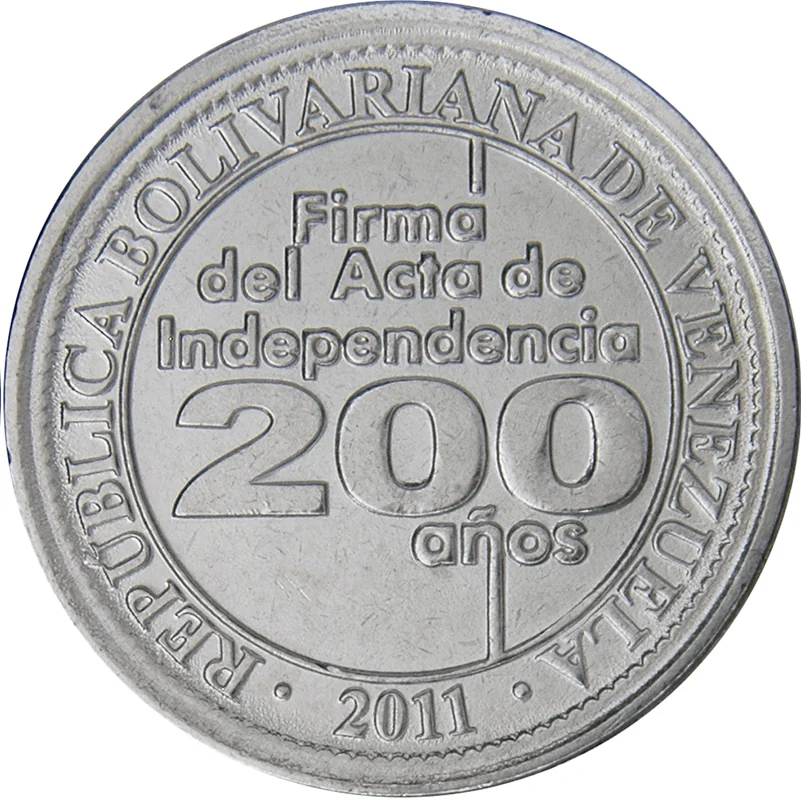
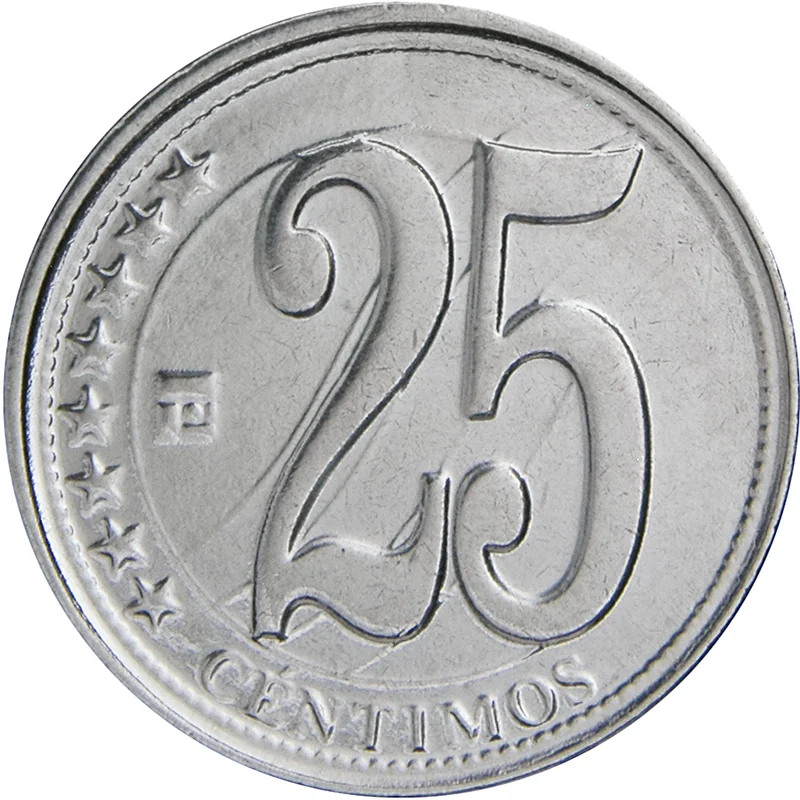
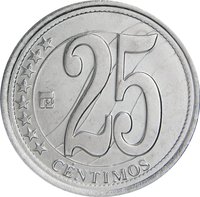
25 centimos (Verbal Independence) – Venezuela
Add to wishlist
Circulating commemorative coins
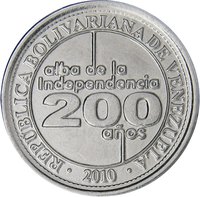
Commemoration: 200th Anniversary of Signing of the Verbal Independence
Venezuela
Obverse
Reverse
Edge
Plain
Categories
| Event> Independence |
Mintings
| Year | Mint Mark | Mintage | Quality | Collection |
|---|---|---|---|---|
| 2011 | — | 500,000 |
Historical background
In 2011, Venezuela's currency situation was characterized by a complex and increasingly strained system of exchange controls, which had been in place since 2003 under President Hugo Chávez. The official fixed exchange rate was set at 4.3 bolívars to the US dollar (BsF 4.3/USD) for essential imports like food and medicine, while a second, slightly depreciated official rate of BsF 5.3/USD was used for other authorized transactions. However, these rates were artificially strong and did not reflect the true market value, leading to a severe shortage of US dollars within the official channels. This scarcity forced many businesses and individuals to turn to a thriving parallel black market, where the bolívar traded at a significant premium, often exceeding BsF 12/USD by the end of the year.
The primary driver of this disparity was a combination of expansive government spending, high inflation (which reached nearly 28% for the year), and a decline in the country's oil production efficiency. Despite high global oil prices, which should have bolstered dollar reserves, state oil company PDVSA's revenues were heavily directed toward social programs and nationalizations, limiting the amount of foreign currency available for the private sector. The government's strict currency controls, administered by the Commission for the Administration of Currency Exchange (CADIVI), created a bottleneck, where requests for dollars were often delayed or denied, crippling importers and leading to growing shortages of goods.
Consequently, the dual currency system in 2011 fostered significant economic distortions. It incentivized corruption and "currency flight," as those with access to cheap official dollars could profit immensely by selling them on the black market. Meanwhile, the average Venezuelan faced rising prices for imported goods and those reliant on imported materials, eroding purchasing power. While the full-scale hyperinflation and profound economic collapse were still a few years away, the entrenched controls and growing gap between official and parallel rates in 1 laid a precarious foundation, signaling the deepening structural vulnerabilities in Venezuela's oil-dependent economy.
The primary driver of this disparity was a combination of expansive government spending, high inflation (which reached nearly 28% for the year), and a decline in the country's oil production efficiency. Despite high global oil prices, which should have bolstered dollar reserves, state oil company PDVSA's revenues were heavily directed toward social programs and nationalizations, limiting the amount of foreign currency available for the private sector. The government's strict currency controls, administered by the Commission for the Administration of Currency Exchange (CADIVI), created a bottleneck, where requests for dollars were often delayed or denied, crippling importers and leading to growing shortages of goods.
Consequently, the dual currency system in 2011 fostered significant economic distortions. It incentivized corruption and "currency flight," as those with access to cheap official dollars could profit immensely by selling them on the black market. Meanwhile, the average Venezuelan faced rising prices for imported goods and those reliant on imported materials, eroding purchasing power. While the full-scale hyperinflation and profound economic collapse were still a few years away, the entrenched controls and growing gap between official and parallel rates in 1 laid a precarious foundation, signaling the deepening structural vulnerabilities in Venezuela's oil-dependent economy.
🌱 Fairly Common