

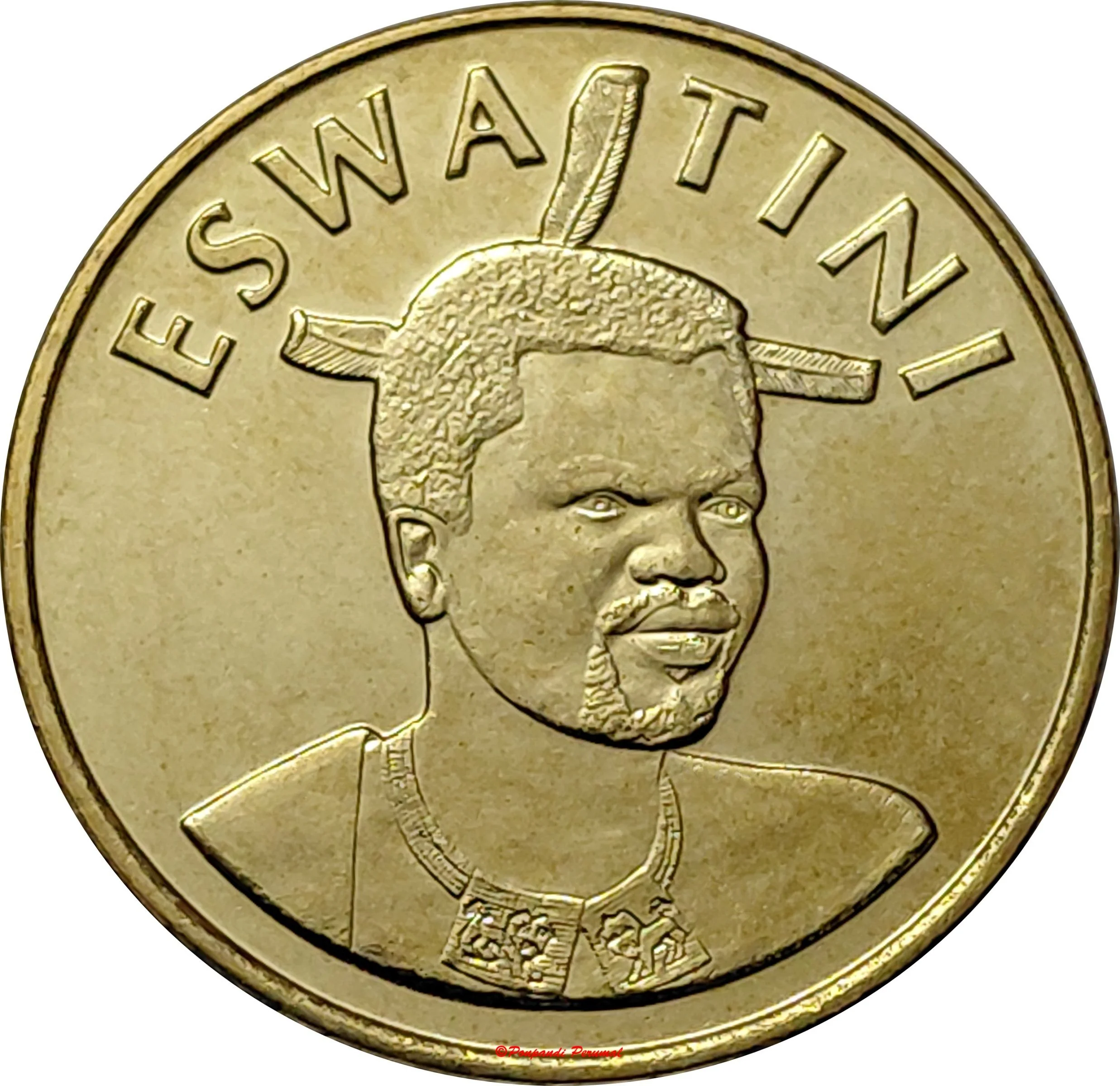
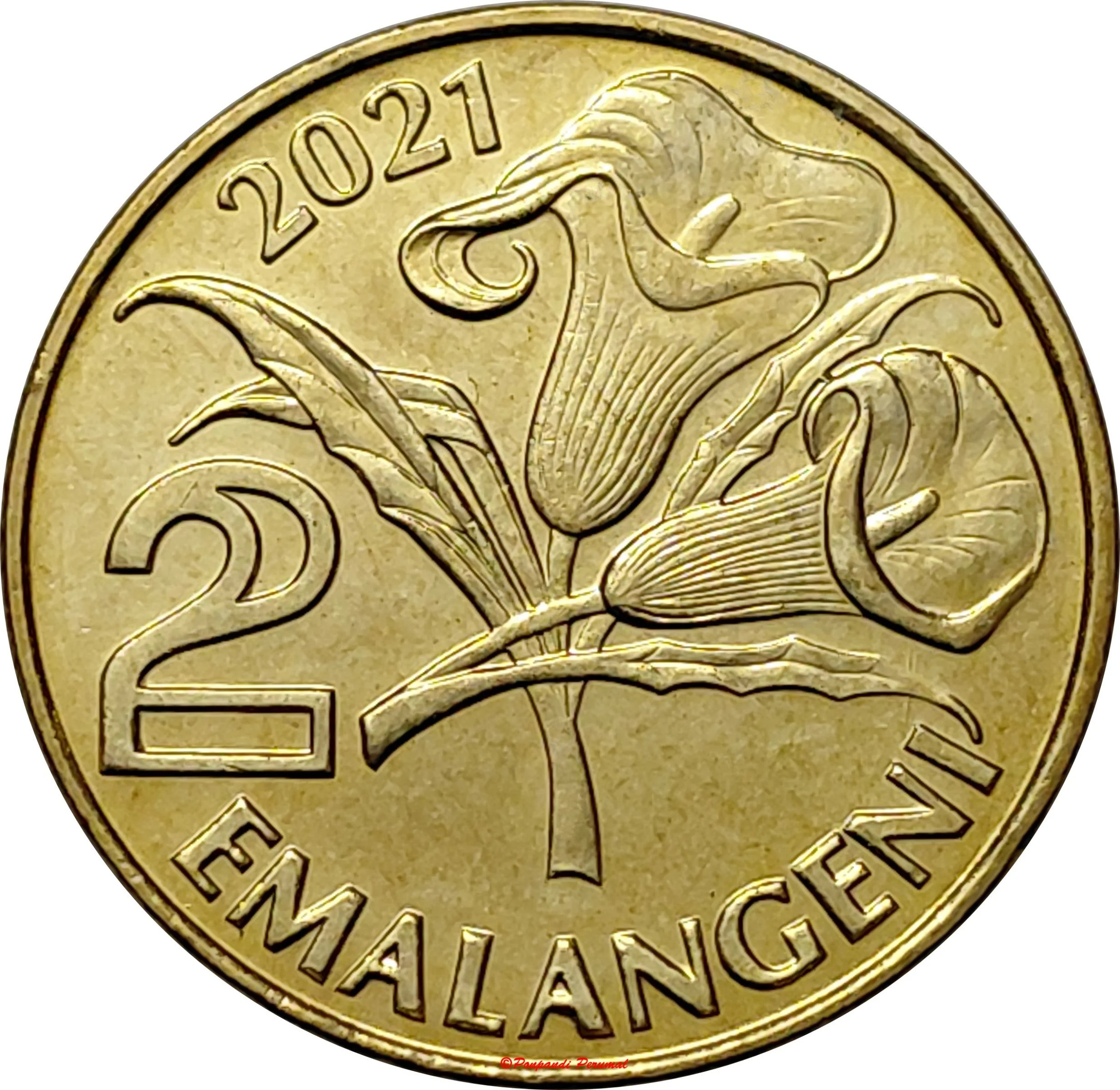
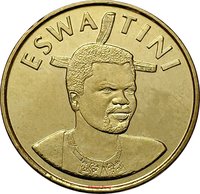
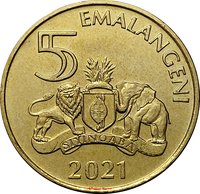
2 Emalangeni – Kingdom of Eswatini
Eswatini
Context

Material
Diameter: 24 mm
Weight: 5 g
Shape: Round
Composition: Aluminium bronze
Magnetic: No
Technique: Milled
References
KM: #Click to copy to clipboard74
Numista: #342204
Mintings
| Year | Mint Mark | Mintage | Quality | Collection |
|---|---|---|---|---|
| 2021 | — | — |
Historical background
In 2021, the Kingdom of Eswatini's currency situation remained defined by its longstanding membership in the Common Monetary Area (CMA) and its pegged exchange rate to the South African Rand. The country uses the Lilangeni (plural: Emalangeni), which is issued by the Central Bank of Eswatini but maintains a 1:1 fixed parity with the Rand. This arrangement provides monetary stability, facilitates trade with its largest economic partner, South Africa, and delegates de facto monetary policy to the South African Reserve Bank. Consequently, Eswatini's inflation and interest rates closely mirrored those of South Africa, with inflation averaging around 3.7% for the year.
The year presented significant economic challenges that pressured the currency peg. Eswatini's economy was severely impacted by the COVID-19 pandemic, which disrupted key sectors like manufacturing and services, and by the civil unrest of mid-2021. The protests and associated damage led to a sharp contraction in GDP, estimated at nearly 2%, straining public finances and foreign exchange reserves. Despite these pressures, the peg held firm, supported by the CMA's framework which allows for the pooling of reserves and provides Eswatini with access to South African capital markets.
Looking forward, the sustainability of this currency regime in 2021 hinged on fiscal discipline and external balances. The government faced the dual challenge of financing reconstruction after the unrest and supporting economic recovery, while needing to maintain adequate reserves to defend the peg. Discussions around potential fiscal reforms and seeking international financial assistance were ongoing, but the fundamental commitment to the Rand peg remained unwavering as it continued to be seen as a critical anchor for economic stability amidst domestic and global uncertainty.
The year presented significant economic challenges that pressured the currency peg. Eswatini's economy was severely impacted by the COVID-19 pandemic, which disrupted key sectors like manufacturing and services, and by the civil unrest of mid-2021. The protests and associated damage led to a sharp contraction in GDP, estimated at nearly 2%, straining public finances and foreign exchange reserves. Despite these pressures, the peg held firm, supported by the CMA's framework which allows for the pooling of reserves and provides Eswatini with access to South African capital markets.
Looking forward, the sustainability of this currency regime in 2021 hinged on fiscal discipline and external balances. The government faced the dual challenge of financing reconstruction after the unrest and supporting economic recovery, while needing to maintain adequate reserves to defend the peg. Discussions around potential fiscal reforms and seeking international financial assistance were ongoing, but the fundamental commitment to the Rand peg remained unwavering as it continued to be seen as a critical anchor for economic stability amidst domestic and global uncertainty.
🌱 Fairly Common