

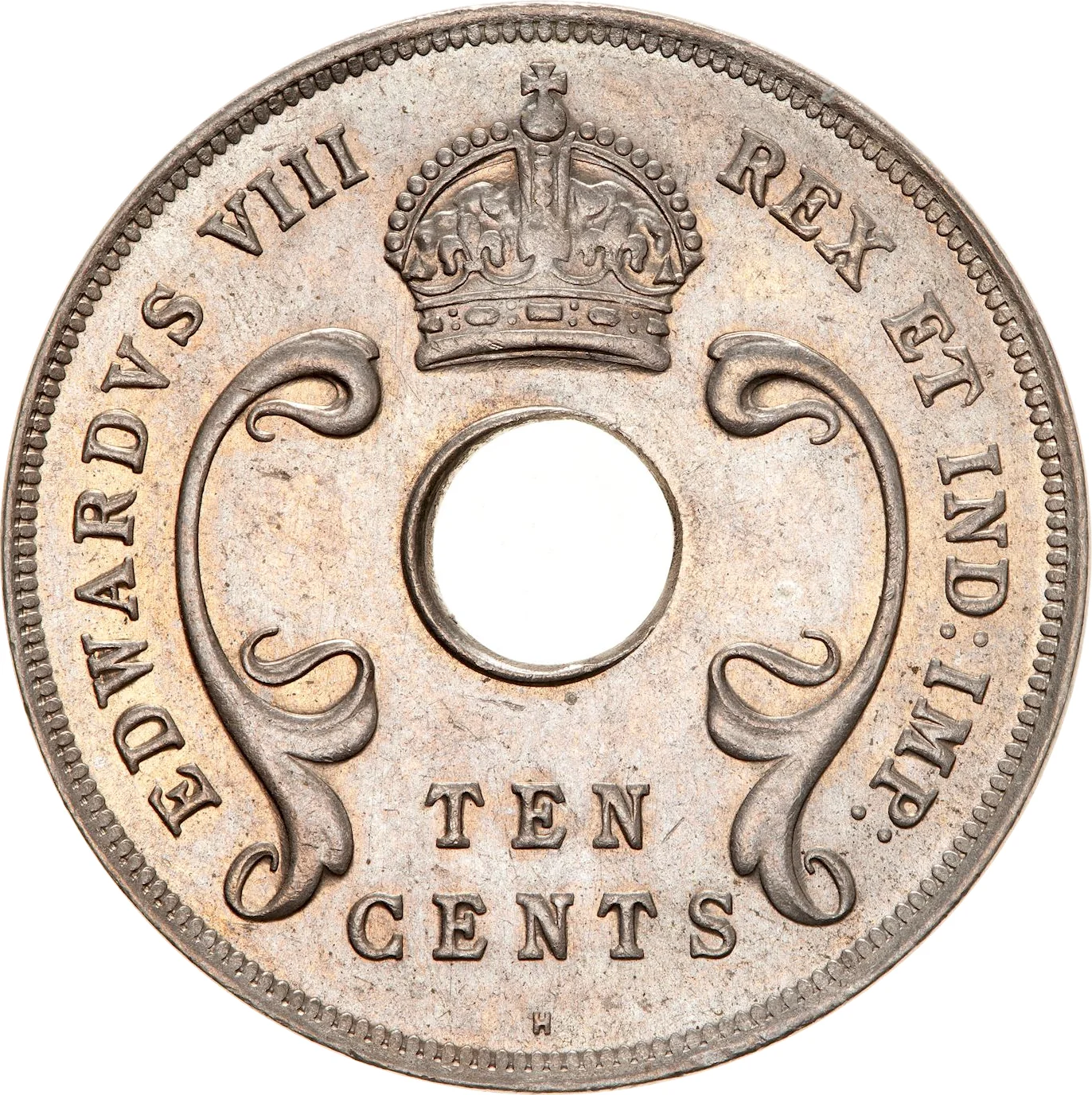
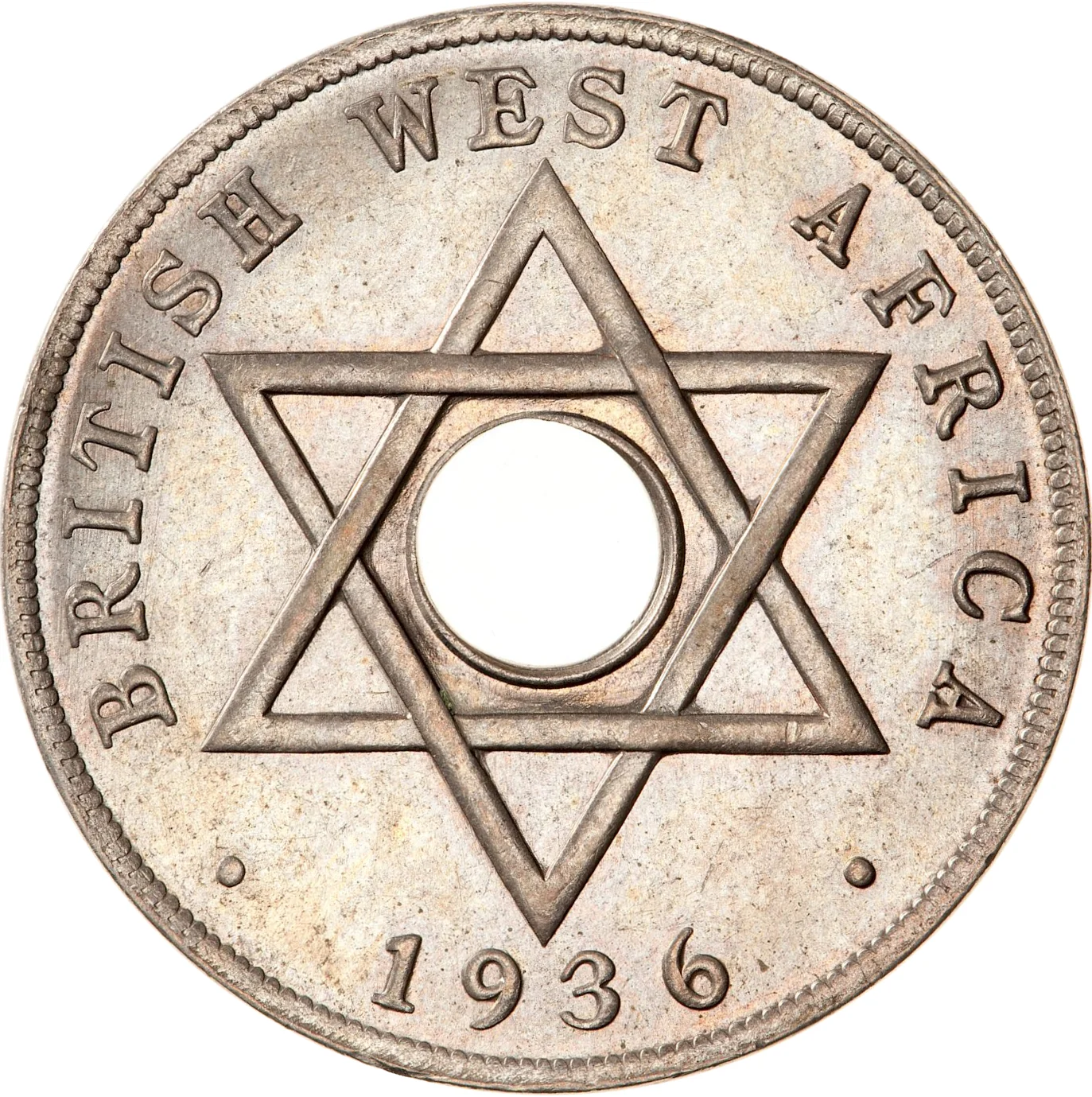
1 Penny – ERR British West AfricaandEast Africa
Context
Material
Diameter: 30.5 mm
Weight: 9.45 g
Shape: Round with a round hole
Composition: Copper-nickel
Technique: Milled
Alignment: Medal alignment
flip
References
KM: #Click to copy to clipboard17
Numista: #34059
Obverse
Reverse
Description:
Solomon's seal: two interlaced equilateral triangles encircling a central hole.
Inscription:
BRITISH WEST AFRICA
· 1936 ·
· 1936 ·
Script: Latin
Edge
Mints
| Name | Mark |
|---|---|
| Heaton and Sons / The Mint Birmingham | H |
Mintings
| Year | Mint Mark | Mintage | Quality | Collection |
|---|---|---|---|---|
| 1936 | H | — |
Historical background
In 1936, the currency situation in British West Africa was defined by the West African Currency Board (WACC), established in 1912. This system pegged the West African pound at par with the British pound sterling. The Board issued distinctive local coinage and notes, which were fully backed by sterling reserves held in London. This ensured convertibility and stability, tightly integrating West Africa’s export economy (dominated by cocoa, palm products, and groundnuts) into the British financial system. While it provided low inflation and trusted currency, it also meant monetary policy was entirely directed from London, with no capacity for local credit management or exchange rate adjustment.
In East Africa, the situation was governed by the East African Currency Board (EACB), formed in 1919. Similar to its West African counterpart, it issued the East African shilling (valued at 20 shillings to the pound sterling) for Kenya, Uganda, Tanganyika, and Zanzibar. This common currency facilitated trade and administration within the region. The EACB also maintained a strict sterling-exchange standard, with reserves held in London. The system was highly conservative, prioritizing currency stability and convertibility over developmental financing, which mirrored the colonial economic focus on primary commodity exports like coffee, sisal, and cotton.
By 1936, both currency boards represented a classic colonial sterling-exchange standard, designed to facilitate imperial trade, ensure fiscal discipline, and minimize risk for British businesses and administrators. They provided stable and familiar currencies that reduced transaction costs within the empires. However, this stability came at the cost of economic autonomy, draining local savings to London reserves and offering no mechanism for the colonies to use monetary policy to address local economic challenges, a structure that would later be criticised in the post-war move toward independence and central banking.
In East Africa, the situation was governed by the East African Currency Board (EACB), formed in 1919. Similar to its West African counterpart, it issued the East African shilling (valued at 20 shillings to the pound sterling) for Kenya, Uganda, Tanganyika, and Zanzibar. This common currency facilitated trade and administration within the region. The EACB also maintained a strict sterling-exchange standard, with reserves held in London. The system was highly conservative, prioritizing currency stability and convertibility over developmental financing, which mirrored the colonial economic focus on primary commodity exports like coffee, sisal, and cotton.
By 1936, both currency boards represented a classic colonial sterling-exchange standard, designed to facilitate imperial trade, ensure fiscal discipline, and minimize risk for British businesses and administrators. They provided stable and familiar currencies that reduced transaction costs within the empires. However, this stability came at the cost of economic autonomy, draining local savings to London reserves and offering no mechanism for the colonies to use monetary policy to address local economic challenges, a structure that would later be criticised in the post-war move toward independence and central banking.
💎 Extremely Rare