

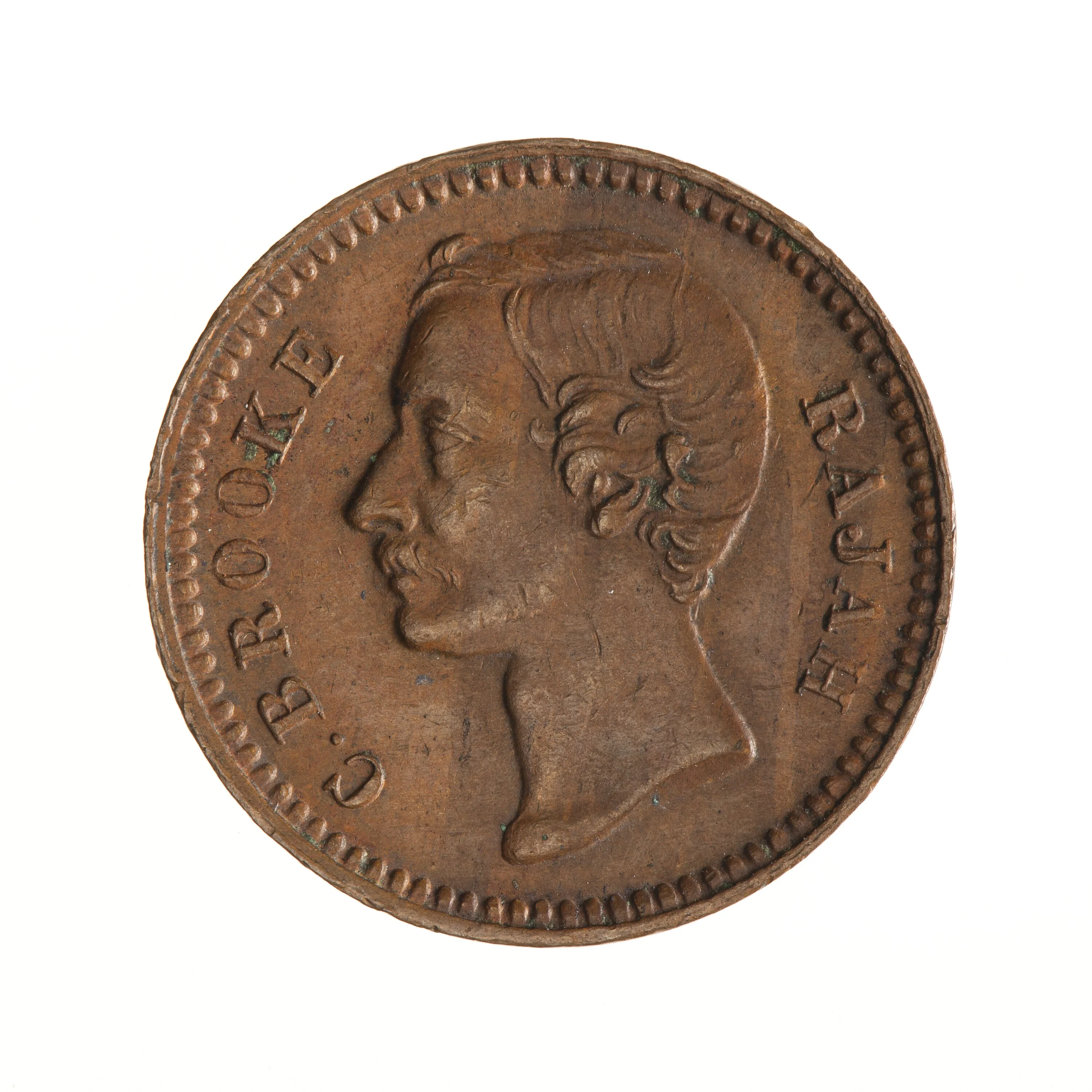
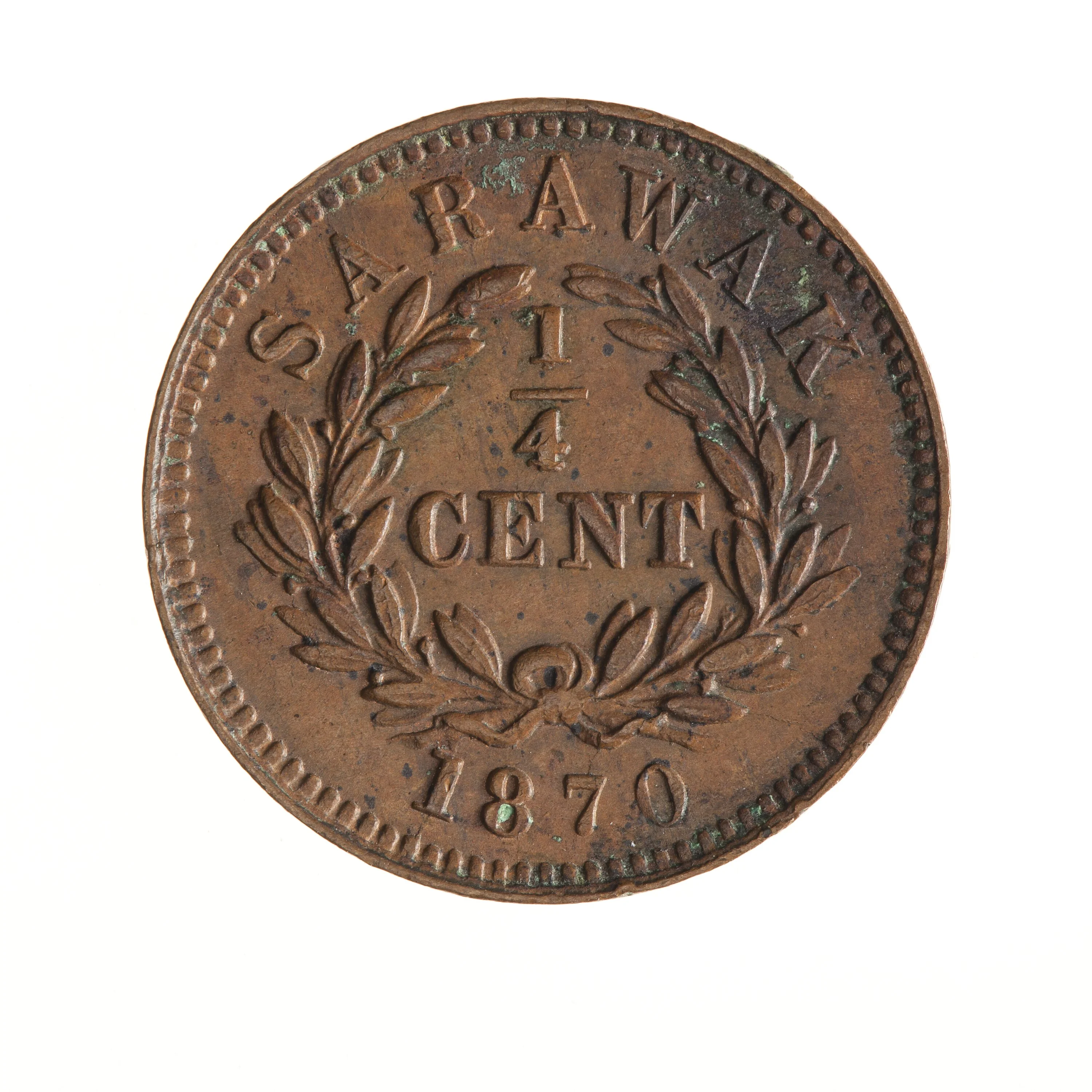
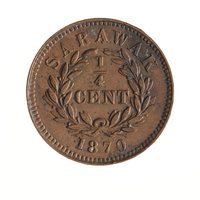
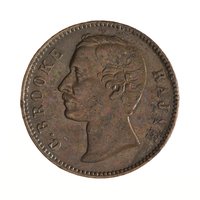
¼ Cent – Sarawak
Malaysia
Context
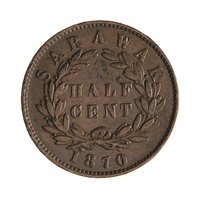
Years: 1870–1896
Country: Malaysia 
Issuer: Sarawak
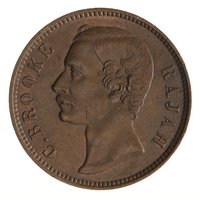
Ruler: Charles Brooke
Currency:
(1868—1946)
Demonetized: Yes
Total mintage: 383,000
Material
References
KM: #Click to copy to clipboard4
Numista: #34027
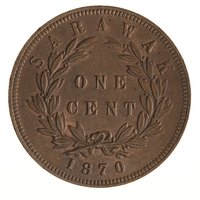
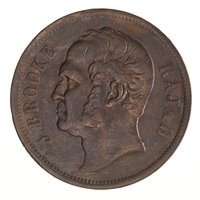
Obverse
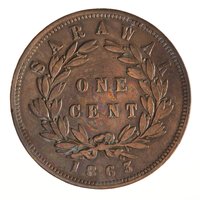
Reverse
Edge
Plain
Mints
| Name | Mark |
|---|---|
| Heaton and Sons / The Mint Birmingham | H |
Historical background
In 1870, Sarawak's currency situation was a complex tapestry of indigenous, regional, and international monies, reflecting its position as an independent state under the rule of the White Rajahs, the Brooke family. The economy was primarily based on barter, with staple goods like rice, brassware, and woven mats serving as common mediums of exchange, especially in upriver communities. However, the growth of trade in coastal settlements—driven by Chinese merchants and European trading houses—created a pressing demand for a reliable, standardized metallic currency to facilitate commerce in exports like sago, pepper, and jungle produce.
The official currency was the silver Mexican dollar, a dominant trade coin throughout Southeast Asia due to its consistent silver content. These dollars, along with other silver coins like Spanish Carolus dollars and later British trade dollars, circulated alongside a plethora of smaller fractional coins, including Dutch doits, Indian rupees, and Chinese copper cash. This proliferation led to confusion, as the value of these coins fluctuated based on weight, wear, and local acceptance, requiring merchants to constantly refer to published "currency bulletins" to determine exchange rates.
Recognizing the administrative and economic inefficiencies, the Second White Rajah, Charles Brooke, actively sought to impose order. He introduced Sarawak's own coinage in small denominations (e.g., keping and cent) in 1863, but these initially struggled to gain full public trust and widespread circulation. Therefore, by 1870, the monetary system remained in a transitional phase. The Brooke administration was asserting its sovereign right to mint coinage, yet in practice, the economy still operated on a messy but functional hybrid system, relying on a mix of foreign silver, limited local coinage, and entrenched barter traditions.
The official currency was the silver Mexican dollar, a dominant trade coin throughout Southeast Asia due to its consistent silver content. These dollars, along with other silver coins like Spanish Carolus dollars and later British trade dollars, circulated alongside a plethora of smaller fractional coins, including Dutch doits, Indian rupees, and Chinese copper cash. This proliferation led to confusion, as the value of these coins fluctuated based on weight, wear, and local acceptance, requiring merchants to constantly refer to published "currency bulletins" to determine exchange rates.
Recognizing the administrative and economic inefficiencies, the Second White Rajah, Charles Brooke, actively sought to impose order. He introduced Sarawak's own coinage in small denominations (e.g., keping and cent) in 1863, but these initially struggled to gain full public trust and widespread circulation. Therefore, by 1870, the monetary system remained in a transitional phase. The Brooke administration was asserting its sovereign right to mint coinage, yet in practice, the economy still operated on a messy but functional hybrid system, relying on a mix of foreign silver, limited local coinage, and entrenched barter traditions.
💎 Very Rare