

3 Pence – British West Africa
Context
Year: 1957
Country: Western African States
Issuer: British West Africa
Ruler: Elizabeth II
Currency:
(1907—1968)
Demonetized: Yes
Total mintage: 800,000
Material
References
KM: #Click to copy to clipboard35
Numista: #34000
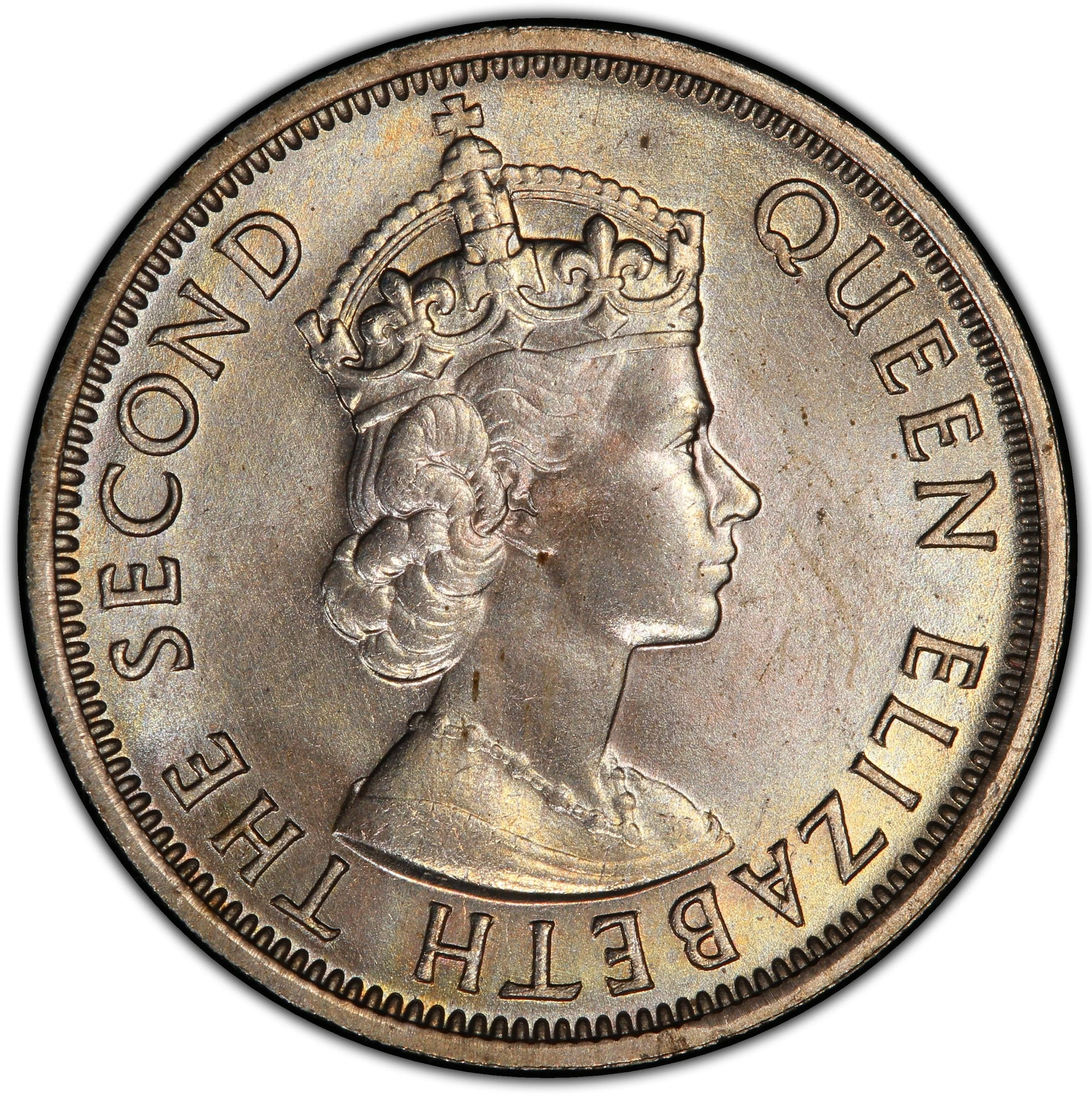
Obverse
Description:
Right-facing crowned portrait with encircling text.
Inscription:
QUEEN ELIZABETH THE SECOND
Script: Latin
Designer: Cecil Thomas
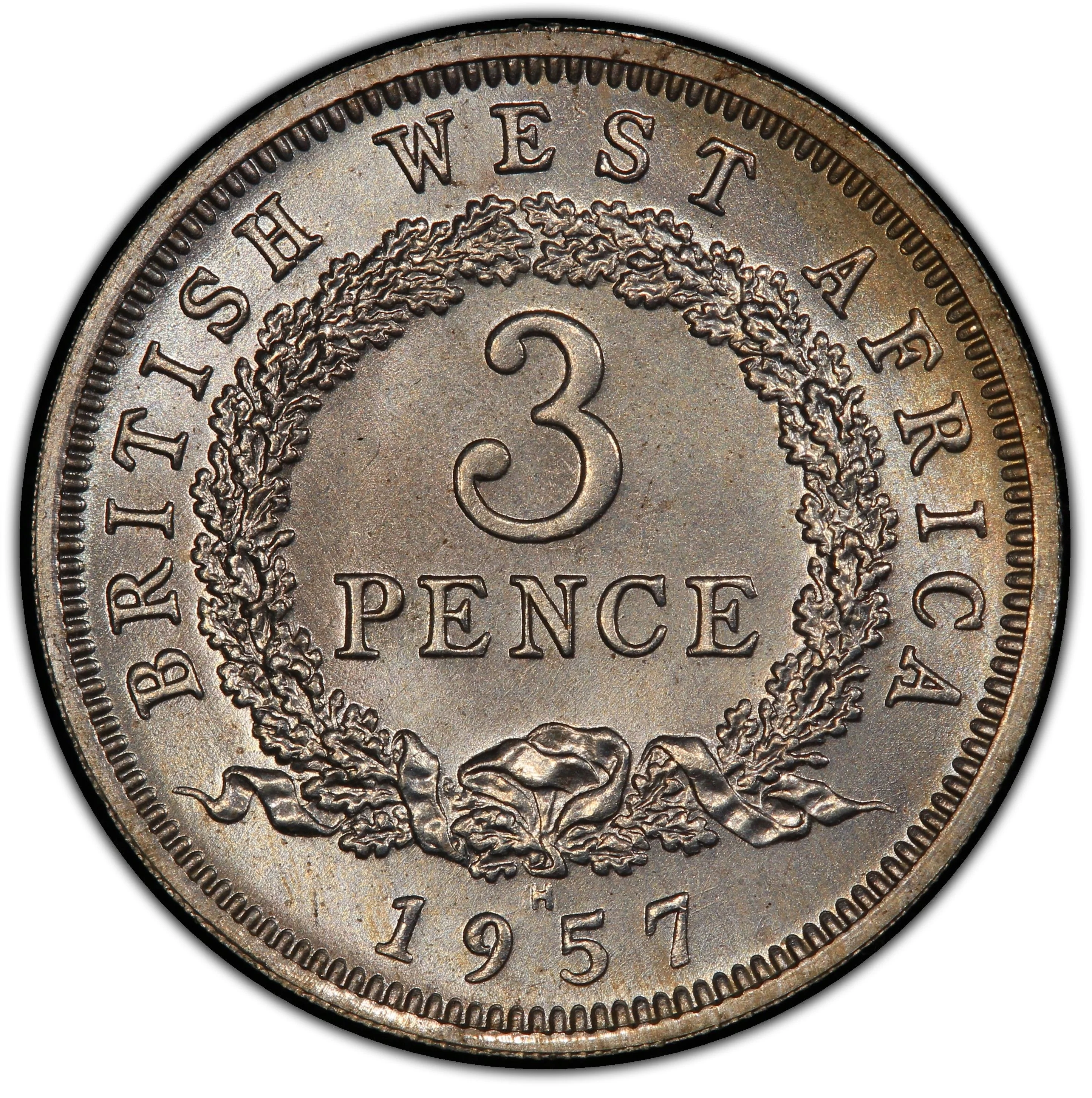
Reverse
Description:
Central wreath with value, surrounding lettering, date below. Mintmark between wreath and date.
Inscription:
BRITISH WEST AFRICA
3 PENCE
1957 H
3 PENCE
1957 H
Script: Latin
Edge
Security edge
Mints
| Name | Mark |
|---|---|
| Heaton and Sons / The Mint Birmingham | H |
Mintings
| Year | Mint Mark | Mintage | Quality | Collection |
|---|---|---|---|---|
| 1957 | H | 800,000 |
Historical background
In 1957, the currency situation in British West Africa was characterised by the operations of the West African Currency Board (WACB), established in 1912. This system provided a stable, sterling-pegged currency—the West African pound—which was issued by the Board and fully backed by sterling reserves held in London. The arrangement facilitated seamless trade with the British Empire and ensured convertibility, but it also meant that monetary policy for the region was entirely determined by the British Treasury, with no capacity for local authorities to manage money supply or devalue to address local economic conditions.
The year 1957 was a pivotal moment of political transition, most notably with Ghana's independence in March. This immediately raised urgent questions about monetary sovereignty, as the new nation sought control over its financial instruments as a symbol and tool of independence. While the WACB system remained technically in force across the remaining territories (Nigeria, Sierra Leone, and The Gambia), Ghana's independence set a clear precedent, signalling the impending end of the colonial currency era. Discussions were already underway for the establishment of a national central bank and a distinct Ghanaian currency.
Consequently, the landscape was one of stability on the surface but fundamental change beneath. The WACB continued to issue uniform coinage and notes across the four territories, maintaining monetary stability during the transition. However, the political drive for independence made the dissolution of the Board inevitable. The period thus marked the final phase of a unified colonial currency, with the region poised to fragment into separate national monetary systems, beginning with Ghana's introduction of the Ghanaian pound in 1958.
The year 1957 was a pivotal moment of political transition, most notably with Ghana's independence in March. This immediately raised urgent questions about monetary sovereignty, as the new nation sought control over its financial instruments as a symbol and tool of independence. While the WACB system remained technically in force across the remaining territories (Nigeria, Sierra Leone, and The Gambia), Ghana's independence set a clear precedent, signalling the impending end of the colonial currency era. Discussions were already underway for the establishment of a national central bank and a distinct Ghanaian currency.
Consequently, the landscape was one of stability on the surface but fundamental change beneath. The WACB continued to issue uniform coinage and notes across the four territories, maintaining monetary stability during the transition. However, the political drive for independence made the dissolution of the Board inevitable. The period thus marked the final phase of a unified colonial currency, with the region poised to fragment into separate national monetary systems, beginning with Ghana's introduction of the Ghanaian pound in 1958.
💎 Very Rare