

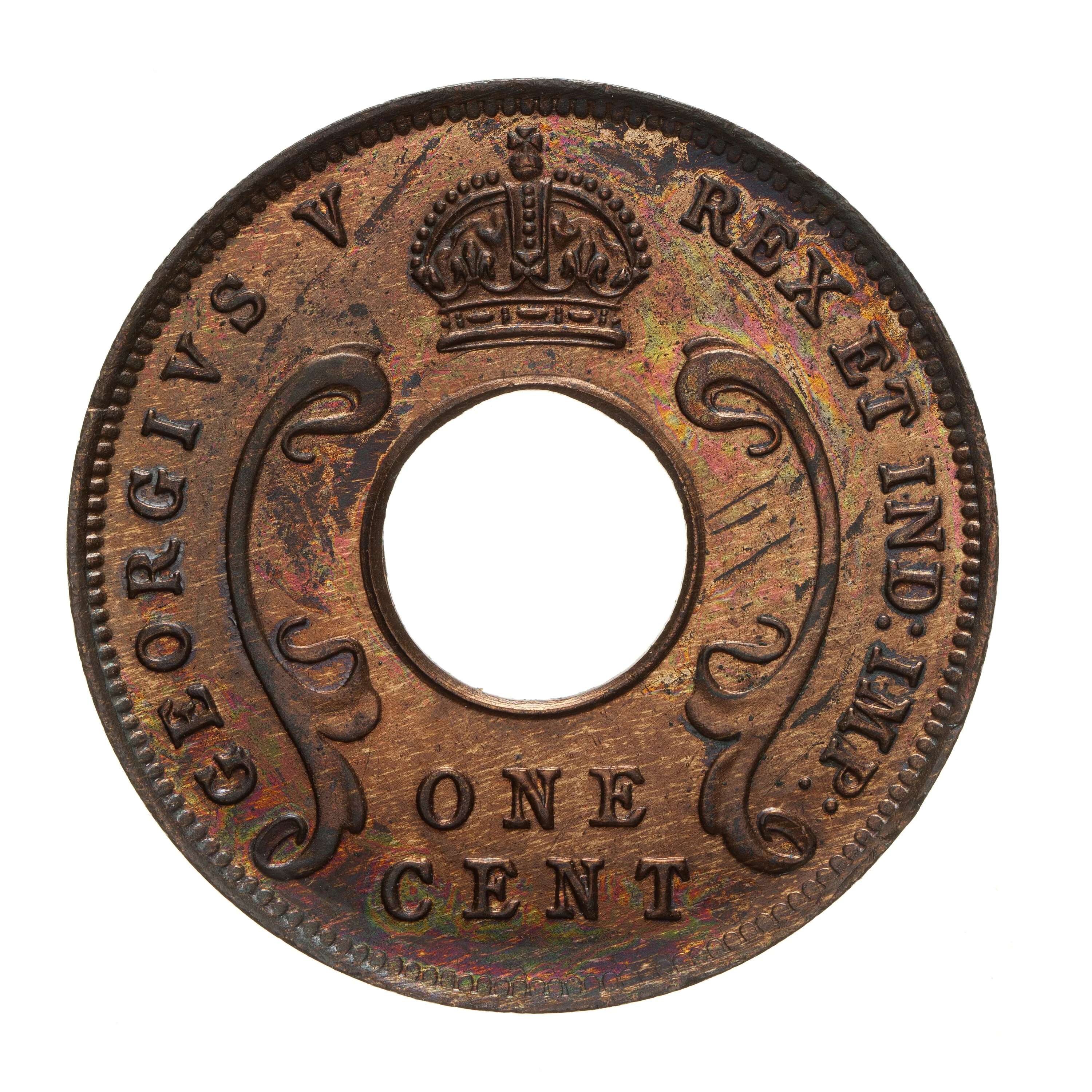
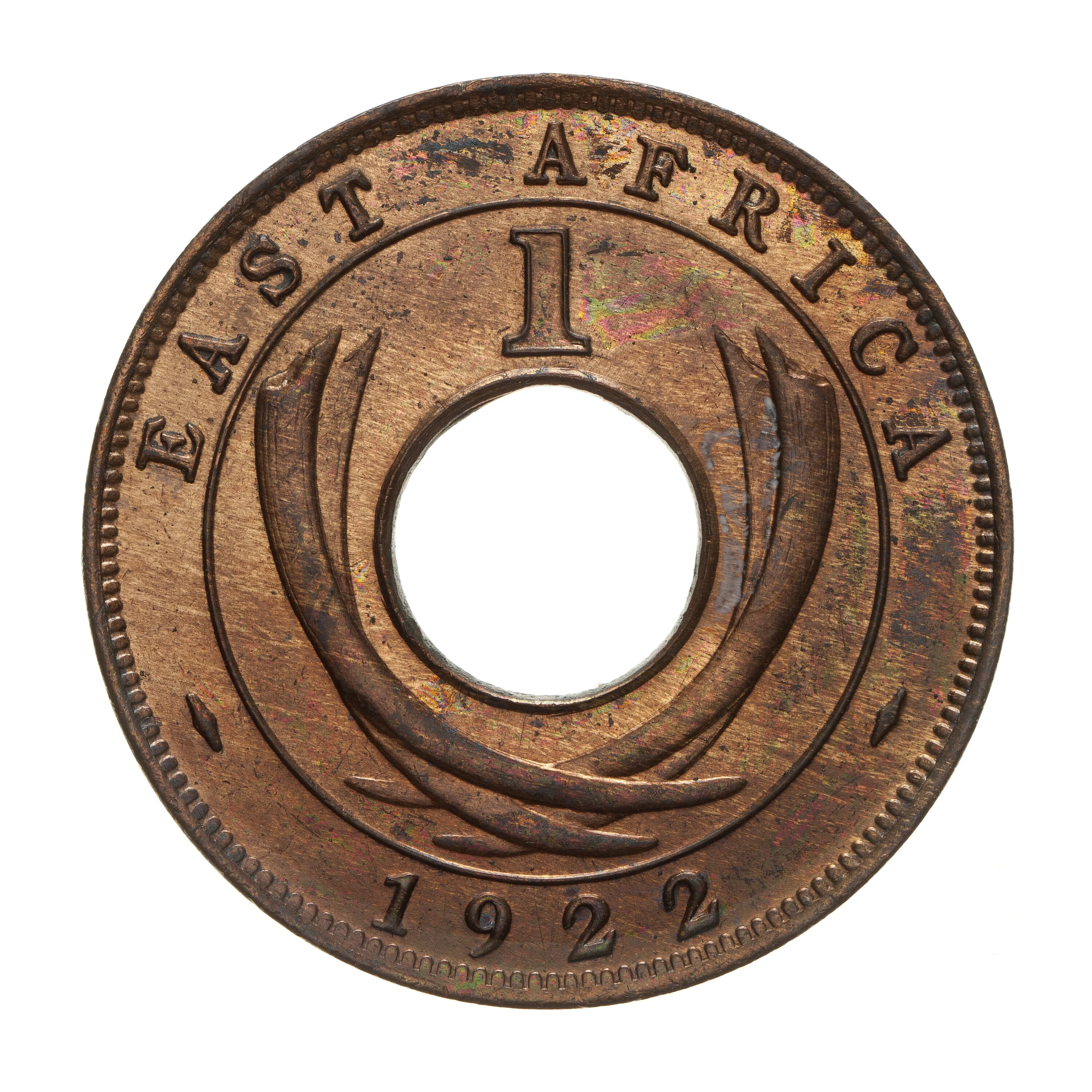
1 Cent – East Africa
Context
Years: 1922–1935
Issuer: East Africa
Ruler: George V
Currency:
(1921—1967)
Demonetized: Yes
Total mintage: 201,764,000
Material
Diameter: 20.2 mm
Weight: 1.94 g
Thickness: 1.05 mm
Shape: Round with a round hole
Composition: Bronze
Magnetic: No
Technique: Milled
Alignment: Medal alignment
flip
References
KM: #Click to copy to clipboard22
Numista: #3400
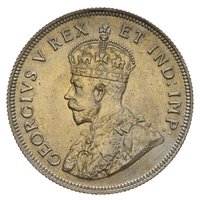
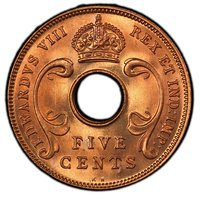
Obverse
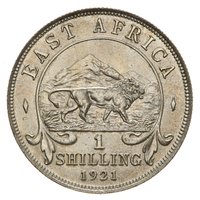
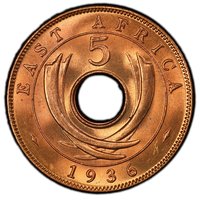
Reverse
Edge
Plain
Mints
| Name | Mark |
|---|---|
| Royal Mint (Tower Hill) | — |
| Heaton and Sons / The Mint Birmingham | H |
| Kings Norton Metal Company | KN |
Mintings
Historical background
In 1922, the currency landscape of East Africa was dominated by the East African Protectorate (later Kenya), Uganda, and Tanganyika, each under varying degrees of British colonial administration. The region operated on a de facto sterling exchange standard, with the official currency being the East African florin, introduced in 1920 to replace the Indian rupee. However, this transition was brief and problematic; the florin, pegged at two shillings sterling, faced public resistance and practical difficulties in accounting, as the British pound sterling remained the region's primary financial benchmark and the currency of imperial trade.
Consequently, 1922 was a pivotal year of monetary reform. Recognising the florin's failure, the British authorities passed the East African Currency Order in Council, paving the way for its replacement. The new currency, the East African shilling, was introduced in 1922. It was subdivided into 100 cents and was permanently fixed at a value of one shilling sterling, simplifying transactions and aligning the colony directly with the British monetary system. This move was designed to stabilise the economy, facilitate administration, and deepen economic integration with the Empire.
The introduction of the shilling also solidified British monetary control across its East African territories, creating a unified currency zone that would persist for decades. In Tanganyika, a former German colony now under British mandate, the shilling replaced the German East African rupie, further consolidating British economic influence. Thus, by the end of 1922, the region had moved from a period of monetary experimentation and public discontent to a standardised, sterling-backed system that would govern commerce and colonial finance until the mid-20th century.
Consequently, 1922 was a pivotal year of monetary reform. Recognising the florin's failure, the British authorities passed the East African Currency Order in Council, paving the way for its replacement. The new currency, the East African shilling, was introduced in 1922. It was subdivided into 100 cents and was permanently fixed at a value of one shilling sterling, simplifying transactions and aligning the colony directly with the British monetary system. This move was designed to stabilise the economy, facilitate administration, and deepen economic integration with the Empire.
The introduction of the shilling also solidified British monetary control across its East African territories, creating a unified currency zone that would persist for decades. In Tanganyika, a former German colony now under British mandate, the shilling replaced the German East African rupie, further consolidating British economic influence. Thus, by the end of 1922, the region had moved from a period of monetary experimentation and public discontent to a standardised, sterling-backed system that would govern commerce and colonial finance until the mid-20th century.
🌱 Very Common