

20 zlotys (Port of Gdynia) – Poland
Add to wishlist
Non-circulating coins
Commemoration: 100th Anniversary of the Port of Gdynia
Poland
Obverse
Description:
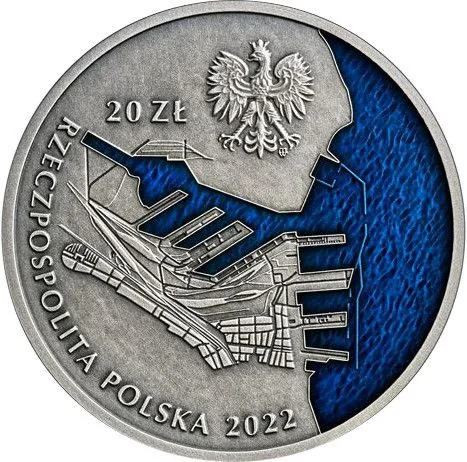
The coin's obverse features a plan of the Gdynia port.
Inscription:
20 ZŁ
m/w
RZECZPOSPOLITA POLSKA 2022
m/w
RZECZPOSPOLITA POLSKA 2022
Translation:
20 ZŁOTYCH
m/w
REPUBLIC OF POLAND 2022
m/w
REPUBLIC OF POLAND 2022
Script: Latin
Language: Polish
Designer: Dominika Karpińska-Kopiec
Reverse
Description:
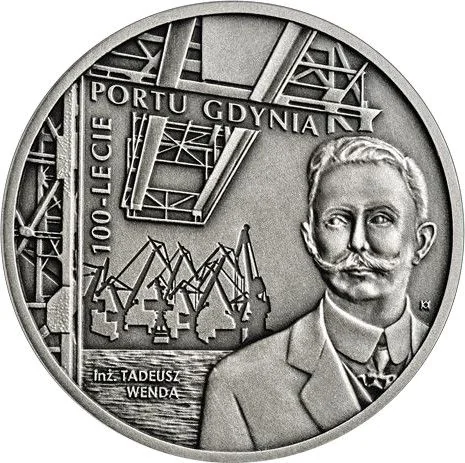
The reverse shows Tadeusz Wenda, with the portal of the gantry crane from his era, still in use today, in the foreground.
Inscription:
100-LECIE
PORTU GDYNIA
KDK
Inż. TADEUSZ
WENDA
PORTU GDYNIA
KDK
Inż. TADEUSZ
WENDA
Translation:
HUNDREDTH ANNIVERSARY
PORT OF GDYNIA
KDK
ENGINEER TADEUSZ
WENDA
PORT OF GDYNIA
KDK
ENGINEER TADEUSZ
WENDA
Script: Latin
Language: Polish
Designer: Dominika Karpińska-Kopiec
Edge
Plain
Mints
| Name | Mark |
|---|---|
| Mint of Poland | (MW) |
Mintings
| Year | Mint Mark | Mintage | Quality | Collection |
|---|---|---|---|---|
| 2022 | mw | 12,000 |
Historical background
In 2022, Poland's currency, the złoty (PLN), faced significant volatility driven primarily by external shocks and aggressive monetary policy. The year began with the currency under pressure from high inflation, which peaked at over 18% in February, largely fueled by soaring energy prices and supply chain disruptions exacerbated by the war in Ukraine. The National Bank of Poland (NBP) responded with a series of interest rate hikes, raising the reference rate from 1.75% at the end of 2021 to 6.75% by September 2022. This tightening cycle aimed to anchor inflation expectations and initially provided some support to the złoty.
However, the currency's trajectory was heavily influenced by global factors, particularly the strength of the US dollar and regional risk aversion. The dollar's broad surge, driven by aggressive Federal Reserve tightening, weighed on most emerging market currencies, including the złoty. Furthermore, the economic and humanitarian crisis resulting from Russia's invasion of Ukraine created investor uncertainty in Central and Eastern Europe, leading to periods of capital outflow and pressure on the PLN/EUR exchange rate, despite Poland's relative economic resilience and influx of Ukrainian refugees.
By the latter part of the year, the situation began to stabilize somewhat. The NBP's decisive rate hikes, combined with government fiscal measures to shield households from energy costs, helped curb extreme volatility. While the złoty remained weaker against the euro compared to pre-2022 levels, it recovered from its lowest point in September as markets grew more confident that the central bank was controlling inflationary pressures. Thus, 2022 was a year where the złoty navigated the dual challenges of domestic inflation fighting and a turbulent global geopolitical landscape.
However, the currency's trajectory was heavily influenced by global factors, particularly the strength of the US dollar and regional risk aversion. The dollar's broad surge, driven by aggressive Federal Reserve tightening, weighed on most emerging market currencies, including the złoty. Furthermore, the economic and humanitarian crisis resulting from Russia's invasion of Ukraine created investor uncertainty in Central and Eastern Europe, leading to periods of capital outflow and pressure on the PLN/EUR exchange rate, despite Poland's relative economic resilience and influx of Ukrainian refugees.
By the latter part of the year, the situation began to stabilize somewhat. The NBP's decisive rate hikes, combined with government fiscal measures to shield households from energy costs, helped curb extreme volatility. While the złoty remained weaker against the euro compared to pre-2022 levels, it recovered from its lowest point in September as markets grew more confident that the central bank was controlling inflationary pressures. Thus, 2022 was a year where the złoty navigated the dual challenges of domestic inflation fighting and a turbulent global geopolitical landscape.
✨ Legendary