

10 francs – France
Add to wishlist
France
Context
Years: 1854–1855
Issuer: France
Ruler: Napoleon III
Currency:
(1795—1959)
Demonetization: 7 April 1855
Total mintage: 2,297,772
Material
References
KM: #
Numista: #3389
Value
Bullion value: $447.50
Obverse
Description:
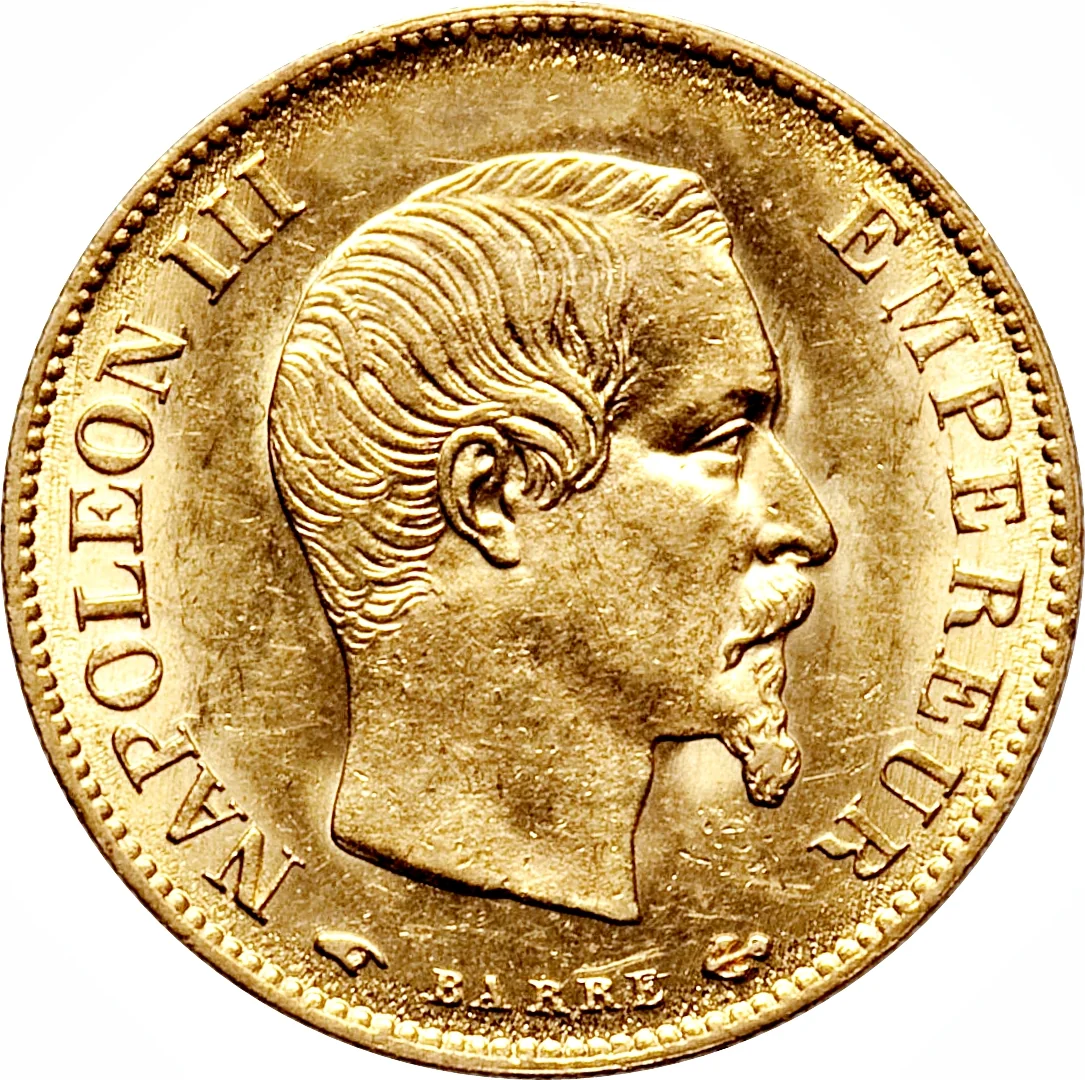
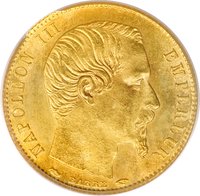
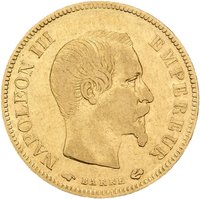
Napoleon III, right-facing bust.
Inscription:
NAPOLEON III EMPEREUR
BARRE
BARRE
Translation:
NAPOLEON III EMPEROR
BARRE
BARRE
Script: Latin
Language: French
Engraver: Jacques-Jean Barre
Reverse
Description:
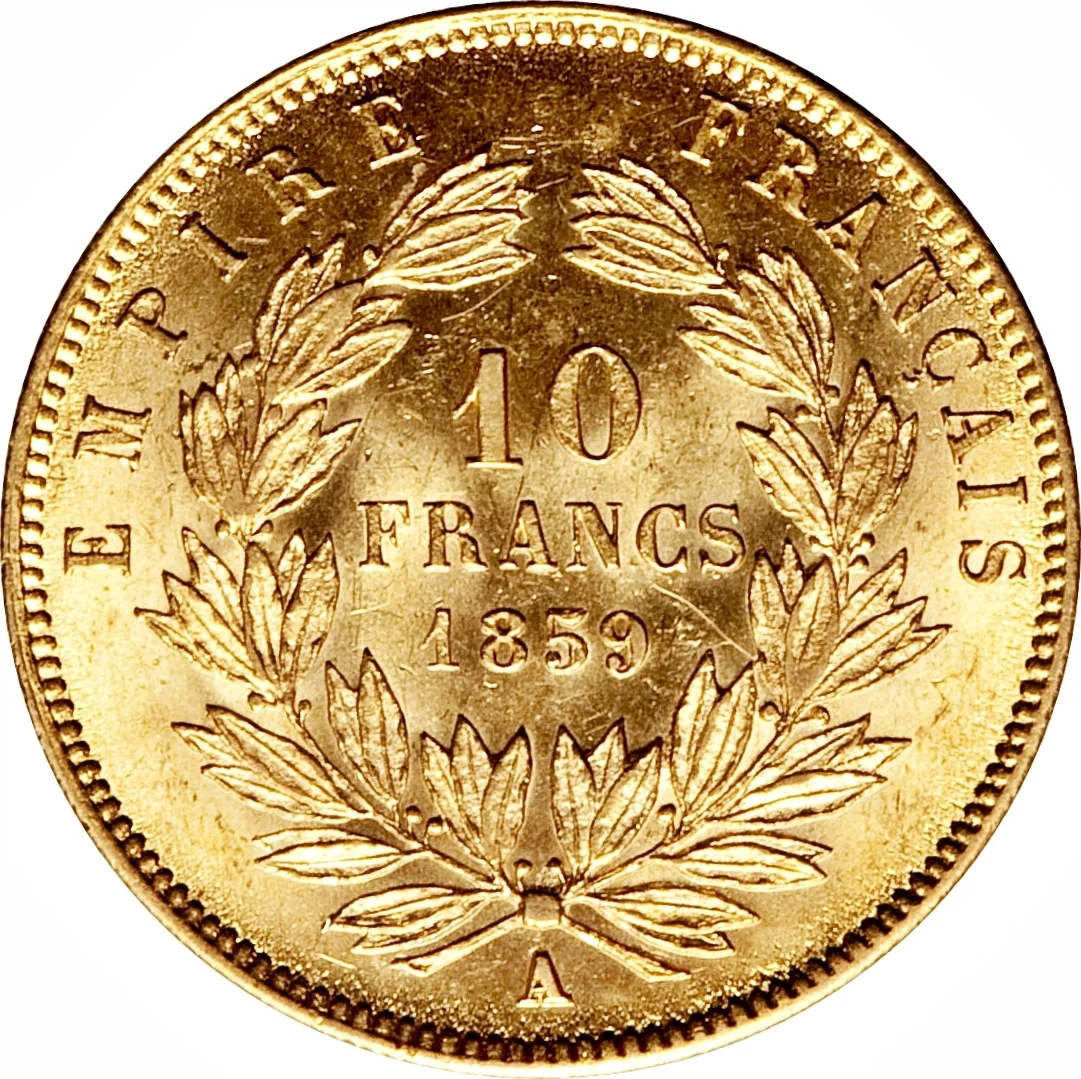
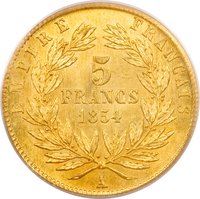
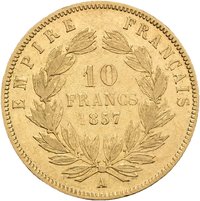
Denomination in wreath, mintmark below, country name around rim.
Inscription:
EMPIRE FRANÇAIS
10
FRANCS
1858
A
10
FRANCS
1858
A
Translation:
FRENCH EMPIRE
10
FRANCS
1858
A
10
FRANCS
1858
A
Script: Latin
Language: French
Engraver: Jacques-Jean Barre
Edge
Reeded
Mints
| Name | Mark |
|---|---|
| Monnaie de Paris | A |
Historical background
In 1854, France operated under a bimetallic monetary system, established by the Franc Germinal law of 1803. This system fixed the value of the franc to specific quantities of both gold and silver, creating a legal exchange ratio between the two metals. The franc was defined as 0.290322 grams of fine gold or 4.5 grams of fine silver, setting a fixed ratio of 15.5 units of silver to 1 unit of gold. This system aimed to provide stability and facilitate international trade by allowing the free minting of both gold and silver coins, which circulated simultaneously.
However, by the 1850s, this bimetallic equilibrium was under growing strain due to global market fluctuations in the relative value of the two metals. The discovery of vast new gold deposits in California (1848) and Australia (1851) was beginning to increase the global supply of gold, a process that would later lead to the gradual depreciation of gold relative to the fixed legal ratio. While the full effects were still developing in 1854, the inflationary pressure and the threat of Gresham's Law—where "bad" money (depreciating metal) drives "good" money (undervalued metal) out of circulation—were emerging concerns for French economists and the government of Emperor Napoleon III.
Consequently, the French currency in circulation was a mix of metallic coins. Gold coins like the 20-franc and 100-franc "Napoléon" existed alongside silver 5-franc pieces and fractional coins. The Bank of France issued paper banknotes, but these were not yet legal tender for private transactions and were primarily used by merchants and financiers; public trust and everyday commerce still heavily relied on specie. Thus, 1854 represents a pivotal moment of apparent stability under the long-standing Franc Germinal, but one that stood on the precipice of significant change due to international bullion movements that would ultimately challenge the bimetallic system itself.
However, by the 1850s, this bimetallic equilibrium was under growing strain due to global market fluctuations in the relative value of the two metals. The discovery of vast new gold deposits in California (1848) and Australia (1851) was beginning to increase the global supply of gold, a process that would later lead to the gradual depreciation of gold relative to the fixed legal ratio. While the full effects were still developing in 1854, the inflationary pressure and the threat of Gresham's Law—where "bad" money (depreciating metal) drives "good" money (undervalued metal) out of circulation—were emerging concerns for French economists and the government of Emperor Napoleon III.
Consequently, the French currency in circulation was a mix of metallic coins. Gold coins like the 20-franc and 100-franc "Napoléon" existed alongside silver 5-franc pieces and fractional coins. The Bank of France issued paper banknotes, but these were not yet legal tender for private transactions and were primarily used by merchants and financiers; public trust and everyday commerce still heavily relied on specie. Thus, 1854 represents a pivotal moment of apparent stability under the long-standing Franc Germinal, but one that stood on the precipice of significant change due to international bullion movements that would ultimately challenge the bimetallic system itself.
💎 Very Rare