

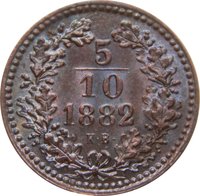
5⁄10 Kreuzer – Hungary
Hungary
Context
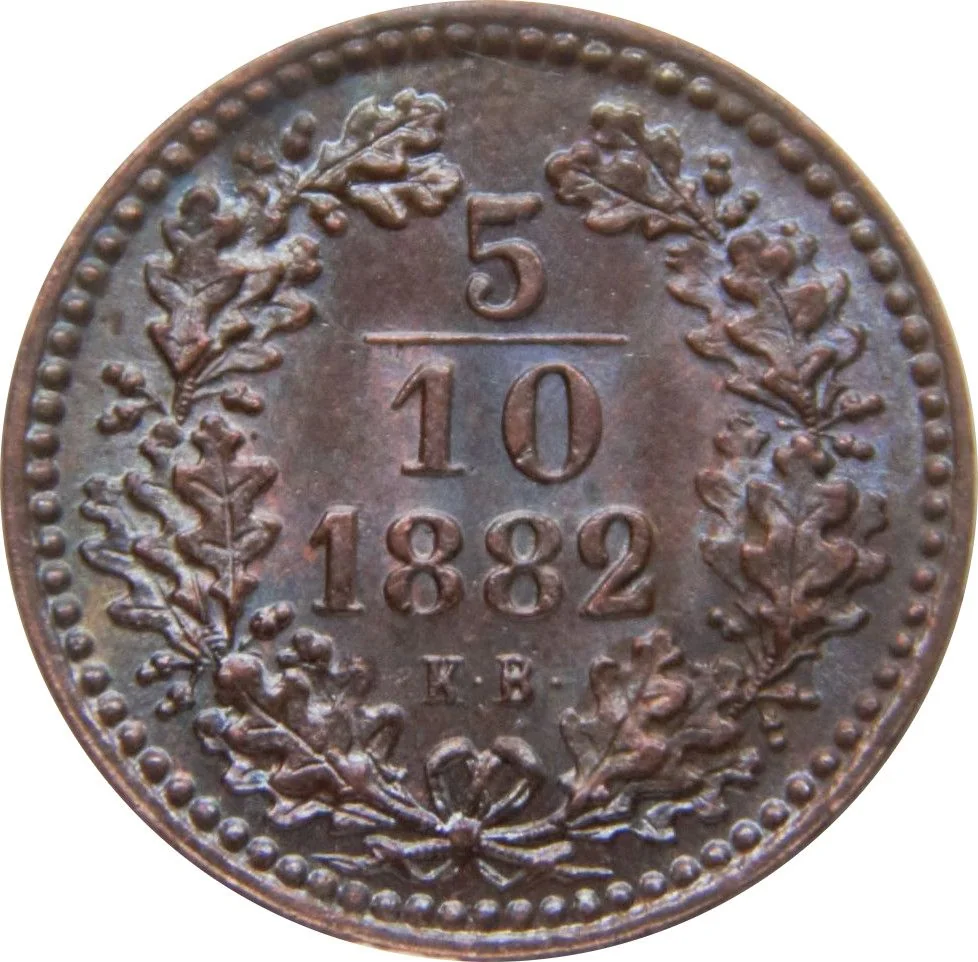
Year: 1882
Issuer: Hungary 
Ruler: Francis Joseph I
Currency:
(1857—1892)
Demonetization: 30 June 1898
Total mintage: 2,400,000
Material
References
KM: #Click to copy to clipboard468
Numista: #33832
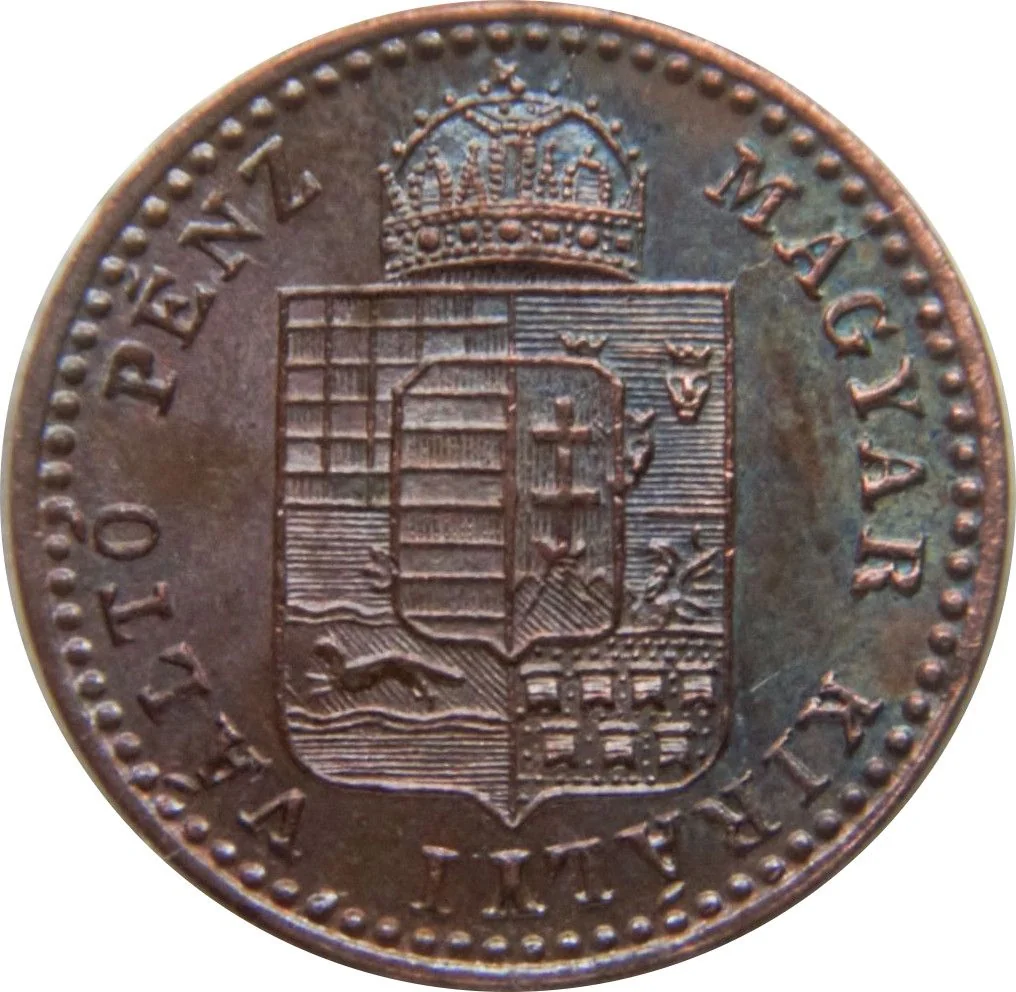
Obverse
Inscription:
MAGYAR KiRÁLYI VÁLTÓ PÉNZ
Translation:
Hungarian Royal Exchange Money
Script: Latin
Language: Hungarian
Engraver: Alexander Mayer
Reverse
Edge
Plain
Mints
| Name | Mark |
|---|---|
| Kremnica | KB |
Historical background
In 1882, Hungary operated within the complex monetary framework of the Austro-Hungarian Empire, established by the Compromise of 1867. The official currency was the Austro-Hungarian gulden (or forint in Hungarian), which was part of a bimetallic system theoretically based on both silver and gold. However, this system was under significant strain. The period was marked by a global transition to the gold standard, and the empire's adherence to a fluctuating silver standard created economic instability, exchange rate volatility, and hindered international trade and investment.
Economically, the 1880s were a time of ambitious development and modernization in Hungary, often called the "Golden Age" of the Hungarian economy. This rapid growth, including major infrastructure projects and the expansion of banking, increased the demand for a stable and modern currency. The existing gulden, susceptible to the depreciating value of silver on the world market, was seen as an obstacle to this progress. Hungarian financial and political leaders increasingly advocated for monetary reform to secure lower interest rates on foreign loans and to better integrate with the dominant financial centers of Western Europe.
Consequently, 1882 was a pivotal year of preparation for a fundamental change. While the formal transition to the gold standard would not be enacted until 1892 with the introduction of the korona, the political and economic debates of the early 1880s were laying the groundwork. The Hungarian government, alongside its Austrian counterpart, was actively studying and negotiating the terms of this shift, recognizing that a stable, gold-backed currency was essential for the kingdom's long-term economic ambitions and credibility on the international stage.
Economically, the 1880s were a time of ambitious development and modernization in Hungary, often called the "Golden Age" of the Hungarian economy. This rapid growth, including major infrastructure projects and the expansion of banking, increased the demand for a stable and modern currency. The existing gulden, susceptible to the depreciating value of silver on the world market, was seen as an obstacle to this progress. Hungarian financial and political leaders increasingly advocated for monetary reform to secure lower interest rates on foreign loans and to better integrate with the dominant financial centers of Western Europe.
Consequently, 1882 was a pivotal year of preparation for a fundamental change. While the formal transition to the gold standard would not be enacted until 1892 with the introduction of the korona, the political and economic debates of the early 1880s were laying the groundwork. The Hungarian government, alongside its Austrian counterpart, was actively studying and negotiating the terms of this shift, recognizing that a stable, gold-backed currency was essential for the kingdom's long-term economic ambitions and credibility on the international stage.
🌟 Limited