

1 satang – Thailand
Add to wishlist
Thailand
Context
Years: 2018–2021
Issuer: Thailand
Ruler: Phra Vajira Klao
Currency:
(since 1897)
Total mintage: 262,500
Material
References
Y: #
Numista: #138619
Value
Exchange value: 0.01 THB
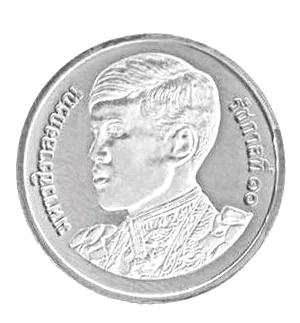
Obverse
Description:
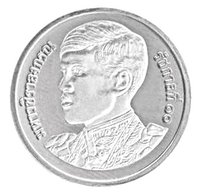
Left-facing bust
Inscription:
มหาวชิราลงกรณ รัชกาลที่ ๑๐
Translation:
Mahawachiralongkon, the 10th Reign.
Language: Thai
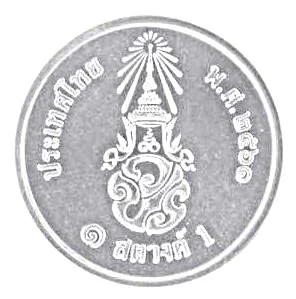
Reverse
Description:
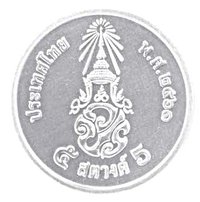
Crowned initials
Inscription:
ประเทศไทย พ.ศ. ๒๕๖๑
วปร
๑ สตางค์ 1
วปร
๑ สตางค์ 1
Translation:
Thailand B.E. 2561
V.P.R.
1 Satang 1
V.P.R.
1 Satang 1
Language: Thai
Edge
Plain
Mintings
| Year | Mint Mark | Mintage | Quality | Collection |
|---|---|---|---|---|
| 2018 | — | 192,500 | In sets | |
| 2019 | — | 20,000 | In sets | |
| 2020 | — | 50,000 | In sets | |
| 2021 | — | — | In sets |
Historical background
In 2018, Thailand’s currency situation was characterized by the Thai baht (THB) demonstrating remarkable strength, becoming one of Asia’s best-performing currencies. This appreciation was driven by a combination of persistent current account surpluses, substantial foreign exchange reserves, and robust inflows of foreign capital into both the stock and bond markets. Thailand's economic fundamentals were solid, with low inflation and a stable political environment following the military government's consolidation of power, which contrasted with regional volatility. The strong baht was a double-edged sword, reflecting economic stability but also raising significant concerns among the country's crucial export and tourism sectors about eroded international competitiveness.
The Bank of Thailand (BoT) faced a delicate policy challenge. While other regional central banks were tightening monetary policy to support their weaker currencies, the BoT maintained its benchmark interest rate at a historically low 1.5% throughout the year, where it had been since 2015. This dovish stance aimed to prevent further baht appreciation and support economic growth, but it also fueled concerns about financial stability and household debt. Authorities employed a toolkit of measures to manage the currency's rise, including verbal intervention, easing some capital outflow restrictions, and closely monitoring short-term speculative inflows.
Ultimately, the strong baht in 8 highlighted a structural shift in Thailand’s economy. The sustained current account surplus, partly due to weaker import demand for capital goods amid subdued domestic investment, pointed to longer-term challenges. While the currency strength benefited Thai consumers and businesses importing raw materials, it placed sustained pressure on exporters, policymakers, and the central bank to find a balance between maintaining external stability and safeguarding the growth of the trade-dependent economy. This tension set the stage for continued currency management challenges in the following years.
The Bank of Thailand (BoT) faced a delicate policy challenge. While other regional central banks were tightening monetary policy to support their weaker currencies, the BoT maintained its benchmark interest rate at a historically low 1.5% throughout the year, where it had been since 2015. This dovish stance aimed to prevent further baht appreciation and support economic growth, but it also fueled concerns about financial stability and household debt. Authorities employed a toolkit of measures to manage the currency's rise, including verbal intervention, easing some capital outflow restrictions, and closely monitoring short-term speculative inflows.
Ultimately, the strong baht in 8 highlighted a structural shift in Thailand’s economy. The sustained current account surplus, partly due to weaker import demand for capital goods amid subdued domestic investment, pointed to longer-term challenges. While the currency strength benefited Thai consumers and businesses importing raw materials, it placed sustained pressure on exporters, policymakers, and the central bank to find a balance between maintaining external stability and safeguarding the growth of the trade-dependent economy. This tension set the stage for continued currency management challenges in the following years.

🌱 Fairly Common