

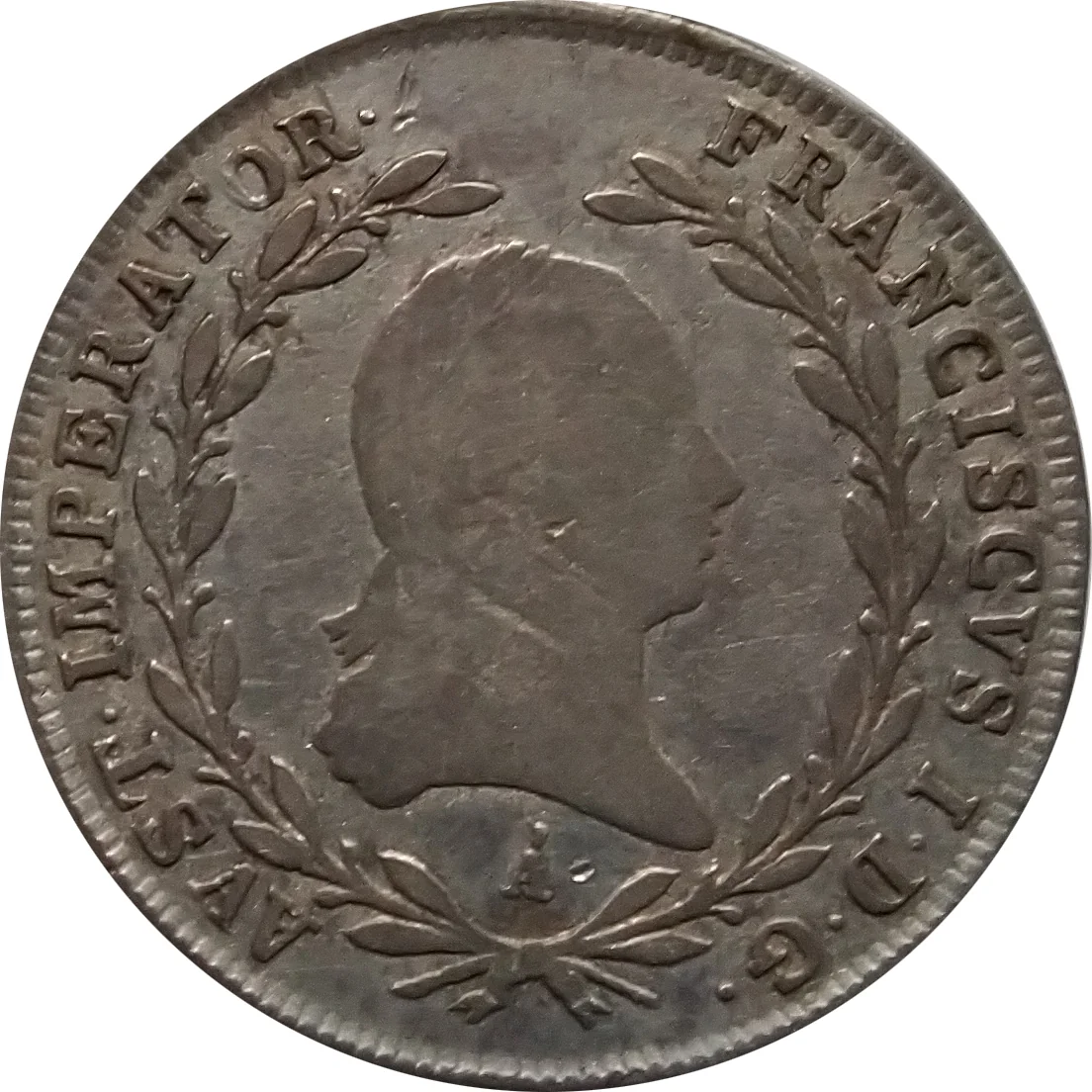
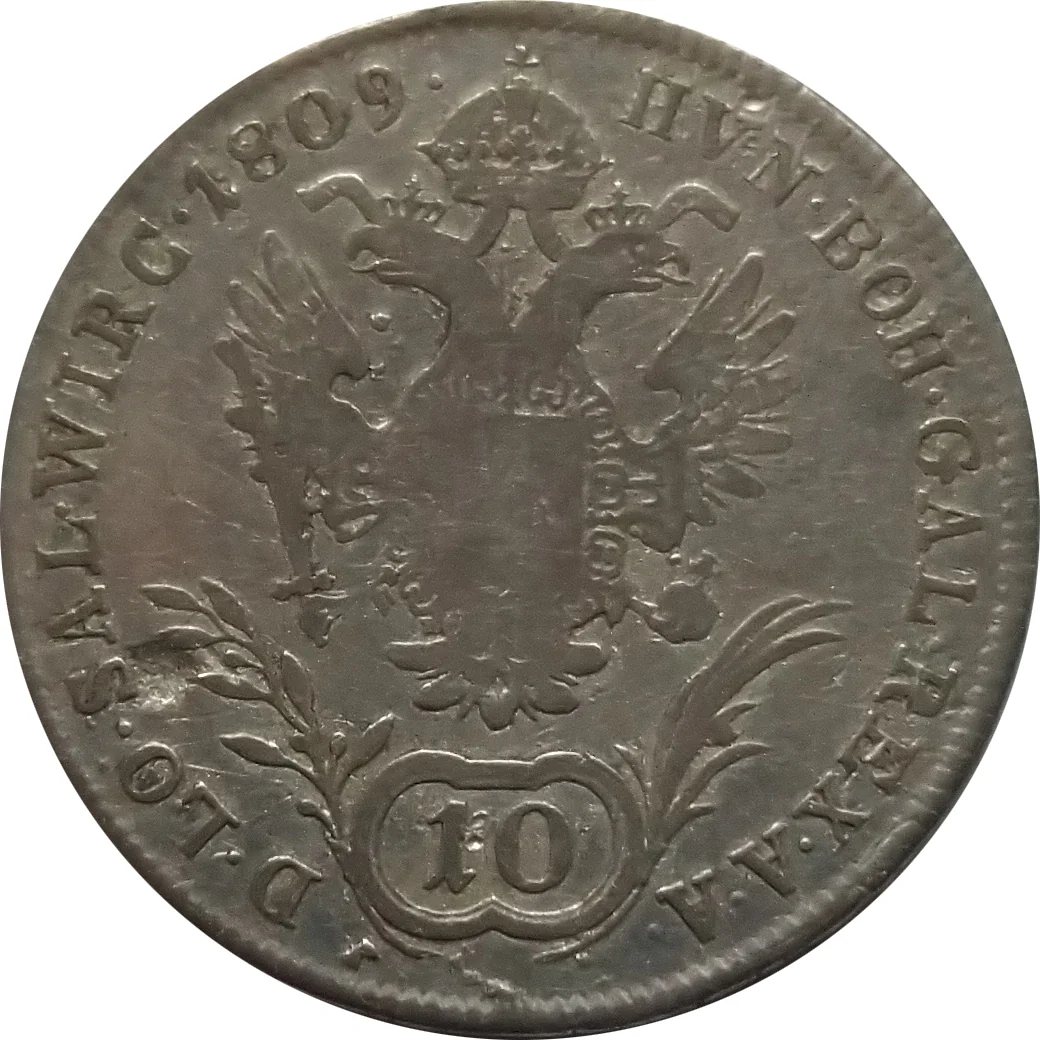
10 kreuzers – Austrian Empire
Add to wishlist
Austria
Context
Years: 1809–1810
Country: Austria
Issuer: Austrian Empire
Ruler: Francis I of Austria
Currency:
(1754—1857)
Demonetized: Yes
Material
References
KM: #
Numista: #33681
Value
Bullion value: $4.97
Obverse
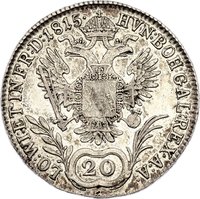
Reverse
Description:
Imperial double-headed eagle, value framed below.
Inscription:
HVN. BOH. GAL. REX. A. A. D. LO. SAL. WIRC.
Script: Latin
Edge
Mints
| Name | Mark |
|---|---|
| Münze Österreich | A |
Historical background
In 1809, the Austrian Empire's currency situation was dire, fundamentally shaped by the immense financial strain of the Napoleonic Wars. The state treasury, drained by years of conflict, resorted to the large-scale issuance of paper money known as Bancozettel. Originally introduced in 1762, these banknotes were not backed by sufficient silver reserves, leading to severe depreciation. By 1809, the value of the Bancozettel had plummeted, causing rampant inflation and a deep loss of public confidence in the paper currency, which circulated alongside a variety of older silver and gold coins.
The crisis peaked with the Finanzpatent of 1809, a desperate decree issued by Emperor Francis I to stabilize the spiraling situation. This law attempted to fix the exchange rate between the depreciated paper money and conventional silver coinage, but it was largely unsuccessful. In practice, it created a chaotic dual system where goods had two prices—one in silver coin (which held its value) and a much higher one in paper notes. This disparity fueled a thriving black market for specie (hard currency) and further eroded the state's ability to finance its military campaigns.
Consequently, the currency disorder of 1809 was more than an economic issue; it severely hampered the Austrian war effort against Napoleon. The government struggled to pay troops and procure supplies efficiently, contributing to its defeat at the Battle of Wagram. The financial devastation of this period laid the groundwork for the state bankruptcy declared in 1811, when the Bancozettel were finally demonetized and replaced at a drastically reduced rate, wiping out much of the public's savings and completing a cycle of fiscal emergency.
The crisis peaked with the Finanzpatent of 1809, a desperate decree issued by Emperor Francis I to stabilize the spiraling situation. This law attempted to fix the exchange rate between the depreciated paper money and conventional silver coinage, but it was largely unsuccessful. In practice, it created a chaotic dual system where goods had two prices—one in silver coin (which held its value) and a much higher one in paper notes. This disparity fueled a thriving black market for specie (hard currency) and further eroded the state's ability to finance its military campaigns.
Consequently, the currency disorder of 1809 was more than an economic issue; it severely hampered the Austrian war effort against Napoleon. The government struggled to pay troops and procure supplies efficiently, contributing to its defeat at the Battle of Wagram. The financial devastation of this period laid the groundwork for the state bankruptcy declared in 1811, when the Bancozettel were finally demonetized and replaced at a drastically reduced rate, wiping out much of the public's savings and completing a cycle of fiscal emergency.
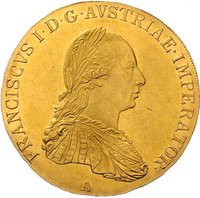
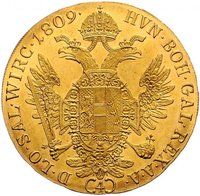
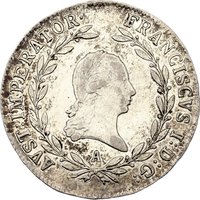
💎 Extremely Rare